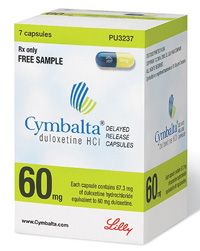
 A Tennessee couple is seeking compensation from Cymbalta manufacturer Eli Lilly for allegedly causing injuries to the wife by failing to provide adequate instructions for stopping the popular anti-depressant Cymbalta as well as a failure to adequately warn about the frequency, severity, and duration of symptoms associated with Cymbalta withdrawal.
Plaintiffs Kathleen and Charles Edens allege that Eli Lilly defectively designed Cymbalta as delayed-release capsules, warning patients not to swallow them whole (without chewing or crushing), while at the same time containing instructions to gradually “taper off” the drug, a contradiction that prevented Mrs. Edens from being able to properly withdraw from the drug.
Mrs. Edens began taking Cymbalta in May 2012, but when her shipment was delayed in October of that year she suffered “severe and dangerous” withdrawal symptoms, including electrical charges, tightening in the brain, vertigo, severe headaches, chest pain, short-term memory loss, depression and unexplained anger, according to the Cymbalta withdrawal side effects lawsuit.
The U.S. Food and Drug Administration (FDA) approved Cymbalta as a treatment for major depressive disorder in 2004. Three years later the agency approved Cymbalta for treatment of generalized anxiety disorder, and in 2008, for treatment of fibromyalgia.
Because Cymbalta’s half-life is less than one day and Cymbalta is generally administered once daily, it is possible for Cymbalta patients to experience withdrawal symptoms after simply forgetting to take one dose, according to the Edens’ Cymbalta withdrawal lawsuit.
This also means that users cannot safely taper off of the drug by taking a capsule every other day. The drug’s warning label suggests that withdrawal symptoms were “rare” or occurred at a rate of approximately 1 percent.
“However, Lilly’s own studies, published as a January 2005 article in the Journal of Affective Disorders, showed that, at a minimum, between 44.3 percent and 50 percent of Cymbalta patients suffered from ‘discontinuation side effects (i.e., withdrawal symptoms),” the Cymbalta withdrawal symptoms lawsuit alleges.
The article referenced also noted that the withdrawal symptom data compiled during Eli Lilly’s clinical trials were gathered from patients who volunteered to disclose their symptoms, not using the more accurate “symptom checklist” which would have produced even higher incidence rates.
Further, between 9.6 percent and 17.2 percent of Cymbalta users suffered “serious withdrawal,” though Lilly does not mention that on Cymbalta’s warning label, according to the Edens’ Cymbalta withdrawal lawsuit.
They allege that Eli Lilly has a pecuniary interest in having “a legion of physically dependent, long-term” Cymbalta users become “prisoners” to the drug, whose 2013 annual sales exceeded $3.9 billion. Eli Lilly is one of the leading drug manufacturers with annual revenues in excess of $20 billion.
Cymbalta withdrawal symptoms include, headaches, dizziness, nausea, fatigue, diarrhea, paresthesia, vomiting, irritability, nightmares, insomnia, anxiety, hyperhidrosis, sensory disturbances, electric shock sensations, seizures, and vertigo.
“When users try to stop taking Cymbalta, the side effects can be severe enough to force them to start taking Cymbalta again, not to treat their underlying conditions, but simply to stop the withdrawal symptoms,” the Edens allege in the Cymbalta lawsuit.
They charges against Eli Lilly in the Cymbalta withdrawal lawsuit includes negligence, fraud, product liability and failure to warn.
Do YOU have a legal claim? Fill out the form on this page now for a free, immediate, and confidential case evaluation. The Cymbalta attorneys who work with Top Class Actions will contact you if you qualify to let you know if an individual lawsuit or Cymbalta class action lawsuit is best for you. [In general, Cymbalta withdrawal lawsuits are filed individually by each plaintiff and are not class actions.] Hurry — statutes of limitations may apply.
ATTORNEY ADVERTISING
Top Class Actions is a Proud Member of the American Bar Association
LEGAL INFORMATION IS NOT LEGAL ADVICE
Top Class Actions Legal Statement
©2008 – 2026 Top Class Actions® LLC
Various Trademarks held by their respective owners
This website is not intended for viewing or usage by European Union citizens.
Get Help – It’s Free
Join a Free Cymbalta Withdrawal Class Action Lawsuit Investigation
If you attempted to stop taking Cymbalta and suffered withdrawal symptoms, you may have a legal claim. See if you qualify by filling out the short form below.
An attorney will contact you if you qualify to discuss the details of your potential case at no charge to you.
Oops! We could not locate your form.