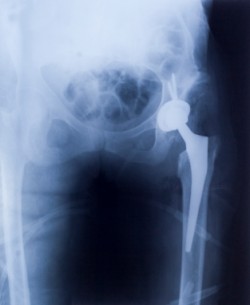
 An Illinois man has filed a Stryker metal-on-metal hip implant lawsuit against the medical device company, alleging that the man’s hip replacement surgery ended in numerous problems that left him permanently disfigured and required at least one revision procedure.
Plaintiff James Madsen underwent hip replacement surgery on May 5, 2011, in which the Stryker Rejuvenate metal-on-metal hip implant product was used. Initially, he exhibited no problems during a few follow-up appointments. However, roughly a year later he began complaining of pain and irritability, according to the Stryker hip lawsuit.
In February 2013, Madsen underwent an MRI and no issues were found. However, blood tests indicated that there were high levels of cobalt in his blood, a sign of metallosis that did not diminish. Metallosis is the build-up of metal debris in the soft tissues of the body, which causes inflammation and damage to the tissue. According to Madsen’s metal-on-metal hip implant lawsuit, these were signs of device failure.
Madsen and his wife claim that the titanium and cobalt chromate components that the hip replacement device is made with has been linked to corrosion “since the 1980s.” Stryker and subsidiary Howmedica Osteonics, however, claim that the alloy would resist “corrosion and fretting.”
According to an urgent field safety notice and subsequent Stryker hip recall notice, risks for patients were due to corrosion and fretting “at or about the modular-neck junction, which may result in adverse local tissue reactions manifesting with pain and/or swelling.” These are also the precursors for metallosis side effects.
Madsen alleges in the Stryker hip lawsuit that by using a streamlined FDA approval process, there was limited testing for the device. While the federal agency deemed the implant similar to previous devices, the metal-on-metal junction was different, as shown in a higher number of adverse event reports, according to the complaint.
The Stryker metal hip implant failure lawsuit is James Madsen et al. v. Howmedica Osteonics Corporation et al., Case No. 13-cv-1415, U.S. District Court, Central District of Illinois.
If you or someone you know has experienced severe pain as a result of problems with a metal-on-metal hip implant and especially if you have had or will soon have a revision procedure, legal options may be available to you. Learn more by visiting the Metal on Metal Replacement Hip Implant Class Action Lawsuit Investigation. There, you can get a free case eligibility review by metal-on-metal hip implant specialists. Qualified individuals will also be contacted for a free consultation with a Stryker metal-on-metal hip implant lawsuit lawyer. Start today and find out if your claim is eligible.
In general, metal hip implant lawsuits are filed individually by each plaintiff and are not class actions.
Do YOU have a legal claim? Fill out the form on this page now for a free, immediate, and confidential case evaluation. The attorneys who work with Top Class Actions will contact you if you qualify to let you know if an individual lawsuit or class action lawsuit is best for you. Hurry — statutes of limitations may apply.
ATTORNEY ADVERTISING
Top Class Actions is a Proud Member of the American Bar Association
LEGAL INFORMATION IS NOT LEGAL ADVICE
Top Class Actions Legal Statement
©2008 – 2026 Top Class Actions® LLC
Various Trademarks held by their respective owners
This website is not intended for viewing or usage by European Union citizens.
Get Help – It’s Free
Join a Free Metal Hip Replacement Class Action Lawsuit Investigation
If you or a loved one had a metal-on-metal hip implant that failed or caused serious complications, you may be entitled to compensation. Hip replacement lawsuits are being filed now against multiple companies, including Stryker, Biomet, DePuy, Zimmer, and Wright. See if you qualify to take legal action by filling out the form below.
An attorney will contact you if you qualify to discuss the details of your potential case at no charge to you.
Oops! We could not locate your form.