McDonald’s class action lawsuit overview:
- Who: Plaintiff Alexander Mercado filed a class action lawsuit against McDonald’s Corp.
- Why: Mercado claims McDonald’s misleads consumers by labeling some of its McCafé drinks as being sugar-free when they actually contain sugar in the form of lactose.
- Where: The McDonald’s class action lawsuit was filed in New York federal court.
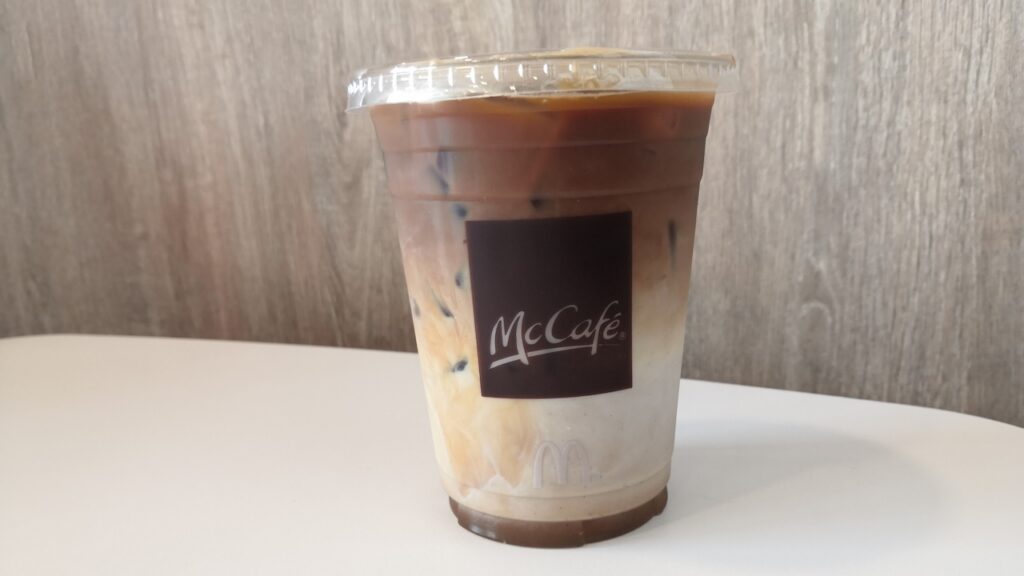
McDonald’s is facing a class action lawsuit claiming it misleads consumers by labeling some of its McCafé drinks as being sugar-free when they actually contain sugar in the form of lactose.
Plaintiff Alexander Mercado alleges McDonald’s falsely advertises that its McCafé “Sugar Free Vanilla Cappuccino,” “Iced Sugar Free Vanilla Latte,” “Sugar Free Vanilla Latte” and “Iced Sugar Free Vanilla Coffee” drinks contain no sugar.
Mercado argues the McCafé drinks actually contain between 2 to 18 grams of lactose sugar — a disaccharide like table sugar — in each serving despite McDonald’s labeling them as being sugar-free.
“Defendant’s ‘sugar free’ representation is false, highly deceptive to the reasonable consumer,” the McDonald’s class action lawsuit says. The complaint cites U.S. Food and Drug Administration (FDA) regulations that any food or drink with 0.5 mg sugar or more cannot be labeled “sugar-free.”
McDonald’s ‘sugar-free’ drinks allegedly contain lactose sugar
Mercado alleges the McCafé drinks use whole milk, which contains lactose and is the first ingredient in three of the four drinks labeled as being “sugar-free.”
Despite this, Mercado argues “nothing about the placement, size or presentation of the word ‘whole milk’ listing would alert a reasonable consumer, unprompted, that whole milk contains a sugar that contradicts the challenged representation.”
Mercado claims McDonald’s is guilty of unjust enrichment and violating New York General Business Law and consumer protection laws of other states.
Mercado wants to represent a nationwide class, New York class and multi-state class of consumers who purchased a McCafé drink labeled as being “sugar-free” within the applicable statute of limitations period.
The plaintiff demands a jury trial and requests declaratory and injunctive relief and an award of actual, compensatory, statutory and treble damages for himself and all class members.
Meanwhile, Starbucks is facing claims its “sugar-free” protein beverages actually contain 13 to 21 grams of sugar.
Have you purchased a McDonald’s McCafé drink labeled as sugar-free? Let us know in the comments.
The plaintiff is represented by James Chung of the Law Office of James Chung and James C. Kelly and Anthony J. Russo Jr. of The Russo Firm.
The McDonald’s class action lawsuit is Mercado v. McDonald’s Corp., Case No. 1:26-cv-09142, in the U.S. District Court for the Southern District of New York.
Don’t Miss Out!
Check out our list of Class Action Lawsuits and Class Action Settlements you may qualify to join!
Read About More Class Action Lawsuits & Class Action Settlements: