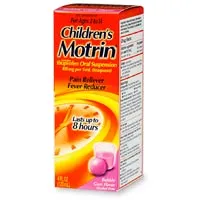
A trial is underway in Pennsylvania against Johnson & Johnson and its subsidiary McNeil-PPC Inc. over allegations that a 3-year-old girl developed Stevens Johnson Syndrome (SJS) and Toxic Epidermal Necrolysis (TEN) as a result of being given Children’s Motrin.
The family of the girl is seeking $5.6 million in financial compensation and punitive damages from the manufacturers.
Children’s Motrin is an ibuprofen based over-the-counter anti-inflammatory, and counsel for the family of the 3-year-old said that the drug manufacturers failed to warn consumers of the risks of the two potentially fatal skin conditions, Stevens Johnson Syndrome and the more severe condition, Toxic Epidermal Necrolysis.
The plaintiffs argued that the drugmakers, not the FDA, have the responsibility to ensure consumer safety and knowledge about the risks associated with the drugs they produce.
Counsel for the plaintiffs stated, “Our country, our government has decided that the duty is going to fall on the drug manufacturer to make their product safe. It is not a delegable duty. They can’t push it off on the FDA. They can’t push it off on a doctor. They can’t push it off on a mom. It is their duty and their duty alone.”
In 2012, the parents of the girl filed the SJS lawsuit against Johnson & Johnson and its subsidiary alleging their daughter developed Stevens Johnson Syndrome and Toxic Epidermal Necrolysis after having taking several doses of Children’s Motrin. The girl began taking the anti-inflammatory drug after suffering a sprained shoulder.
After taking the medication, the girl began to develop a rash and other flu-like symptoms, and her parents thought she must have been coming down with a virus, so they gave her more Motrin to alleviate her symptoms.
SJS and TEN Treatment
Little did the parents know that the first signs of SJS and TEN are an onset of flu-like symptoms and a rash. The body actually has an allergic and autoimmune reaction to the drug, and the only way to stop the reaction is to stop the drug. However, when it becomes obvious the condition is more than just the flu, major damage has already been done.
SJS and TEN cause blistering and rashes on the skin and mucosal lining of the body, in such places as the eyes, nose, genital and anal areas. The skin blisters and begins peeling off in large sheets from the body. Patients with SJS/TEN must be hospitalized for care, as the condition is considered a medical emergency. Most will be treated in the intensive care unit or in the burn ward of the hospital.
The difference between Stevens Johnson Syndrome and Toxic Epidermal Necrolysis is the amount of skin on the body that is affected. If less than 30 percent of the skin contains a rash, it is referred to as SJS, and 30 percent or more is affected, then it is considered TEN.
Severe, lasting damage can result from these two conditions. Blindness, organ damage and failure, breathing difficulties from airflow disruption are common results of the conditions.
There is no cure of SJS and TEN and treatment for the conditions revolves around symptom management. Pain medication, topical treatments for the skin wounds, IV fluids and nutrition are some of the basic ways to manage the symptoms.
SJS Lawsuits
Plaintiffs in SJS and TEN cases have had some successful outcomes by filing SJS lawsuits. A family whose daughter lost 90 percent of her skin and 80 percent of her lung capacity was awarded $63 million in damages. In addition, the family of another 3-year-old girl who took Children’s Motrin and developed SJS/TEN was awarded $10 million.
If you or a loved one has developed SJS or TEN as a result of taking any medication, you may be entitled to legal compensation.
The Stevens Johnson Syndrome Motrin Lawsuit is Brown et al. v. Johnson & Johnson et al., Case No. 2:12-cv-04929 in U.S. District Court for the Eastern District of Pennsylvania.
Do YOU have a legal claim? Fill out the form on this page now for a free, immediate, and confidential case evaluation. The Stevens Johnson Syndrome attorneys who work with Top Class Actions will contact you if you qualify to let you know if an individual lawsuit or class action lawsuit is best for you. [In general, SJS lawsuits are filed individually by each plaintiff and are not class actions.] Hurry — statutes of limitations may apply.
ATTORNEY ADVERTISING
Top Class Actions is a Proud Member of the American Bar Association
LEGAL INFORMATION IS NOT LEGAL ADVICE
Top Class Actions Legal Statement
©2008 – 2026 Top Class Actions® LLC
Various Trademarks held by their respective owners
This website is not intended for viewing or usage by European Union citizens.
Get Help – It’s Free
Help for Victims of Stevens Johnson Syndrome
If you or a loved one were diagnosed with Stevens Johnson Syndrome (SJS) or toxic epidermal necrolysis (TEN) after taking a prescribed or over-the-counter medication, you may be eligible to take legal action against the drug’s manufacturer. Filing an SJS lawsuit or class action lawsuit may help you obtain compensation for medical bills, pain and suffering, and other damages. Obtain a free and confidential review of your case by filling out the form below.
An attorney will contact you if you qualify to discuss the details of your potential case at no charge to you.
Oops! We could not locate your form.