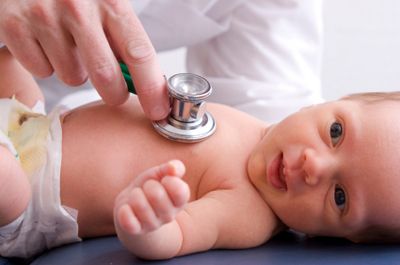
 An increasing number of studies have shown that there may be a link between antidepressants known as selective serotonin reuptake inhibitors, such as Zoloft and Paxil, and birth defects in the children of mothers who took them while pregnant.
The potential birth defects include congenital malformations of the heart, omphalocele (when major organs grow outside of the body), anal atresia (when the anus is either not present or in the wrong place), limb reduction defects, cardiac septal defects and anencephaly.
>>Learn More: SSRI Birth Defects
But there’s a new blood test that may make it easier for women to detect when their unborn child has developed a birth defect, which can be done at week 10 of the pregnancy. Although blood tests like this have existed for a while, a new study shows for the first time that they are actually more when compared to older tests, and they can be used by all women, not just those who are believed to be at risk.
This new test is called the “cell free DNA test” (cfDNA) and it is able to detect very small amounts of fetal DNA present in the mother’s blood.
About 2,000 pregnant women underwent the test as part of the study, which found a 10 times lower rate of false positives than with traditional screening tests which can’t be done until much later on in pregnancy.
“If you were screened positive with cfDNA test, there was a 45 percent chance that your fetus had Down syndrome, and if you had a standard test only a 4 percent chance that the fetus had Down syndrome,” said Dr. Diana Bianchi, author of the study and executive director of the Mother Infant Research Institute at Tufts Medical Center.
That means that 96 percent of the time women test positive for having a child with Down syndrome with screening tests commonly used, it is a false positive.
Women who test positive of early screening tests then typically go through more invasive tests such as amniocentesis or chorionic villus sampling, which also come with the risk of miscarriage.
The cfDNA will test for trisomy 18, also known as Edwards Syndrome, in which a baby is born with a third eighteenth chromosome and will rarely live very long outside the womb if the baby even makes it to term. It also tests for Down syndrome and Trisomy 13, also known as Patau syndrome as well as other chromosomal abnormalities.
The American College of Obstetrics and Gynecology has not yet updated its recommendation on cfDNA.
“Studies such as this one will inevitably challenge them to consider updating their guidelines,” said Dr. Brian Skotko, a pediatrician and co-director of Massachusetts General Hospital’s Down Syndrome Program.
If you or anyone you know has had a child born with a birth defect as a result of taking an SSRI such as Zoloft, legal options are available. Learn more and get a free legal consultation regarding a claim’s eligibility at the Zoloft & SSRI Antidepressant Birth Defect Class Action Lawsuit Investigation. Experienced legal professionals have access to medical experts to assess whether or not this antidepressant played a role in the development of a serious heart defect in your child, so act now.
ATTORNEY ADVERTISING
Top Class Actions is a Proud Member of the American Bar Association
LEGAL INFORMATION IS NOT LEGAL ADVICE
Top Class Actions Legal Statement
©2008 – 2026 Top Class Actions® LLC
Various Trademarks held by their respective owners
This website is not intended for viewing or usage by European Union citizens.

FACTA lawsuit investigation: Check your paper receipts for credit card privacy violations
November 6, 2026 | Legal News