

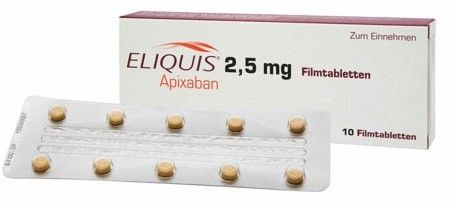
 Eliquis belongs to the newer generation of blood thinners, and may carry the same risk as its peers like Pradaxa and Xarelto.
Eliquis is a type of drug called an anticoagulant or blood thinner. These drugs are designed to decrease the body’s ability to form blood clots. Under ideal circumstances, blood clots are a part of the body’s naturally healing process.
However, when the mechanisms of clotting misfire, errant blood clots can form within the body, where they can block the supply of blood to vital organs like the heart, brain, and lungs. A blood clot could cause a heart attack, stroke, and pulmonary embolism respectively.
Anticoagulants like Eliquis are deisgned to help patients at risk for forming dangerous blood clots. For example, patients with atrial fibrillation are at increased risk for developing dangerous clots, and anticoagulants may reduce this risk. However, all anticoagulants carry certain risks of their own.
Theoretically, any anticoagulant could cause uncontrolled bleeding. By decreasing the body’s ability to form clots, anticoagulants like Eliquis carry the risk of allowing a patient to bleed to death from minor injuries.
Sometimes, these injuries can occur inside the body, causing internal bleeding such as pulmonary bleeding and gastrointestinal bleeding. In these situations, doctors may not be able to stop the patient from bleeding to death. But newer anticoagulants like Eliquis carry special risks not seen in older anticoagulants such as warfarin, which has been around for decades.
Warfarin is an older anticoagulant with an important distinction from newer drugs like Eliquis. If a patient on Warfarin develops internal bleeding like pulmonary bleeding or gastrointestinal bleeding, doctors have a trick to “turn off” Warfarin.
In the case of this blood thinner, doctors can administer a very high dose of vitamin K, which interferes with warfarin to the point that patients can form life-saving blood clots and stop bleeding. Newer blood thinners like Eliquis do not have known reversal agents.
Eliquis lawsuits could allege that drug makers were aware of this shortcoming of Eliquis, but aggressively marketed the blood thinner as superior to older drugs anyway.
Do YOU have a legal claim? Fill out the form on this page now for a free, immediate, and confidential case evaluation. The Eliquis attorneys who work with Top Class Actions will contact you if you qualify to let you know if an individual lawsuit or Eliquis class action lawsuit is best for you. [In general, Eliquis lawsuits are filed individually by each plaintiff and are not class actions.] Hurry — statutes of limitations may apply.
Get Help – It’s Free
Join a Free Eliquis Class Action Lawsuit Investigation
If you or a loved one took Eliquis (apixaban) and suffered injuries such as uncontrollable internal bleeding, gastrointestinal bleeding, hemorrhaging, kidney bleeding or death, you may have a legal claim. See if you qualify by filling out the short form below.
An attorney will contact you if you qualify to discuss the details of your potential case at no charge to you.
Oops! We could not locate your form.
ATTORNEY ADVERTISING
Top Class Actions is a Proud Member of the American Bar Association
LEGAL INFORMATION IS NOT LEGAL ADVICE
Top Class Actions Legal Statement
©2008 – 2026 Top Class Actions® LLC
Various Trademarks held by their respective owners
This website is not intended for viewing or usage by European Union citizens.











