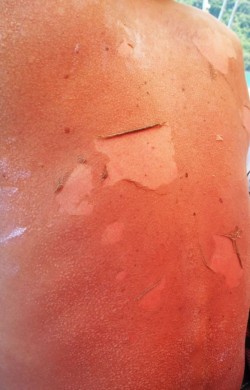
 A community is raising funds to help a sheriff’s deputy who has suffered from the life-threatening condition Stevens Johnson Syndrome.
Sheriff’s deputy Ed Lasseigne has been diagnosed with the autoimmune disease Stevens Johnson Syndrome, or SJS. This disorder has caused him to suffer a blistering, peeling rash all over his body. The damage also affected his eyesight, leaving him blind. Lasseigne has begun to eat again, and some of his vision is returning. However, it’s not clear when, or if, he will be able to return to work.
Lasseigne’s community has responded by raising funds for his care, including a fundraising dinner. Others have contributed by setting up a page on Facebook and a GoFundMe campaign to raise money for the deputy. But even with this outpouring of support from his community, he faces a challenging road ahead. It could take months of physical therapy as well as reconstructive surgery to recover.
Cases like Lasseigne’s are a reminder that SJS can strike almost at random. Physicians and medical researchers still have many questions about SJS and related reactions, but one thing is clear: Nearly all cases of SJS are triggered by medications. But it is almost impossible to determine what drug will trigger SJS in which people. Additionally, a person may take a drug for years before developing SJS, or they may develop SJS the first time they take a new medication. Some genetic markers seem to make some people more likely to develop SJS, but the link is not consistent. Many people who develop SJS lack the genes in question and many who have the genes never develop SJS. It is likely that multiple genes interacting probably play a role in people developing SJS.
SJS lawsuits against drug companies have been filed by individuals who developed SJS. SJS lawsuits like this typically charge that drug makers knew, or reasonably should have known, about the risk of SJS, and failed to adequately warn patients about the risks associated with their drug. Other drug lawsuits have alleged that drug makers sometimes couch dangerous side effects like SJS in technical jargon and vague terms. For example, some drugs known to cause SJS merely carry a warning that the drugs may cause “serious skin reactions,” instead of mentioning Stevens Johnson Syndrome.
In general, SJS lawsuits are filed individually by each plaintiff and are not class actions.
Do YOU have a legal claim? Fill out the form on this page now for a free, immediate, and confidential case evaluation. The attorneys who work with Top Class Actions will contact you if you qualify to let you know if an individual lawsuit or class action lawsuit is best for you. Hurry — statutes of limitations may apply.
ATTORNEY ADVERTISING
Top Class Actions is a Proud Member of the American Bar Association
LEGAL INFORMATION IS NOT LEGAL ADVICE
Top Class Actions Legal Statement
©2008 – 2026 Top Class Actions® LLC
Various Trademarks held by their respective owners
This website is not intended for viewing or usage by European Union citizens.
Get Help – It’s Free
Help for Victims of Stevens Johnson Syndrome
If you or a loved one were diagnosed with Stevens Johnson Syndrome (SJS) or toxic epidermal necrolysis (TEN) after taking a prescribed or over-the-counter medication, you may be eligible to take legal action against the drug’s manufacturer. Filing an SJS lawsuit or class action lawsuit may help you obtain compensation for medical bills, pain and suffering, and other damages. Obtain a free and confidential review of your case by filling out the form below.
An attorney will contact you if you qualify to discuss the details of your potential case at no charge to you.
Oops! We could not locate your form.