

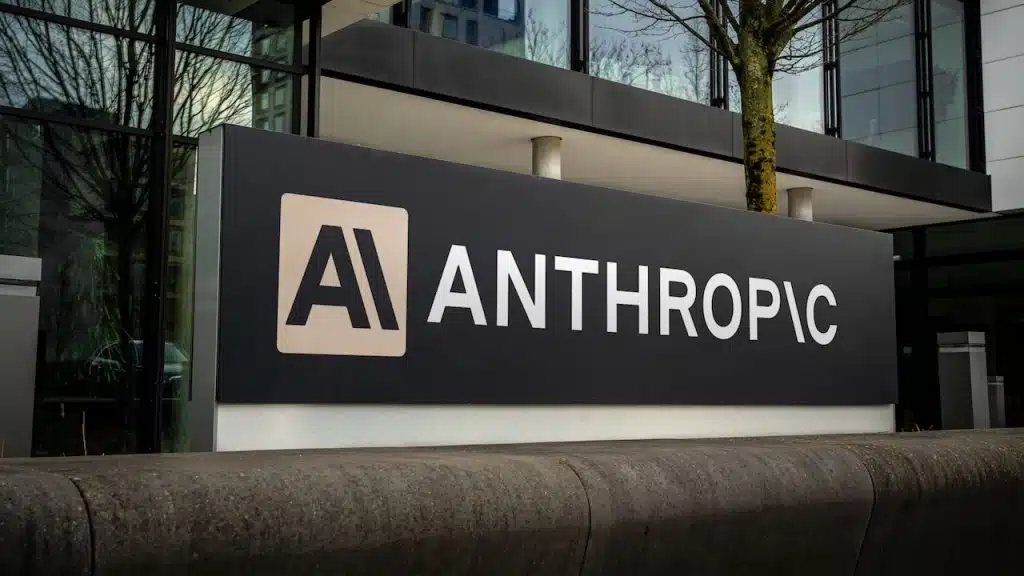
Anthropic settlement overview:
- Who: A federal judge granted final approval to a $1.5 billion settlement between Anthropic PBC and a class of authors and publishers.
- Why: The class alleged Anthropic downloaded their books from pirated databases to train its Claude AI models.
- Where: The class action settlement was approved in California federal court.
A federal judge has granted final approval to a $1.5 billion class action settlement resolving claims brought against Anthropic PBC over its use of pirated books to train Claude, the company’s AI chatbot.
Plaintiffs Andrea Bartz and four others alleged in the underlying class action lawsuit that Anthropic downloaded copyrighted books from two piracy websites, Library Genesis and Pirate Library Mirror, to build datasets for its large language models.
The settlement class covers any legal or beneficial owner of a copyrighted book Anthropic downloaded from LibGen or PiLiMi with an ISBN or ASIN that was properly registered with the U.S. Copyright Office — more than 480,000 works in all.
The deal resolves only past claims through Aug. 25, 2025, but does not release claims over what Anthropic’s AI models generate.
Anthropic must pay $1.5 billion into a non-reversionary fund, roughly $3,000 per qualifying work before fees and costs, in installments through September 2027. It must also destroy the pirated books it downloaded.
Attorneys had requested $187.5 million in fees; the court awarded a little more than $101 million, plus service awards of up to $50,000 per named plaintiff.
“We are gratified by the court’s ruling granting final approval of this historic settlement,” attorney Justin Nelson of Susman Godfrey said in a statement, according to Reuters.
The claims deadline was March 30, 2026, and the opt-out/objection window closed Feb. 9, 2026. Claims were filed covering more than 92% of the works in the settlement, though some who opted out have filed separate, ongoing lawsuits.
AI training lawsuit says plaintiffs’ books circulated on pirate site LibGen
In June 2025, the district court found that training AI models on the books qualified as fair use and did not violate the Copyright Act, but it left open — to be decided at trial — whether Anthropic’s downloading and use of the LibGen and PiLiMi works was similarly protected.
The complaint stated that pirated copies of the named plaintiffs’ books circulated online through piracy websites, including Library Genesis and Pirate Library Mirror.
The class action lawsuit’s piracy allegations centered on a dataset called “Books3,” a cache of 196,640 pirated books compiled from what the complaint calls a “notorious pirated collection” known as Bibliotik. Books3 was folded into a larger training set called the “Pile,” which the complaint alleges Anthropic used to train Claude.
Plaintiffs Andrea Bartz, Charles Graeber and Kirk Wallace Johnson allege in the complaint that pirated versions of their books, including Bartz’s “The Lost Night: A Novel” and Graeber’s “The Good Nurse,” were available through LibGen.
Similarly, Apple was hit with an AI training lawsuit last year, alleging it used “Books3”, a dataset of pirated copyrighted books, to train its OpenELM language models.
Have you ever read any of the books included in the Anthropic class action settlement? Let us know in the comments.
The plaintiffs are represented by Justin A. Nelson, Alejandra C. Salinas and Rohit D. Nath of Susman Godfrey LLP and Rachel Geman and Reilly T. Stoler of Lieff Cabraser Heimann & Bernstein LLP.
The Anthropic class action settlement is Bartz, et al. v. Anthropic PBC, Case No. 3:24-cv-05417-WHA, in the U.S. District Court for the Northern District of California.
Don’t Miss Out!
Check out our list of Class Action Lawsuits and Class Action Settlements you may qualify to join!
Read About More Class Action Lawsuits & Class Action Settlements:












2 thoughts on$1.5B Anthropic settlement resolves AI training lawsuit
Add me
Hi, I’ve read AND written books stolen by Anthropic to train Claude. ;-)