

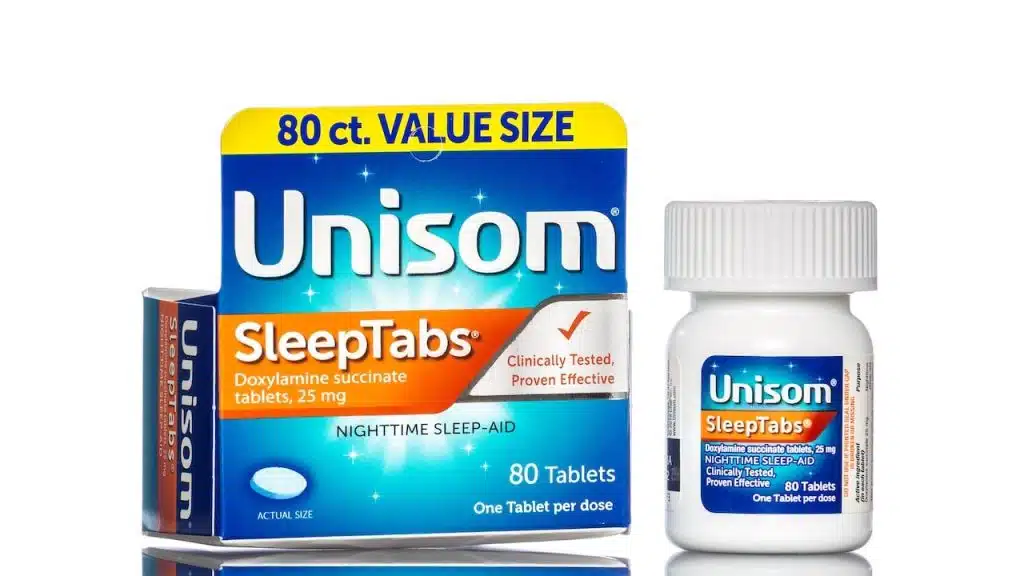
Unisom class action lawsuit overview:
- Who: Plaintiff Tasha Amaral filed a class action lawsuit against Chattem Inc., doing business as Opella North America, and Sanofi-Aventis U.S. LLC.
- Why: Amaral claims the companies falsely marketed Unisom sleep aid products as non-habit forming.
- Where: The Unisom class action lawsuit was filed in California federal court.
A new class action lawsuit claims Chattem and Sanofi-Aventis falsely marketed Unisom sleep aid products as non-habit forming.
Plaintiff Tasha Amaral says she purchased one of the Unisom products in April 2025 for around $12.48 from Amazon.com. She claims she relied on the product’s label, which stated it was “non-habit forming.” Amaral says she would not have purchased the product if she knew it could lead to habitual use.
According to the class action lawsuit, Unisom’s non-habit forming claim is false and misleading because the active ingredient diphenhydramine is known to lead to dependence. The lawsuit claims that chronic consumption of the ingredient can lead to abuse, withdrawal, agitation, tremors, neurological symptoms and mental status changes, including psychosis.
Amaral alleges that Chattem and Sanofi knew consumers would use the sleep aid products in sustained patterns that increase the risk of dependence and/or abuse.
She wants to represent a California class of consumers who purchased Unisom sleep aid products that contain the active ingredient diphenhydramine.
Unisom class action claims sleep aid market is a ‘global juggernaut’
The class action lawsuit alleges that sleep aids have become a “global juggernaut,” reaping nearly $65 billion a year. It claims that consumers desire sleep aid products that are safe and do not cause significant side effects.
Amaral alleges that Unisom’s non-habit forming claim was prominently displayed on the front of the product’s label to reassure consumers that the medication would not come with the risks associated with dependence.
She claims consumers paid a premium for the sleep aid products based on the false non-habit forming claim.
Amaral argues that Chattem and Sanofi’s non-habit forming claim gave the companies an unfair competitive advantage over their competitors who sell sleep aids with the same active ingredient but do not make similar claims.
The lawsuit asserts claims for fraud by misrepresentation, unjust enrichment, breach of express warranty and breach of implied warranty. It also claims the companies violated California consumer protection laws.
Amaral is seeking certification of the class action, compensatory, statutory and punitive damages, disgorgement, restitution and an order requiring Chattem and Sanofi to cease making the allegedly false non-habit forming claim.
In related news, Procter & Gamble is facing allegations ZzzQuil melatonin products with the tagline “helps you fall asleep naturally” contain several artificial and synthetic ingredients.
What do you think of the claims made in this Unisom class action lawsuit? Join the discussion in the comments.
The plaintiff is represented by Yana Hart and Cassandra Rasmussen of Clarkson Law Firm P.C.
The Unisom class action lawsuit is Amaral v. Chattem Inc., et al., Case No. 3:26-cv-05474, in the U.S. District Court for the Northern District of California.
Don’t Miss Out!
Check out our list of Class Action Lawsuits and Class Action Settlements you may qualify to join!
Read About More Class Action Lawsuits & Class Action Settlements:












121 thoughts onUnisom sued over allegedly misleading ‘non-habit forming’ sleep aid claims
It is unacceptable and wrong
Add me please this is unacceptably wrong shame on them
Add me please this is unacceptably wrong shame on them
Add me please this is unacceptably wrong