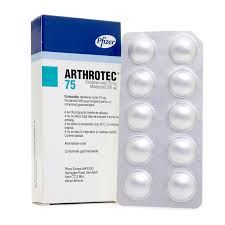
Patients taking Arthrotec to treat their rheumatoid arthritis or osteoarthritis may not know that the drug they are taking has been associated with a potentially fatal drug reaction known as Stevens Johnson Syndrome.
Arthrotec is a medication that features a combination of two drugs: diclofenac and misoprostol.
Diclofenac belongs to a class of non-steroidal anti-inflammatory drugs, more commonly referred to as NSAIDs. NSAIDs are effective in helping to reduce pain and inflammation, but they also can cause stomach problems.
For this reason, misoprostol is added to Arthrotec to reduce the acidity of the stomach and protects the stomach from the potential damage that the NSAID can cause.
With any medication, there is a possibility of suffering side effects. Many times the side effects are mild to moderate and do not interfere with treatment. These can be things like upset stomach, insomnia, dizziness or dry mouth and typically are not a huge concern.
However, some medications carry greater risks of side effects, and sometimes the more severe side effects are not clearly stated on the product label. One such condition that frequently appears to be omitted from product labeling is an allergic drug reaction known as Stevens Johnson Syndrome.
Stevens Johnson Syndrome
Stevens Johnson Syndrome (SJS) is an immune mediated response initiated by the ingestion of the drug. Most times, this reaction develops toward the start of taking a new medication for the first time, but in SJS reaction can occur at any time, even after months or years of successfully using the medication in the past.
SJS symptoms initially start out by resembling a cold or flu. Sore throat, achy muscles, fever, chills, malaise, insomnia, weakness and pain may be noted.
Many times, these symptoms are not taken too seriously, because the user thinks he or she is coming down with an illness or the symptoms are similar to what the medication was being used to treat.
It is typically not until the next stage of Stevens Johnson Syndrome that patients begin to take notice of a potential reaction.
This is when the characteristic Stevens Johnson Syndrome rash develops. Red or purple blisters make up the rash that can appear anywhere on the body or in the mucous membranes of the body, such as the nose, mouth or genital area.
As the rash spreads, it causes the tissue to die and flake off. If large enough amounts are affected, the skin can even shed in large sheets. After the top layers of skin have fallen off, it often leaves the patient looking like a burn victim.
Stevens Johnson Syndrome is a medical emergency and patients must be hospitalized in order to treat their condition. The offending drug must immediately be discontinued, and supportive measures are used to keep the patient stable.
There is no cure for SJS, and is focus on keeping the patient hydrated, fed, treating the wounds to avoid infection and offering pain management.
The mortality rate for Stevens Johnson Syndrome is approximately 5 to 15%. If a more severe form of Stevens Johnson Syndrome known as Toxic Epidermal Necrolysis is diagnosed for patients whose body is covered with more of the SJS rash, the mortality rate climbs to 25 to 40%.
Taking Legal Action against Arthrotec Stevens Johnson Syndrome
If you have taken Arthrotec and have subsequently suffered from Stevens Johnson Syndrome, you may be able to take legal action against the manufacturer for your injuries.
Plaintiffs filing product liability lawsuits against drug manufacturers after an SJS diagnosis typically state that the manufacturer failed to adequately warn patients about the risk of this potentially fatal drug reaction.
Do YOU have a legal claim? Fill out the form on this page now for a free, immediate, and confidential case evaluation. The Stevens Johnson Syndrome attorneys who work with Top Class Actions will contact you if you qualify to let you know if an individual lawsuit or class action lawsuit is best for you. [In general, SJS lawsuits are filed individually by each plaintiff and are not class actions.] Hurry — statutes of limitations may apply.
ATTORNEY ADVERTISING
Top Class Actions is a Proud Member of the American Bar Association
LEGAL INFORMATION IS NOT LEGAL ADVICE
Top Class Actions Legal Statement
©2008 – 2026 Top Class Actions® LLC
Various Trademarks held by their respective owners
This website is not intended for viewing or usage by European Union citizens.
Get Help – It’s Free
Help for Victims of Stevens Johnson Syndrome
If you or a loved one were diagnosed with Stevens Johnson Syndrome (SJS) or toxic epidermal necrolysis (TEN) after taking a prescribed or over-the-counter medication, you may be eligible to take legal action against the drug’s manufacturer. Filing an SJS lawsuit or class action lawsuit may help you obtain compensation for medical bills, pain and suffering, and other damages. Obtain a free and confidential review of your case by filling out the form below.
An attorney will contact you if you qualify to discuss the details of your potential case at no charge to you.
Please Note: If you want to participate in this investigation, it is imperative that you reply to the law firm if they call or email you. Failing to do so may result in you not getting signed up as a client, if you qualify, or getting you dropped as a client.
Oops! We could not locate your form.