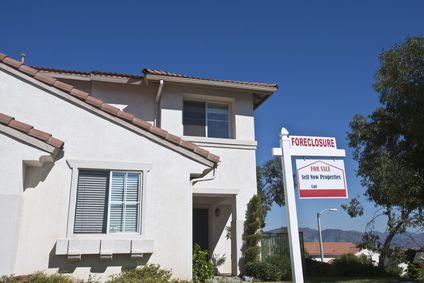
 A Pennsylvania appellate court has ruled that the federal Fair Debt Collection Practices Act (FDCPA) extends to foreclosure lawsuits
Plaintiff Dale K. filed a unfair debt collection lawsuit alleging that a law firm, on behalf of his mortgage lender, Bank of America, violated the FDCPA by listing in a foreclosure lawsuit fees that had not been incurred as “due and owing.” Dale also maintained that the law firm violated the FDCPA by trying to collect fees not authorized in his mortgage agreement.
A lower court ruled against Dale, but on appeal the decision was reversed. The panel found that the disputed fees constituted “actionable misrepresentation.”
According to the unfair debt collection lawsuit, Dale refinanced his home in Coraopolis, Pa. in December 2006, executing a note for $245,600. Bank of America was the mortgage holder. Dale reportedly experienced a drop in income in June 2011 and failed to make his mortgage payments.
On Aug. 1, 2011, Bank of America sent Dale a notice of pre-foreclosure delinquency. As per Pennsylvania’s Housing Finance Agency Law, mortgage-holders are required to notify consumers that the bank is considering foreclosure.
The notice must include an itemized breakdown of the total amount past due as of the date of the notice and inform the homeowner that he is entitled to 30 days, plus three additional days for mailing, to meet with a consumer credit counseling agency to attempt to resolve the delinquency.
Dale alleges his notification was improper by attempting to collect three months payment when, at the date of mailing, he was only two months in arrears, and by misrepresenting the time within which Dale had to meet with a credit agency as 30 days, instead of 33 days.
Over a year later, in September 2012, Udren Law Offices, on behalf of Bank of America, filed a verified foreclosure lawsuit against Dale in the Court of Common Pleas of Allegheny County, Pennsylvania. Included in that lawsuit was an itemized list of the total debt.
Dale’s FDCPA lawsuit alleges that the $1,650 in attorneys’ fees, $325 in title report fees, and $75 in property inspection fees — for a total of $2,050 — were not actually incurred as of July 12, two months before the foreclosure action was filed on September 13.
The appellate panel found that Dale’s rights were in fact violated under the FDCPA for including fees that he had not yet incurred. It is well-established in the Third Circuit that the FDCPA covers attorneys engaged in debt collection litigation, according to the panel’s decision.
“Nowhere does the FDCPA exclude foreclosure actions from its reach,” the panel wrote in its decision. “On the contrary, foreclosure meets the broad definition of ‘debt collection’ under the FDCPA. We conclude that a communication cannot be uniquely exempted from the FDCPA because it is a formal pleading or, in particular, a complaint.”
Federal law prohibits debt collectors from making false statements and engaging in deceptive practices, attempting to collect debts that have expired or are not owed (such as those discharged in bankruptcy or debts previously settled), making improper reports to credit reporting agencies and contacting third parties, such as family members or employers, in an effort to collect the debt.
If a debt collector is found to have violated the FDCPA, the debtor is entitled to receive $1,000 in statutory damages, plus any actual damages that they have suffered.
Join a Free Unfair Debt Collection Class Action Lawsuit Investigation
If a lender or debt collector engaged in unfair debt collection practices, you may have a legal claim and could be owed compensation for violations of the Fair Debt Collection Practices Act (FDCPA).
DISCLAIMER: Debt collection itself is not illegal. However, debt collection firms collecting on consumer debts must adhere to the FDCPA. Even though debt attorneys are investigating these companies, their debt collection practices may be legal.
ATTORNEY ADVERTISING
Top Class Actions is a Proud Member of the American Bar Association
LEGAL INFORMATION IS NOT LEGAL ADVICE
Top Class Actions Legal Statement
©2008 – 2026 Top Class Actions® LLC
Various Trademarks held by their respective owners
This website is not intended for viewing or usage by European Union citizens.

FACTA lawsuit investigation: Check your paper receipts for credit card privacy violations
November 6, 2026 | Legal News