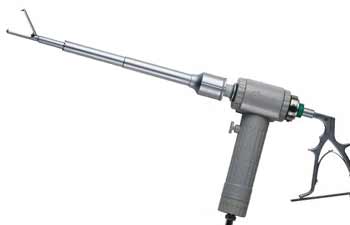
 The U.S. Food and Drug Administration (FDA) advisory panel gave vocal support last Friday to increasing the restrictions of power morcellator surgical tools used in laparoscopic surgeries and increasing the use of safer surgical alternatives.
This FDA announcement comes on the heels of several morcellator cancer class action lawsuits against manufacturers like Johnson & Johnson.
A power morcellator is a surgical tool that, since its FDA approval in 1991, has been commonly used in surgeries to remove large tissues masses with minimal invasiveness. During a laparoscopic surgery, a morcellator instrument is used to drill a small hole into the surgical area and remove the infected or target bodily tissue.
Until recently, a morcellator was used frequently in laparoscopic surgeries, including myomectomy (removal of fibroids), hysterectomy (removal of the uterus), oophorectomy (removal of the ovaries), and salpingectomy (removal of fallopian tubes).
According to remarks made by the Obstetrics and Gynecology Devices Advisory Committee to FDA officials, new studies have demonstrated the newly assessed risk of using laparoscopic morcellators when removing benign fibroids, which according to several sources, can dislodge and disseminate malignant tissue and allegedly worsen a patient’s risk for tumor and cancer.
In light of these remarks, the FDA is considering reclassifying morcellator tools in a more restrictive category and quite possibly adding the highest level of product warning issued by the FDA, the black box warning.
In a recent Medscape report, Dr. Amy J. Reed, MD, PhD, who was present at the two day meeting between Obstetrics and Gynecology Devices Advisory Committee and the FDA, stated her support for the banning of power morcellation surgical tools.
According to the Medscape news article, “Dr. Reed, whose case of tumor upstaging after LPM was the first to be filed with the FDA, in December 2013, and who subsequently received wide media attention, noted that morcellation also interferes with pathological diagnosis of uterine tissue and may lead to misdiagnosis. ‘Morcellation is bad medicine[.]’”
In the future, Johnson & Johnson and other power morcellator manufacturers may face an increasing number of class action lawsuits by patients who have allegedly suffered damage and/or developed cancer or tumors as a result of the morcellator.
Dangers Associated with Power Morcellators
Morcellation has become a common practice during surgical procedures in the United States medical community, but in recent years, the exact nature and risk of morcellation has become increasingly apparent.
There have been various medical reports cataloging how in surgeries using power morcellators, there is always a risk of damaging surrounding organs during laparoscopic surgery, including the uterus, bowels, bladder, pancreas, and the spleen.
There have also been a slew of reports linking the use of power morcellators with the increased spread of cancerous cells in post-surgery patients. This additional health concern may suggest that in the future, other surgical alternatives to laparoscopic surgery will become more common.
Since the FDA issued a public notice in April detailing the increased risk of cancers when using power morecellators during surgery, many doctors and hospitals have discontinued using power morcellators in favor of sager surgical alternatives.
As a result of this notice and other studies, many patients, who allegedly developed cancer after having a surgery using a power morcellator, have filed mocellator cancer class action lawsuits.
ATTORNEY ADVERTISING
Top Class Actions is a Proud Member of the American Bar Association
LEGAL INFORMATION IS NOT LEGAL ADVICE
Top Class Actions Legal Statement
©2008 – 2026 Top Class Actions® LLC
Various Trademarks held by their respective owners
This website is not intended for viewing or usage by European Union citizens.
Get Help – It’s Free
Join a Free Morcellation Cancer Class Action Lawsuit Investigation
If you or a loved one were diagnosed with cancer in the uterus, pelvis or abdomen within two years of undergoing surgery for a myomectomy (removal of fibroids), hysterectomy (removal of the uterus), oophorectomy (removal of the ovaries), or salpingectomy (removal of fallopian tubes), you may have a legal claim. See if you qualify by filling out the short form below.
An attorney will contact you if you qualify to discuss the details of your potential case at no charge to you.
Oops! We could not locate your form.