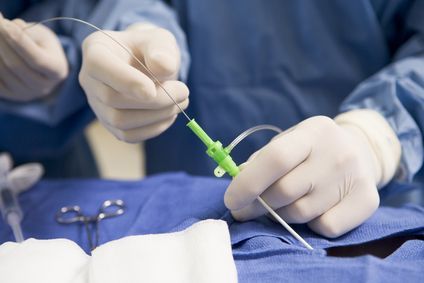
Power morcellators were created to be a less invasive way of performing a hysterectomy or similar surgeries. However, although recovery time may be shorter than the traditional method, many women have claimed that they developed uterine cancer after undergoing a hysterectomy with a power morcellator. Although many power morcellator lawsuits have been filed, one complaint has allegedly reached a settlement.
Plaintiff Scott B. filed the power morcellator lawsuit against manufacturer Lina following the alleged wrongful death of his wife. The decedent, Donna B., had undiagnosed leiomyoscarcoma in her body. When she underwent surgery with the morcellator, the cancer was spread throughout her body causing her premature death, claimed the power morcellator lawsuit.
Scott B.’s power morcellator lawsuit was originally filed in March 2014, just one month before the FDA issued a warning about the risks of power morcellator cancer. Following the announcement, more power morcellator lawsuits were filed by women who had previously undiagnosed uterine cancer spread throughout their body because of use of the new surgical tool.
The Lina power morcellator lawsuit was scheduled for trial in November 2015, but the settlement preempted the date. The terms of settlement have not been disclosed.
Power Morcellators
Power morcellators were marketed as being a safer, less invasive method of performing hysterectomy and myomectomy procedures. Hundreds of women have also used this tool to have their uterine fibroids removed. The device enters the body through a small insertion made in the abdomen, cuts up the tissue that is going to be removed and then removes the tissue through that same incision.
However, many women have undiagnosed sarcoma in their uterine fibroids or uterus. While on its own it could have been contained and potentially more easily treated later, the power morcellator causes the sarcoma to leave the uterus, or worse cuts it up, where it spreads throughout the body.
The FDA warning released in 2014 stated that one in every 350 women undergoing a hysterectomy with a power morcellator may have undiagnosed sarcoma. The risk of power morcellator cancer has caused many medical professionals to stop using power morcellators for hysterectomy procedures.
Women may choose to file a power morcellator lawsuit against the maker of the power morcellator, claiming that they failed to warn against potentially deadly power morcellator cancer.
There has been a movement to consolidate the power morcellator lawsuits that have already been filed in the U.S. District of Kansas. Arguments for or against power morcellator lawsuit consolidation is expected to take place in October.
Power morcellator lawsuits can help plaintiffs win compensation for medical costs, pain and suffering, loss of consortium (loss of intimacy with a spouse) if applicable, and more. Wrongful death lawsuits may also be filed if, like Scott, your spouse or loved one died from power morcellator induced cancer.
Do YOU have a legal claim? Fill out the form on this page now for a free, immediate, and confidential case evaluation. The morcellation cancer attorneys who work with Top Class Actions will contact you if you qualify to let you know if an individual lawsuit or class action lawsuit is best for you. [In general, morcellator cancer lawsuits are filed individually by each plaintiff and are not class actions.] Hurry — statutes of limitations may apply.
ATTORNEY ADVERTISING
Top Class Actions is a Proud Member of the American Bar Association
LEGAL INFORMATION IS NOT LEGAL ADVICE
Top Class Actions Legal Statement
©2008 – 2026 Top Class Actions® LLC
Various Trademarks held by their respective owners
This website is not intended for viewing or usage by European Union citizens.
Get Help – It’s Free
Join a Free Morcellation Cancer Class Action Lawsuit Investigation
If you or a loved one were diagnosed with cancer in the uterus, pelvis or abdomen within two years of undergoing surgery for a myomectomy (removal of fibroids), hysterectomy (removal of the uterus), oophorectomy (removal of the ovaries), or salpingectomy (removal of fallopian tubes), you may have a legal claim. See if you qualify by filling out the short form below.
An attorney will contact you if you qualify to discuss the details of your potential case at no charge to you.
Oops! We could not locate your form.