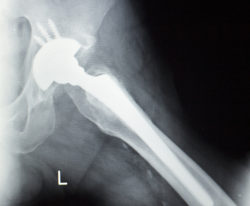
 Many Stryker hip replacement surgeries completed since 2001 could include components that are part of a Stryker metal-on-metal hip implant recall.
Earlier this year, Stryker Orthopedics issued a voluntary recall of its hip implant heads, specifically the LFIT V40 femoral heads. The joint where the metal stem and the V40 femoral head meet can cause corrosion, releasing metal debris into the body.
The recalled V40 devices were manufactured from 2001 through 2011. All of the products in the Stryker metal-on-metal hip implant recall have either been implanted or had expired, so it’s expected that none have to be removed from hospitals’ or suppliers’ inventories.
Stryker is no stranger to troublesome hip implants.
The Stryker Rejuvenate and ABG II Modular hip implant systems caused metal poisoning, also known as metallosis, because of a problem with the stem and femoral head connection.
Microscopic particles of metal were being shaved off the parts as they rubbed together within the body, causing cobalt and chromium to leach into patients’ systems.
The V40 femoral head allegedly also can cause the similar release of these metals into the body.
As the metals enter surrounding tissue, the damage progresses to necrosis (tissue death) that causes pain and inflammation. The only way to stop metallosis is to complete revision surgery.
The Stryker metal-on-metal hip implant recall also points to possible taper lock failure, which means the device fails at the point it connects with the femoral stem. There are indications that the stem is too small to properly secure the head, leading to the need for revision surgery.
The recalled part was used in conjunction with other Stryker products, including the Accolade TMZF, Hfx, Citation, LASST, Accolade II, Anato, Secur-Fit Advanced, and LSP76.
Some doctors conduct surgery using hip implant parts made by different manufacturers. Depending upon a patient’s specific needs, a surgeon might use interchangeable components made by different companies.
Indications Your Implant is Part of Stryker Metal-on-Metal Hip Implant Recall
When the metal-on-metal parts erode and cause metallosis, the effects are gradual. A patient who has received a Stryker hip replacement surgery that includes the V40 femoral head might experience the following:
- User annoyance
- Loss of mobility
- Pain
- Inflammation
- Local tissue reaction, swelling
- Dislocation
- Joint instability
- Loosened implant, resulting in pain
- Difficulty walking or standing
- Leg length difference
- Bone fracture around the implant
- Chromium and cobalt poisoning
- Noise coming from the implant
The health journal Orthopedics published a 2012 study in that determined 95 percent of patients needed revision surgery within three years if their original metal-on-metal hip replacement surgery failed.
If you have received hip implant surgery using components included in the Stryker metal-on-metal hip implant recall, you could be eligible for compensation through a defective hip implant lawsuit.
Do YOU have a legal claim? Fill out the form on this page now for a free, immediate, and confidential case evaluation. The hip implant attorneys who work with Top Class Actions will contact you if you qualify to let you know if an individual lawsuit or class action lawsuit is best for you. [In general, metal hip implant lawsuits are filed individually by each plaintiff and are not class actions.] Hurry — statutes of limitations may apply.
ATTORNEY ADVERTISING
Top Class Actions is a Proud Member of the American Bar Association
LEGAL INFORMATION IS NOT LEGAL ADVICE
Top Class Actions Legal Statement
©2008 – 2026 Top Class Actions® LLC
Various Trademarks held by their respective owners
This website is not intended for viewing or usage by European Union citizens.
Get Help – It’s Free
Join a Free Stryker Metal Hip Replacement Class Action Lawsuit Investigation
An attorney will contact you if you qualify to discuss the details of your potential case at no charge to you.
Please Note: If you want to participate in this investigation, it is imperative that you reply to the law firm if they call or email you. Failing to do so may result in you not getting signed up as a client, if you qualify, or getting you dropped as a client.
Email any problems with this form to [email protected].
Oops! We could not locate your form.