 A federal judge has reversed his decision to allow a class action lawsuit against Uber Technologies Inc. to move forward, saying that out-of-state drivers cannot make allegations under California law.
U.S. District Judge Edward Chen wrote that “the court now concludes that its earlier holding was in error, and that the California statutes involved in this action do no apply extra-territorially.”
Judge Chen cited the California Supreme Court from a 2011 decision, in which it stated that “‘we presume the Legislature did not intend a statute to be ‘operative, with respect to occurrences outside the state.'”
He goes on to explain that “the Court’s prior order rested on a fundamental mis-reading of” Gravquick A/S v. Trimble Nav. Int’l Ltd., a decision by Ninth Circuit court of appeals.
“The court in Gravquick did not hold that California choice of law provision can overcome the presumption against extraterritorial applications of California law,” Chen explained.
“Instead, the court recognized that parties agreement to apply California law must yield in those circumstances where the law in question contains ‘geographical limitations,'” he added.
U.S. District Judge Vincent Chhabria of the Northern District of California had also ruled that those who work out-of-state exclusively cannot claim violations under laws in the Golden Gate State.
“Even if the choice of law provision were intended to confer upon out-of-state drivers a cause of action for violation of California’s wage and hour laws, it could not do so,” Judge Chhabria wrote. “An employee cannot create by contract a cause of action that California law does not provide.”
The plaintiffs in the the Uber class action lawsuit filed in 2013 are from California, Georgia, and Washington. They are taxicab drivers “who have participated in the Uber service . . . that gives consumers the ability to hail participating car service driver[s] ‘on demand’ using their mobile phone.”
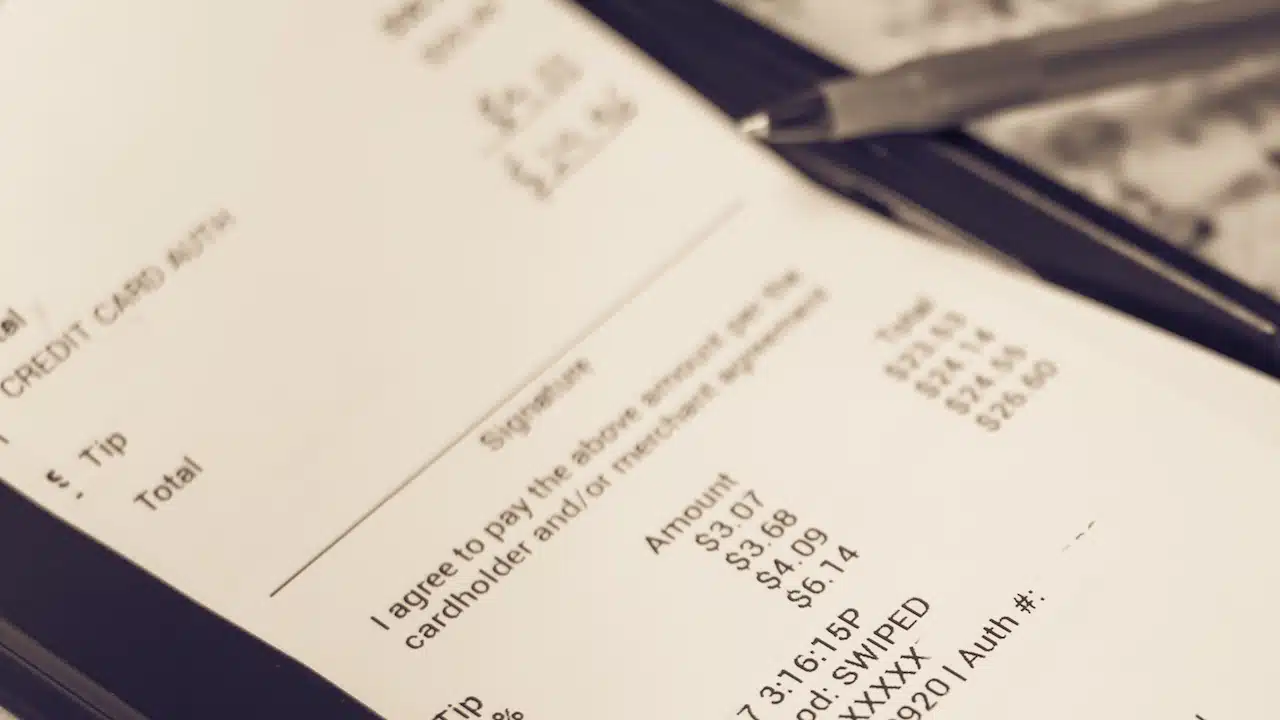
According to the drivers who filed the class action lawsuit, “Uber advertises on its website (and in its marketing materials) that a gratuity is included in the total cost of the car service and the customer does not need to provide a tip to the driver.”
However, the plaintiffs claim that they do not receive the entire gratuity that Uber charges.
“This failure to provide the full amount of the gratuity, plaintiffs allege, violates various California statutes and common law principles,” Judge Chen explained in his summary of the Uber drivers class action lawsuit.
Uber tried to have the class action lawsuit dismissed in 2013, but Chen denied the motion to dismiss in a December 2013 decision because at the time he had said that it was okay for out-of-state drivers to join the class action lawsuit because Uber states in its licensing agreement that any disputes would be addressed under California law.
Uber had filed another motion to dismiss with Judge Chen in late August, in which the company argued against the specific allegations which included tortious interference with prospective economic advantage, breach of implied-in-fact contract, and unlawful and fraudulent business practices.
The plaintiffs are represented by Shannon Liss-Riordan of Lichten & Liss-Riordan PC and Monique Olivier of Duckworth Peters Lebowitz Olivier LLP.
The Uber Driver Gratuity Class Action Lawsuit is O’Connor, et al. v. Uber Technologies Inc., et al., Case No. 3:13-cv-03826, in the U.S. District Court for the Northern District of California.
ATTORNEY ADVERTISING
Top Class Actions is a Proud Member of the American Bar Association
LEGAL INFORMATION IS NOT LEGAL ADVICE
Top Class Actions Legal Statement
©2008 – 2026 Top Class Actions® LLC
Various Trademarks held by their respective owners
This website is not intended for viewing or usage by European Union citizens.