
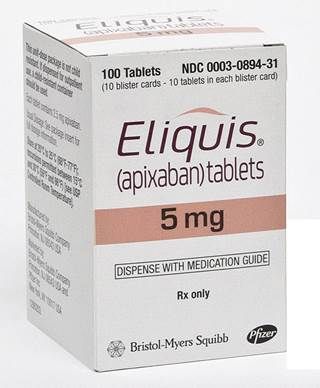
 Recently, anticoagulants (blood thinners) such as Pradaxa and Xarelto have made headlines as the basis of lawsuits brought by individuals who claim to have suffered internal bleeding caused by these allegedly dangerous drugs. Another blood thinner, Eliquis (apixaban), is also known to carry a high risk of internal bleeding which could prove fatal to patients.
Eliquis Side Effects
Eliquis (apixaban) was approved in 2012 to help prevent blood clots in the veins after a hip or knee replacement surgery. Most people who have these surgeries are less active for a period of weeks or even months while they recover. This can cause blood flow to slow down, which increases the risk of a blood clot.
Eliquis may also be prescribed to prevent stroke and blood clots in patients with atrial fibrillation, or a-fib, which is a type of abnormal heart rhythm. With atrial fibrillation, part of the heart beats irregularly, which increases the risk of blood clots forming, leading to a stroke.
Additionally, the blood thinner was later approved to help prevent deep vein thrombosis and pulmonary embolism. Made by Pfizer and Bristol-Myers Squibb, Eliquis is one of a new generation of anticoagulants called direct thrombin inhibitors, along with Xarelto and Pradaxa. Like Xarelto and Pradaxa, Eliquis has been aggressively marketed as a superior alternative to warfarin (Coumadin), an older blood thinner, because they require less patient monitoring and dietary restrictions.
However, the truth is that all blood thinners pose a risk of internal bleeding, and warfarin side effects can be stopped with Vitamin K. There is currently no reversal agent for Eliquis internal bleeding. In fact, in August 2014, a study published in the Journal of Neurosurgery put to words what many patients injured by Eliquis and other oral anticoagulants (OACs) are now stating in Eliquis lawsuits: “Despite their convenience, efficacy and lower (brain bleed) risk, a major limitation of the targeted OACs is that there is currently no specific antidote for any of the agents.”
Eliquis Lawsuits
When patients take a prescribed medication, they do so with the trust that the drug will help their condition and protect their health, and also with the trust that the drug will not cause additional harm to them. Unfortunately, many Eliquis patients who suffered internal bleeding and people who lost a loved one to Eliquis internal bleeding claim that this trust was violated when they were not properly warned about Eliquis side effects.
Plaintiffs in these cases contend that Pfizer and Bristol-Meyers Squibb failed to adequately warn doctors and patients that there is no antidote to reverse the blood-thinning effects of Eliquis once bleeding begins. In an Eliquis internal bleeding lawsuit, plaintiffs may pursue compensation for medical bills, pain and suffering, and other damages.
Do YOU have a legal claim? Fill out the form on this page now for a free, immediate, and confidential case evaluation. The Eliquis attorneys who work with Top Class Actions will contact you if you qualify to let you know if an individual lawsuit or Eliquis class action lawsuit is best for you. [In general, Eliquis lawsuits are filed individually by each plaintiff and are not class actions.] Hurry — statutes of limitations may apply.
Get Help – It’s Free
Join a Free Eliquis Class Action Lawsuit Investigation
If you or a loved one took Eliquis (apixaban) and suffered injuries such as uncontrollable internal bleeding, gastrointestinal bleeding, hemorrhaging, kidney bleeding or death, you may have a legal claim. See if you qualify by filling out the short form below.
An attorney will contact you if you qualify to discuss the details of your potential case at no charge to you.
Oops! We could not locate your form.
ATTORNEY ADVERTISING
Top Class Actions is a Proud Member of the American Bar Association
LEGAL INFORMATION IS NOT LEGAL ADVICE
Top Class Actions Legal Statement
©2008 – 2026 Top Class Actions® LLC
Various Trademarks held by their respective owners
This website is not intended for viewing or usage by European Union citizens.












One thought on Eliquis May Pose Serious Risk of Irreversible Internal Bleeding