

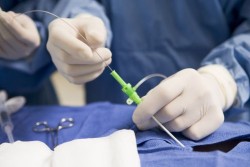
 Power morcellators have been around for over 20 years and have become one of the most well known surgical tools for laparoscopic surgeries.
Women especially enjoy their minimally invasive techniques for delicate gynecological procedures, however, just as many women have reportedly developed morcellator cancer soon after using the device.
While power morcellators can be used for a variety of surgeries, one of the most popular uses is uterine fibroid removal.
The tiny rotating blades at the end of the surgical tool are effective in cutting uterine fibroids into manageable portions which are then suctioned out through a small tube. The small tube is inserted into the patient’s abdomen, in which a laparoscopic incision is made to allow entry.
For years, power morcellators have been advertised as providing a safe and convenient method for women scheduled to undergo uterine fibroid, with hospital recovery time.
However by 2014, the FDA had begun warning patients and surgeons against using power morcellators due to the risk of morcellator cancer.
The agency stated that there was a significant risk of women developing uterine cancer soon after the fibroids are removed, due to previously undiscovered cancer cells being suddenly released into the body.
The FDA estimates one out 350 women are at risk for potential morcellator cancer, due to undiagnosed uterine cancer cells.
Overview of Power Morcellator Cancer
Uterine cancer occurs when the cells in the uterus begin to grow and multiply unusually fast, eventually forming into malignant masses. Approximately 95% of uterine cancer cases occur from the inner lining of the uterus, the endometrium, and is curable in its early stages.
However the remaining 5% of uterine cancer cases occur in the myometrium, or the outer muscular lining of the uterus, and are considerably more aggressive.
Either form can be devastating for women when diagnosed, but can be deadly if the power morcellator spreads the cancerous tissue throughout the abdomen.
When the power morcellators cut up the fibroids, malignant cancer cells can potentially be released when they were previously at a dormant or beginning stage. This allows the cancer to develop quickly, which reduces the patient’s chances of long term survival significantly.
There is currently no diagnostic method available to confirm if a woman has uterine cancer cells before undergoing the surgery, but preventative methods have been developed to make the morcellation procedures safer.
For example, surgical bags can be implemented during the power morcellator procedure to catch the debris produced during the surgery.
Even with this development, a number of hospitals and gynecological surgeons no longer offer the option of this surgical tool in order to prevent morcellator cancer. At this point, the FDA has not banned the device as power morcellators still serve as an important option for women who still may wish to use the device.
Even though the information regarding morcellator cancer is now widely available, this was not the case for many years and has come as unpleasant revelation for many women.
Furthermore, different power morcellator manufacturing companies allegedly knew of the risks but did not disclose this information to patients.
Women who have developed morcellator cancer after using this surgical tool, may be able to file legal action. Potential claimants should contact a specialized lawyer to determine their eligibly for a power morcellator lawsuit.
Do YOU have a legal claim? Fill out the form on this page now for a free, immediate, and confidential case evaluation. The morcellation cancer attorneys who work with Top Class Actions will contact you if you qualify to let you know if an individual lawsuit or class action lawsuit is best for you. [In general, morcellator cancer lawsuits are filed individually by each plaintiff and are not class actions.] Hurry — statutes of limitations may apply.
ATTORNEY ADVERTISING
Top Class Actions is a Proud Member of the American Bar Association
LEGAL INFORMATION IS NOT LEGAL ADVICE
Top Class Actions Legal Statement
©2008 – 2026 Top Class Actions® LLC
Various Trademarks held by their respective owners
This website is not intended for viewing or usage by European Union citizens.
Get Help – It’s Free
Join a Free Morcellation Cancer Class Action Lawsuit Investigation
If you or a loved one were diagnosed with cancer in the uterus, pelvis or abdomen within two years of undergoing surgery for a myomectomy (removal of fibroids), hysterectomy (removal of the uterus), oophorectomy (removal of the ovaries), or salpingectomy (removal of fallopian tubes), you may have a legal claim. See if you qualify by filling out the short form below.
An attorney will contact you if you qualify to discuss the details of your potential case at no charge to you.
Please Note: If you want to participate in this investigation, it is imperative that you reply to the law firm if they call or email you. Failing to do so may result in you not getting signed up as a client, if you qualify, or getting you dropped as a client.
Oops! We could not locate your form.











