

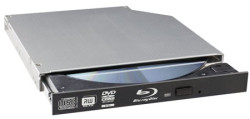
 A federal judge refused to certify two optical disk drive monopoly class actions, arguing that the plaintiffs were not representative of the Class and their expert witness failed to adequately demonstrate how damages would be assessed on a class-wide basis.
There are two separate optical disk class action lawsuits, one regarding direct purchasers of optical disk drives, such as CD and DVD players, and indirect purchasers, such as those who bought a computer. U.S. District Judge Richard Seeborg focused most of the effort in the order examining the direct purchaser Class.
He noted that “even though the named plaintiffs have strong evidence of bid-rigging involving some of the largest purchasers, they are struggling to find a way to prove that list prices paid by ordinary purchasers such as themselves were fixed.” While the expert witness for the plaintiff did ascertain that a statistical model indicated an average overcharge of about 11.48 percent, Seeborg was unconvinced.
While that may be true, “nothing in the regression methodology attempts to show that all or nearly all purchasers were overcharged in that amount, or any amount at all.” If that is the case, then the certification fails as a matter of typicality, in that there is no way for the damages to accurately model each Class Member’s economic loss.
That provides a larger problem for the indirect purchasers, in most cases business IT departments and consumers. According to Judge Seeborg, “their burden is two-fold. Not only must they show that all or nearly all of the original direct purchasers of ODDs bought at inflated prices, they must also show those overcharges were passed through all stages of the distribution chain.”
Since the direct purchaser Class failed, they already faced an uphill battle. They also would face problems when it comes to the supply chain. Judge Seeborg noted “they must find a way to account for the decision-making of a variety of resellers and manufacturers.” However, without such a method, there is no way for them to do so.
Other plaintiffs have had more luck, however. NEC and Hitachi-LG settled their class action lawsuits for $6 million and $26 million, respectively. Hitachi-LG also provided information to help plaintiffs in the other optical disk drive class action lawsuits.
The proposed direct purchaser Class is represented by attorneys from Saveri & Saveri Inc., the Alioto Law Firm, Berman DeValerio, Cotchett Pitre & McCarthy LLP, Hausfeld LLP and Kaplan Fox & Kilsheimer LLP, among others.
The Optical Disk Drive Monopoly Class Action Lawsuits are centralized as In re: Optical Disk Drive Products Antitrust Litigation, Case No. 10-md-02143, in the U.S. District Court for the Northern District of California.
UPDATE July 25, 2016: A judge approved a $124.5 million settlement for indirect purchasers in 23 states and the District of Columbia. To file a claim, visit https://www.DollarsForDiskDrives.com/TCA.
ATTORNEY ADVERTISING
Top Class Actions is a Proud Member of the American Bar Association
LEGAL INFORMATION IS NOT LEGAL ADVICE
Top Class Actions Legal Statement
©2008 – 2026 Top Class Actions® LLC
Various Trademarks held by their respective owners
This website is not intended for viewing or usage by European Union citizens.














2 thoughts onCert. Denied in Optical Disk Drive Monopoly Class Action Lawsuits
UPDATE July 25, 2016: A judge approved a $124.5 million settlement for indirect purchasers in 23 states and the District of Columbia. Register here for updates: http://www.opticaldiskdriveantitrust.com/
So basically because distributors took advantage of too many consumers, it is almost impossible to hold them accountable for price gouging, because being held accountable would cause them too much of a debt? It is simple math really the over charge is the difference between the MSRP which does include the expected normal profit margin, and the actual higher sale price. Once how much they cheated people is noted per drive, you find total number of drives sold that is how many claims should be available and then you simply allow that number to be approximately what is available on claims then you limit how many can be claimed with or without proof of purchase to a reasonable number allow public sign ups, and because of the monopoly existing on the sale it would be reasonable to expect the owners who cheated people to pay each claimant for over charges with a reasonable limit per person on claims. This is not as trivial as the article reads, just rich people dodging their responsibilities.