
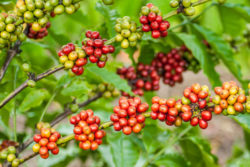
 Although consumers should be able to trust labeling that tells them they’re getting Blue Mountain coffee from Jamaica, this may not be true for some products.
Is it Real Jamaican Blue Mountain?
Jamaican Blue Mountain coffee is considered to be some of the best coffee in the world, characterized by a mild flavor and a lack of bitterness. It will come as no surprise that this high quality is associated with a steep price tag.
However, Blue Mountain coffee may be subject to misleading labeling. It is estimated that 80 percent of consumers end up purchasing fake Blue Mountain coffee due to the prevalence of mislabeled products. These consumers may be influenced by representations that certain products are genuine Blue Mountain coffee from Jamaica, and based on that representation, they may be willing to pay a significant amount of money.
To combat the fraud surrounding the Blue Mountain coffee beans, the Coffee Industry Board created a special seal for the product. If a coffee product is authentic Blue Mountain coffee from Jamaica, it has the privilege of carrying the seal. This signals to customers that the products can be trusted.
Kona Coffee May Have the Same Problem
Consumer advocates say a similar problem affects coffee marketed as genuine Hawaiian Kona.
Kona coffee is the name of a certain type of coffee cultivated on the slopes of Haulalai and Mauna Loa, two mountains found in the North and South Kona Districts of Hawaii’s Big Island. The coffee beans cultivated in these areas are considered to be of the highest quality due to the area’s favorable weather and mineral rich volcanic soil.
The rarity and quality of authentic Kona coffee makes the products very expensive and difficult to come by in their pure form. That means consumers are willing to pay more for coffee labeled as Kona, and suppliers may be willing to exploit that demand.
In some cases, retailers may sell “Kona blends” opposed to pure, unadulterated Kona beans. These blends are required by Hawaii law to contain at least 10 percent Kona beans, but the other 90 percent of the blend may be made up of other kinds of coffee.
If companies include the 10 percent of Kona beans, they are allowed to label their products as “Kona blends”. However, this allegedly takes utilizes the reputation of Kona Coffee from Hawaii without actually providing the expected quality of product. This harms both consumers, who are deceived into paying a higher price, and bean growers, who are affected by flooding the market with fraudulent Kona beans.
Which retailers may be selling fake Hawaiian Kona and Jamaican Blue Mountain Coffee?
Lawyers are investigating numerous retailers to see if they may have sold fake coffee beans. Coffee drinkers who relied on misleading labeling but didn’t get what they paid for may be in a position to take legal action against the companies that misled them.
Retailers under scrutiny include: Amazon, Walmart, Costco, Albertsons Companies Inc., BCC Assets LLC, Bed Bath & Beyond Inc., Cameron’s Coffee and Distribution Co., Copper Mood Coffee LLC, CostPlus/WorldMarket, Gold Coffee Roasters Inc., Hawaiian Isles Kona Coffee Ltd. LLC, Java LLC, MNS LLC, Marmaxx Operating Corp., Mulvadi Corp., Pacific Coffee Inc., Safeway Inc., Sprouts Farmers Inc., and The Kroger Co.
Join a Free Kona Coffee & Blue Mountain Coffee Investigation
If you purchased Kona Coffee or Blue Mountain Coffee because you believed it was from the Kona District of Hawaii or the Blue Mountains of Jamaica, you may qualify to join this Kona coffee false advertising class action lawsuit investigation.
ATTORNEY ADVERTISING
Top Class Actions is a Proud Member of the American Bar Association
LEGAL INFORMATION IS NOT LEGAL ADVICE
Top Class Actions Legal Statement
©2008 – 2026 Top Class Actions® LLC
Various Trademarks held by their respective owners
This website is not intended for viewing or usage by European Union citizens.




39 thoughts onIs All Blue Mountain Coffee from Jamaica?
add me
Add me in
Add me please
Please add me.
Add me
Add me
please add me
Please add me.