
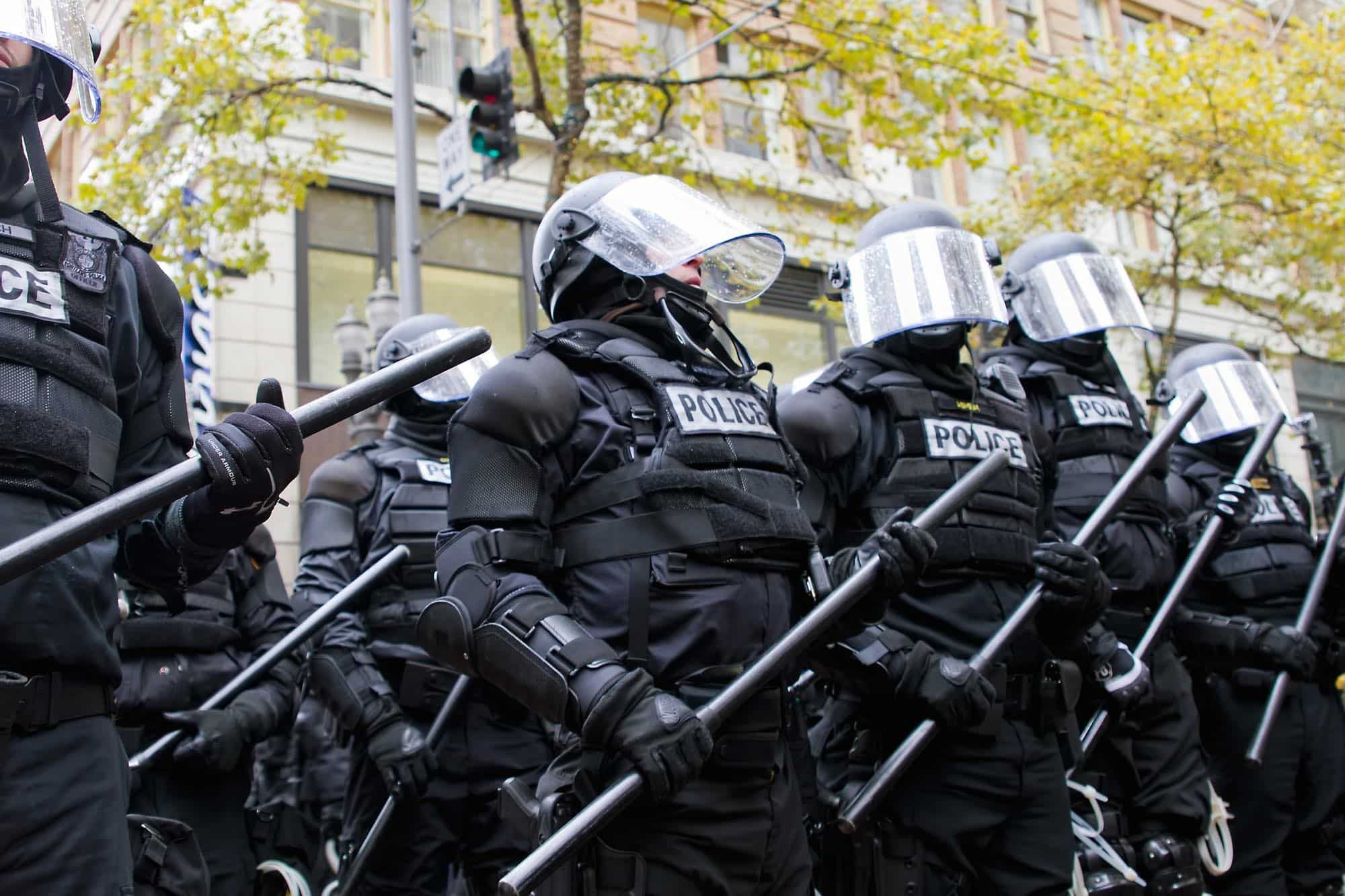
A journalist blinded while covering the George Floyd protests in Minneapolis is suing the city and law enforcement for alleged police brutality.
Plaintiff Linda Tirado, a freelance journalist from Tennessee, says an officer shot her in the face with a foam projectile, causing her to lose her left eye, as well as potentially damaging the hearing in her left ear.
Tirado was covering the protests the night of May 29, the complaint states. She stepped in front of police brutality protesters and aimed her camera at officers to take a picture of the police line.
Police ignored the press credential Tirado was wearing around her neck and marked her with a ballistic tracking round, the lawsuit states. Police then shot her in her face with foam bullets.
“With blood dripping down her face, she cried out repeatedly, ‘I’m press!’, but the police ignored her,” the complaint states. “By the time protestors got her to the hospital, Ms. Tirado’s left eye was permanently destroyed.”
May 29 was also the first night of the city’s curfew that had been imposed to try to discourage the protests. However, all news media was exempt from this curfew.
Tirado’s lawsuit claims that just before the curfew began, officers fired tear gas, unprovoked, in the direction of the nonviolent, peaceful protesters without warnings, dispersal orders or demands that protesters go home.
Because of her past experience covering protests, Tirado made sure her press credentials were visibly displayed, secured her respirator and goggles and began to take photos.
Tirado felt an impact on the left side of her face, the George Floyd protest lawsuit says. As she felt blood pouring down her face and her eyes burned from tear gas, she realized her goggles had been shattered by a projectile.
The plaintiff says no law enforcement tried to help her or attempt to provide aid; instead, after several minutes, protesters helped her get to the on-site medics.
She was then transported to a local hospital, where she went into surgery, the George Floyd protest lawsuit says. When she woke up, doctors informed her she was permanently blind in her left eye.
In addition to her injuries, Triado is concerned about the long-term effects of this incident on her children. Her oldest child, 9, is autistic and will need therapy to work through the trauma associated with Tirado’s injury, the lawsuit states. Her younger child, 7, may also need therapy.
Following the death of George Floyd at the hands of law enforcement in Minneapolis, protests against police brutality have broken out in cities around the country and the rest of the world. Multiple reports of journalists being injured and perhaps intentionally targeted have surfaced in several cities.
Tirado’s lawsuit claims the City of Minneapolis and police officials were aware of these pre-existing violations of journalists’ constitutional rights before Tirado was blinded, “in time to have prevented it from happening through appropriate supervision and training.”
The ACLU has filed a class action lawsuit against the city of Minneapolis and several officials with the Minneapolis Police Department and Department of Public Safety over alleged police brutality against journalists.
In that case, members of the press claim to have been targeted and attacked by officers during the protests against police brutality.
Triado’s lawsuit outlines Minneapolis’ history of violations against members of the press.
On Aug. 17, 2017, the Minnesota State Patrol allegedly jailed and charged two journalists covering the Philando Castile shooting. “On information and belief,” Triado claims, “no troopers were investigated or disciplined for these unlawful arrests.”
In April 2002, Minneapolis police officers allegedly used excessive force against journalists after a victory celebration turned into a riot near the University of Minnesota campus. The editor of the Minnesota Daily said one of the newspaper’s reporters and three of its photographers were “singled out and sprayed with a chemical irritant, and that Minneapolis police hit them with batons,” the lawsuit states.
Again, Tirado claims, no officers were investigated or disciplined for police brutality as a result of this incident.

Tirado says the defendants “flagrantly disregard their own rules and regulations to further their violations against members of the press.”
The Minneapolis Police Department’s use of force policy specifically states “[o]fficers shall not deploy 40mm launchers for crowd management purposes.”
The policy also advises that in the event 40mm launchers are deployed, officers should avoid the head “unless deadly force is justified, officers should avoid the delivery of 40mm impact projectiles[.]”
With her lawsuit, Tirado demands a jury trial and is seeking a declaration that the defendants’ use of excessive force prevented media coverage of the George Floyd protests and law enforcements’ response violated the First and Fourth Amendments.
She is also asking for compensation for her injuries, punitive damages, prejudgment interest, attorneys’ fees and costs and any other relief deemed proper by the court.
Have you witnessed police brutality while attending a protest? Tell us your experience in the comments section below.
Tirado is represented by Clifford M. Greene, John M. Baker and Davida S. McGhee of Greene Espel PLLP, and Tai-Heng Cheng, Margaret Hope Allen, Patricia Butler and Kierstin S. Fowler of Sidley Austin LLP.
The Minneapolis Police Excessive Force Lawsuit is Linda Tirado v. City of Minneapolis, et al., Case No. 0:20-cv-01338-JRT-ECW, in the U.S. District Court for the District of Minnesota.
ATTORNEY ADVERTISING
Top Class Actions is a Proud Member of the American Bar Association
LEGAL INFORMATION IS NOT LEGAL ADVICE
Top Class Actions Legal Statement
©2008 – 2026 Top Class Actions® LLC
Various Trademarks held by their respective owners
This website is not intended for viewing or usage by European Union citizens.












2 thoughts onJournalist Blinded by Police During George Floyd Protest Files Lawsuit
I don’t like reading about these various suit tied to rioting/looting/burning. Don’t think this site should promote such suits. If it doesn’t stop promoting them, I’ll stop looking at this site. I’d guess other think the same way.
People who really protest, and follow the law, and get permits are not injured. But the so-called protesters are just mom said if they try to intimidate and attack the police and burn peoples businesses and homes down.
I am also sort of shocked that his so-called freelance journalist whatever that is, has a nine-year-old autistic child at home and another seven-year-old at home and she goes out instead and gets in the police face snapping her camera and flashes at them and then she expects The police do not defend themselves by shooting her with rubber bullets?
The police should file charges against her for interfering with police actions during a riot and a mob. You don’t get off Scott free because you’ve got press credentials dangling around your neck. She was part of the mob and everybody knows it.