N.C. Couple Files Vaginal Mesh Lawsuit Against Boston Scientific
By Courtney Coren
 A North Carolina woman along with her husband has filed a vaginal mesh lawsuit against Boston Scientific Corporation after suffering painful complications from the mesh implant and undergoing revision surgery.
Lisa Miller had vaginal mesh implant surgery performed on Jul. 31, 2008. The mesh implant that was used was the Obtryx Transobturator Mid-Urethral Sling System (Lot No. OML7061302) made by Boston Scientific.
After the implant surgery, Mrs. Miller began experiencing pelvic pain. Her symptoms also included bleeding, recurrent urinary tract and other infections, vaginal dryness and pain during sexual intercourse. There was also something protruding from her vagina.
She did not associate her symptoms with the vaginal mesh implant until she saw an ad on TV explaining “the defective nature of Pelvic Mesh Products and the potential symptoms of such defects and recognized that she was suffering from similar problems.”
She made an appointment with her doctor to have the transvaginal mesh implant examined, and he found that the mesh was eroding and protruding into her vaginal wall.
On Nov. 19, 2012, Mrs. Miller had revision surgery to have the Obtryx mesh implant removed. However, due to the erosion caused by the implant, the doctor could not remove all of the mesh implant.
Following the revision surgery, the damage caused by the mesh implant resulted in painful adverse side effects for the North Carolina woman.
Mrs. Miller claims in her lawsuit filed with her husband Fred Miller on Oct. 21. that the mesh implant complications were the direct result of the faulty Obtryx Transobturator Sling System.
“Lisa Miller sustained and continues to suffer economic damages (including medical and hospital expenses), severe and permanent injuries, pain, suffering and emotional distress,” the vaginal mesh lawsuit states.
The lawsuit alleges that “Boston Scientific was on notice that the mesh implant was defective, but Defendant failed to disclose this information to Plaintiffs, her physician, the healthcare community or the public.”
Therefore, “Lisa Miller and her physicians were unaware, and could not have reasonably known or have learned through reasonable diligence that Plaintiff Lisa Miller had been exposed to the risks identified in this Complaint, and those were risks were the direct and proximate result of Defendant’s acts, omissions, and misrepresentations.”
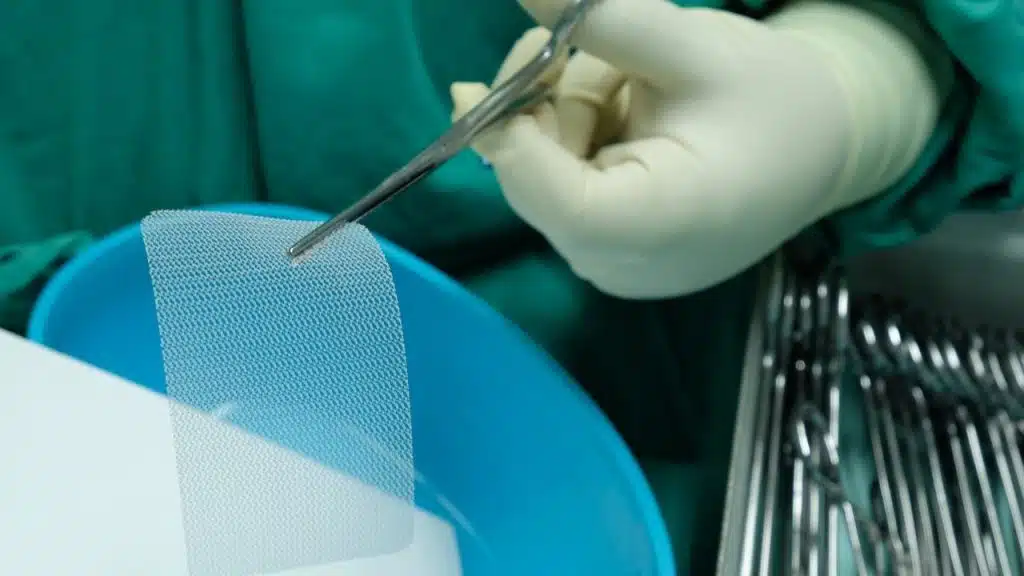
The Obtryx Transobturator Mid-Urethral Sling System is made with monofilament polypropylene mesh and/or collagen. “Despite claims that polypropylene is inert, the scientific evidence shows that this material as implanted in Plaintiff Lisa Miller is biologically incompatible with human tissue and promotes a negative immune response in a large subset of the population,” Miller’s complaint states.
Those who react negatively to the substance experience a variety of symptoms including hyper-inflammation, chronic pain, and fibrotic reaction. The collagen in the mesh products can cause adverse tissue reactions leading to infections, chronic pain and functional disabilities.
Vaginal mesh products are used to repair damage from pelvic organ prolapse (POP) and stress urinary incontinence (SUI).
Pelvic organ prolopse develops in women due to child birth, a hysterectomy, or menopause. During childbirth the muscles and ligaments are stretched and can tear causing them to become too weak to hold the organs in place. As a result, the bottom of the uterus, the floor of the bladder, the rectum or all three can sag and even protrude into the vagina. Vaginal mesh slings are implanted to hold the organs in place where the muscles have failed.
Stress urinary incontinence is the leaking of urine when there is a “stress event,” which can include coughing, sneezing, laughing or lifting–in other words, anything that puts pressure on the the abdomen. This occurs as the result of weakened pelvic muscles and connective tissue that support the bladder and urethra. There can be several causes of SUI including pregnancy, childbirth, menopause, obesity, smoking, and previous pelvic surgery. Over 15 million Americans suffer from SUI.
The U.S. Food and Drug Administration (FDA) issued a Safety Communication on July 13, 2011 saying that “serious complications associated with surgical mesh for transvaginal repair of POP are not rare.
“Mesh contraction (shrinkage) is a previously unidentified risk of transvaginal POP repair with mesh that has been reported in the published scientific literature and in adverse event reports to the FDA,” the report continued. “Reports in the literature associated with mesh contraction with vaginal shortening, vaginal tightening and vaginal pain.”
The FDA concluded that “it is not clear that transvaginal POP repair with mesh is more effective than traditional non-mesh repair in all patients with POP and it may expose patients to greater risk.”
Boston Scientific “omitted and downplayed the risks, dangers, defects, and disadvantages of the Products, and advertised, promoted, marketed, sold and distributed the Products as safe medical devices when Defendant knew or should have known that the Products were not safe for their intended purposes.”
Mr. and Mrs. Miller’s charges against Boston Scientific include negligence, defective design, manufacturing defect, failure to warn, breach of warranty, fraudulent misrepresentation and concealment, and loss of consortium for Mr. Miller, meaning that Mrs. Miller’s injuries have negatively impacted his relationship with his wife.
The North Carolina couple is asking Boston Scientific to pay economic and punitive damages.
The Mesh Implant lawsuit is Lisa Ann Miller, et al. v. Boston Scientific Corporation, Case No. 5:13-cv-00737-D, in the U.S. District Court for the Eastern District of North Carolina, Western Division.
If you or someone you know has had similar side effects or symptoms caused by a transvaginal mesh, bladder sling or vagina sling implant, legal options are available to you. Learn more and get a free legal consultation regarding a claim’s eligibility at the Vaginal Mesh Sling Class Action Lawsuit Investigation. Experienced legal professionals have access to medical experts to assess whether or not a vaginal mesh implant may be playing a role in your current pain, discomfort or other serious side effects, so act now.
All medical device, dangerous drug and medical class action and lawsuit news updates are listed in the Drug and Medical Device section of Top Class Actions.
Top Class Actions Legal Statement