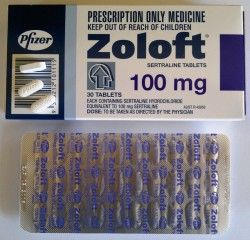
 A young Oklahoma woman and her mother recently filed a lawsuit against Pfizer, alleging that the manufacturer’s antidepressant Zoloft caused the young woman’s birth defects.
Zoloft belongs to a class of drugs called “selective serotonin reuptake inhibitors,” also known as SSRIs. Zoloft was first approved by the United States Food and Drug Administration (FDA) in 1991, for the treatment of major depression. Katelyn P.’s mother ingested Zoloft while she was pregnant with Katelyn, and Katelyn was subsequently born with congenital birth defects and other conditions that were allegedly caused by her mother’s use of Zoloft while pregnant. Katelyn and her mother claim that Zoloft (sertraline hydrochloride) is a defective drug, and that Pfizer should be held accountable for neglecting to include proper warnings about the dangers of its usage.
Katelyn’s mother took Zoloft in the amounts and for the period of time prescribed by her physician. Her mother claims that, had she been adequately warned of the potential Zoloft birth defects, she would not have taken the drug.
Zoloft Birth Defect Lawsuit
Katelyn and her mother claim that Pfizer either knew or should have known that Zoloft crosses the placenta, and could pose risks to the fetus. Katelyn’s Zoloft lawsuit argues that, prior to her mother’s pregnancy, the defendants had the “knowledge, the means, and the duty to provide the medical community and the consuming public with a stronger warning regarding the association between Zoloft and congenital birth defects, heart defects, PPHN, and other related conditions.”
Further, Katelyn and her mother claim that knowing of the potentially dangerous Zoloft birth defects, Pfizer intentionally concealed, suppressed, and failed to disclose the drug’s dangers.
The FDA stance on drug warnings is that drug companies, including the defendant Pfizer, are required to issue stronger warnings whenever there is reasonable evidence of a link between a serious risk and their drug. The regulations state specifically that the link between the potential risk and the drug need not be proven before issuing the new warnings.
Katelyn is suing Pfizer on several counts, including failure to warn, defective design, negligence, fraud and misrepresentation, and breach of express and implied warranties. Katelyn is seeking compensatory and punitive damages.
If you have been negatively affected by side effects of Zoloft, including Zoloft birth defects, contact an attorney to determine whether you may be able to file a lawsuit.
The Zoloft Birth Defect Lawsuit is Katelyn P. v. Pfizer, Case No. 2:15-cv-02018-CMR, in the U.S. District Court for the Eastern District of Pennsylvania.
Do YOU have a legal claim? Fill out the form on this page now for a free, immediate, and confidential case evaluation. The birth defect attorneys who work with Top Class Actions will contact you if you qualify to let you know if an individual lawsuit or class action lawsuit is best for you. [In general, birth defect lawsuits are filed individually by each plaintiff and are not class actions.] Hurry — statutes of limitations may apply.
ATTORNEY ADVERTISING
Top Class Actions is a Proud Member of the American Bar Association
LEGAL INFORMATION IS NOT LEGAL ADVICE
Top Class Actions Legal Statement
©2008 – 2026 Top Class Actions® LLC
Various Trademarks held by their respective owners
This website is not intended for viewing or usage by European Union citizens.
Get Help – It’s Free
Join a Free Birth Defect Lawsuit Investigation
If you or a loved one took Zoloft, Prozac, Lexapro, Effexor, Celexa, Cymbalta or Depakote during pregnancy and gave birth to a child with a congenital defect, you may have a legal claim against the drug’s manufacturer. Find out if you qualify to pursue compensation for your child’s medical expenses, pain and suffering, and other damages by filling out the form below now.
An attorney will contact you if you qualify to discuss the details of your potential case.
Oops! We could not locate your form.