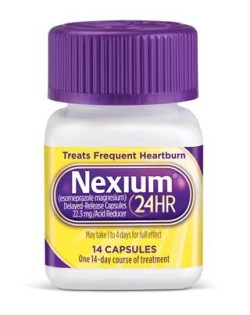
 A growing body of medical studies suggest users of one of the most popular stomach acid remedies may be at risk for Nexium acute interstitial nephritis.
Nexium, also known by its generic name esomeprazole, is used to reduce the amount of acid produced in the stomach.
It was first approved by the FDA in 2001. It now comes in both prescription strength and a lower dosage for over-the-counter sale.
Nexium is one of a group of medications known as PPIs. These drugs are used to treat conditions like gastroesophageal reflux disease and peptic ulcer disease – conditions in which an excess of stomach acid can cause problems.
PPIs have been enormously popular. Annual sales of Nexium from 2010 through 2014 varied from $5.9 billion to $6.5 billion per year.
But despite the popularity of PPIs, a growing body of research has linked these drugs to several potentially serious side effects.
In particular, PPIs have been implicated as the possible cause of kidney conditions like acute interstitial nephritis.
Symptoms of Nexium Acute Interstitial Nephritis
Nexium acute interstitial nephritis
is an inflammation of the tubules within the kidneys and the tissue that surrounds them.
One of the earliest symptoms of this condition may be an abnormal amount of urine production – either more or less than normal.
As Nexium acute interstitial nephritis advances, it can produce signs of kidney failure. In the most severe cases, it can cause kidney damage that may be irreversible.
These most severe cases may require dialysis or a kidney transplant for treatment.
Litigants Say Manufacturers Knew About Risks for Years
The link between PPIs and kidney problems has been publicized in several recent scientific studies. But according to the plaintiffs behind Nexium side effects lawsuits, the drugs’ manufacturers were aware of the link for decades.
As early as 1992, one case study suggested that a PPI was the cause behind a case of acute interstitial nephritis. That study documented the experience of a 74-year-old woman who developed acute interstitial nephritis after taking a PPI for about six months.
When her doctors discontinued her PPI, her kidney problems began to resolve. They returned when she resumed taking her PPI to relieve symptoms of her esophageal ulceration. Her kidneys began to heal again after she discontinued her PPI a second time.
Another collection of case studies published in the Indian Journal of Nephrology in 2013 noted that acute interstitial nephritis is becoming increasingly recognized as a complication of PPIs like Nexium.
The FDA got on the case in December 2014, when it issued a warning about the risk of kidney problems associated with PPIs. With that warning, the agency announced it would require the labeling for PPIs to carry an additional warning about that risk, including the possibility of Nexium acute interstitial nephritis.
Then in April 2015, another study revealed a higher instance of acute interstitial nephritis among patients who used PPIs.
Researchers reported that users of Nexium or other PPIs were three times as likely as those who did not use those drugs to develop acute interstitial nephritis. The same users may also face more than double the risk of acute kidney injury, the researchers reported.
In general, acid reflux medication lawsuits are filed individually by each plaintiff and are not class actions.
Do YOU have a legal claim? Fill out the form on this page now for a free, immediate, and confidential case evaluation. The attorneys who work with Top Class Actions will contact you if you qualify to let you know if an individual lawsuit or class action lawsuit is best for you. Hurry — statutes of limitations may apply.
ATTORNEY ADVERTISING
Top Class Actions is a Proud Member of the American Bar Association
LEGAL INFORMATION IS NOT LEGAL ADVICE
Top Class Actions Legal Statement
©2008 – 2026 Top Class Actions® LLC
Various Trademarks held by their respective owners
This website is not intended for viewing or usage by European Union citizens.
Get Help – It’s Free
Join a Free Nexium, Prilosec Kidney Failure Class Action Lawsuit Investigation
If you or a loved one suffered acid reflux medication complications, you may have a legal claim. See if you qualify to pursue compensation and join a free acid reflux medication class action lawsuit investigation by submitting your information for a free case evaluation.
An attorney will contact you if you qualify to discuss the details of your potential case.
Please Note: If you want to participate in this investigation, it is imperative that you reply to the law firm if they call or email you. Failing to do so may result in you not getting signed up as a client, if you qualify, or getting you dropped as a client.
Oops! We could not locate your form.