
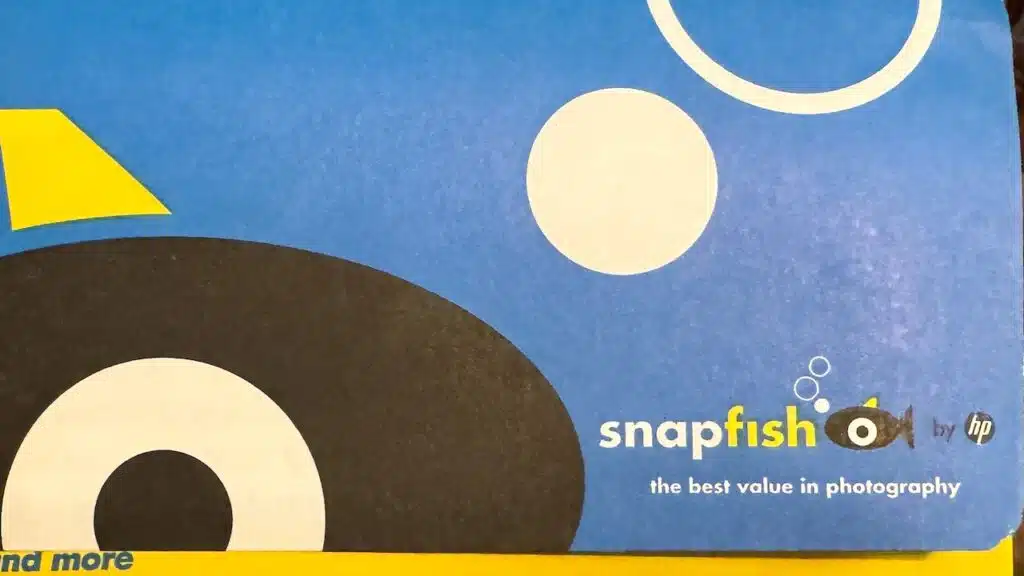
Snapfish class action lawsuit overview:
- Who: A consumer filed a class action lawsuit against Snapfish LLC.
- Why: The plaintiff alleges Snapfish misleads customers with fake discounts on its website.
- Where: The Snapfish class action lawsuit was filed in California federal court.
A new class action lawsuit alleges Snapfish misleads customers with fake discounts on its website.
Plaintiff Sean Haratyk filed the class action lawsuit against Snapfish on Feb. 27 in California federal court, alleging violations of state and federal consumer laws.
According to the complaint, Snapfish, which sells photos, cards, prints and other home decor online, lists all its products as having continuous fake discounts ranging from 30% to 70% off. The company also offers sitewide discounts on its products.
However, these discounts are allegedly false, as the products are never actually sold at the higher strikethrough reference prices listed next to the “sale” price, Haratyk says.
The class action lawsuit claims that Snapfish’s pricing practices violate California’s False Advertising Law, which prohibits businesses from making statements they know or should know to be untrue or misleading.
The law specifically prohibits advertising a former price unless it was the prevailing market price within the previous three months, Haratyk explains.
Snapfish allegedly misleads customers into believing they are receiving a discount on their purchase, as the former or prevailing market price listed next to the sales price is not actually the price at which the product was sold in the previous three months.
Snapfish pricing scheme allegedly causes customers to overpay for products
Haratyk alleges that Snapfish’s deceptive pricing scheme misled hundreds of thousands of customers across the United States, resulting in millions of dollars in sales at misrepresented discounts.
The plaintiff claims he relied on Snapfish’s misrepresentations when purchasing prints and large prints at discounted prices, believing he was receiving a 65% discount from the original total price.
In reality, the products were not sold at the former or regular price listed on the website within the previous three months, making the discount false, he says.
The Snapfish class action lawsuit alleges that the company’s conduct violated California’s Unfair Competition Law, False Advertising Law and Consumers Legal Remedies Act.
Haratyk is looking to represent anyone in California who bought one or more items from Snapfish.com at a represented discount from a higher reference price. He is suing for damages and injunctive relief.
In similar allegations, e-commerce company Quince is also accused of misleading consumers with a false reference pricing scheme that offers products at significant discounts.
What do you think of the allegations made in this Snapfish class action lawsuit? Let us know in the comments.
The plaintiff is represented by Doris Cheng of Walkup, Melodia, Kelly & Schoenberger and Tyler B. Ewigleben and Winston S. Hudson of Jennings & Earley PLLC.
The Snapfish class action lawsuit is Haratyk v. Snapfish LLC, Case No. 5:26-cv-01753, in the U.S. District Court for the Northern District of California.
Don’t Miss Out!
Check out our list of Class Action Lawsuits and Class Action Settlements you may qualify to join!
Read About More Class Action Lawsuits & Class Action Settlements:
- TransUnion class action certified over alleged failure to block fraudulent credit report items
- Hyundai recalls over 94K Genesis models due to potential fuel leak risk
- Hanes class action lawsuit over Washington marketing emails can proceed
- Johnson & Johnson accused at LA trial of hiding asbestos risks in baby powder for decades

Cellphone wrong-number robocalls could be worth $500-$1,500 per violation of the federal TCPA
October 22, 2026 | TCPA Class Action Lawsuits








4 thoughts onSnapfish class action claims products were ‘always on sale’ at misleading discounts
Yes many of the online photo companies do this. I have used Snapfish and purchased gifts and prints thinking it was a special but really could get at that price most of the time.
I use Snapfish, for Xmas presents fir the last 6 yrs. I noticed a change of prices in December of 2025.
Yes use all time
Yes snapfish always advertised “sales”