

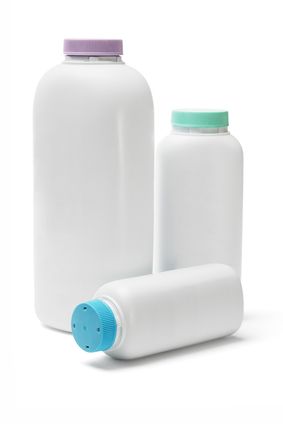
 For decades, people have been using talcum powder, also known as baby powder, as a personal hygiene aid – useful in helping to absorb moisture and to protect the skin from becoming rough and worn.
Recent studies and lawsuits have brought the dangers of this popular household product to light, specifically the risks of developing ovarian cancer.
There have been warnings issued by individual doctors for years regarding the dangers of talcum powder/baby powder and the potential for women who use it over long periods of time to develop ovarian cancer.
These warnings have had a lot to do with talc, the mineral used to make talcum powder, contains potentially dangerous substances such as magnesium and silicon. There have also been claims that talcum powder has contained asbestos. These substances are ground into a fine powder and packaged before being sold to consumers.
The belief regarding the connection between baby powder and ovarian canceris that, over time, particles of talcum powder can enter a woman’s body through the vagina and settle in her ovaries. This belief stems from analyses that have been done on cancerous tissues. These cancerous cells contained particles of talc according to the doctors who studied them.
Baby Powder and Ovarian Cancer Allegations
The manufacturing of powder using talc continues to go unchecked, and Johnson & Johnson, the leading manufacturer of baby powder, has failed to do anything about these findings for the last 40 years. A follow up study in 1992 found that the use of talc containing products for feminine hygiene increases the risk of getting ovarian cancer threefold. By 2010, Harvard University researchers concluded that talc is in fact carcinogenic to humans.
Despite the lack of information provided by the FDA and Johnson & Johnson regarding the use of talc, the first lawsuit claiming talc was responsible for ovarian cancer was won in 2013. The baby powder lawsuit was filed in 2006, after the woman suffering from ovarian cancer reported using Shower to Shower talcum powder for the previous 30 years.
This baby powder cancer lawsuit set the stage for future lawsuits by women suffering from ovarian cancer who used talcum based products in their personal hygiene routine.
Corn starch based formulas are known to be safe, but Johnson & Johnson continue to make Shower to Shower and baby powders using talc.
Baby Powder Cancer Lawsuits
Talc, in its purest form, has been the target of lawsuits filed against baby powder manufacturers such as Johnson & Johnson. Most of these baby powder lawsuits contend that talc is a dangerous substance responsible for causing cancer.
If you have been diagnosed with ovarian cancer and believe that it could be due to the use of baby powder products, you should take steps to protect yourself. You can start by contacting a baby powder cancer lawyer to see if you are eligible to file a baby powder cancer lawsuit.
Do YOU have a legal claim? Fill out the form on this page now for a free, immediate, and confidential case evaluation. The attorneys who work with Top Class Actions will contact you if you qualify to let you know if an individual lawsuit or class action lawsuit is best for you. [In general, baby powder cancer lawsuits are filed individually by each plaintiff and are not class actions.] Hurry — statutes of limitations may apply.
ATTORNEY ADVERTISING
Top Class Actions is a Proud Member of the American Bar Association
LEGAL INFORMATION IS NOT LEGAL ADVICE
Top Class Actions Legal Statement
©2008 – 2026 Top Class Actions® LLC
Various Trademarks held by their respective owners
This website is not intended for viewing or usage by European Union citizens.
Get Help – It’s Free
Join a Free Baby Powder Cancer Class Action Lawsuit Investigation
If you used Johnson’s Baby Powder, Shower to Shower, or another talcum powder product and were diagnosed with ovarian cancer, you may have a legal claim. Family members of loved ones who died of ovarian cancer can also join. Submit your information now for a free case evaluation.
An attorney will contact you if you qualify to discuss the details of your potential case at no charge to you.











