

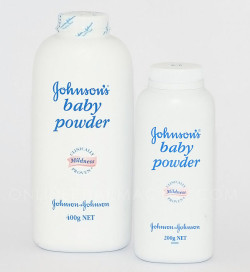
 Plaintiff Judith H. of Madison County, Ill., is suing Johnson & Johnson for the injuries she allegedly incurred from using their talcum powder products. After using the defendants’ baby powder and Shower-to-Shower powder, she allegedly developed the permanent injury of ovarian cancer.
Judith states that she had relied on these products for almost five decades for her personal hygiene purposes without knowing of the ovarian cancer risks associated with using talcum powder on the genital area. She filed this baby powder cancer lawsuit in the Madison County Circuit Court on Jan. 20, 2015, claiming that she had used the defendant’s talcum powder products from 1964 to 2013.
In her baby powder cancer lawsuit, Judith claims that Johnson & Johnson and the other defendants named in her suit had known about the possibility of ovarian cancer, but had opted not to warn her and other consumers of talc powder cancer. Judith’s lawyers state that Johnson & Johnson had the responsibility to warn her and other consumers about the risk of ovarian cancer, because these consumers were relying on the accuracy of the product’s label when purchasing the talcum powder product. Judith insists that she never would have used the talcum powder products, if she had known about the risk of ovarian cancer.
Along with Johnson & Johnson, other companies named as defendants in this case include: Imerys Talc America, Personal Care Products Council, Luzenac America Inc., and Walgreens. According to the plaintiff’s baby powder lawsuit, Imerys Talc America and Luzenac America are the talc mining companies that supply talc to Johnson & Johnson, and Walgreens was the store responsible for selling the products to the plaintiff. Judith’s lawyers state that Walgreens also had the responsibility of protecting their customers against ovarian cancer, but failed to do so by neglecting to provide no additional warnings.
While experts have suspected a link between talcum powder and ovarian cancer since the 1970s, it was not until recently that it has become a major healthcare concern. In Judith’s baby powder cancer lawsuit, several talcum powder studies were cited, which demonstrated the increased risk of ovarian cancer development after the use of talcum powder. For example in 1982, a baby powder cancer study found that women faced a 92 percent greater risk of ovarian cancer after using talcum powder.
Based on this early research and the recent health concerns, Judith reiterates her claim that the defendants knew about the risk these talcum powder products posed for their consumers, but had aggressively marketed the products regardless of the cancer risks. The allegations Judith is bringing against Johnson & Johnson and the other defendants in this ovarian cancer lawsuit include: negligence, failure to warn, breach of express warranty, breach of implied warranties, and civil conspiracy.
This Talcum Powder Ovarian Cancer Lawsuit is Case No. 12-L-84, in the Madison County Circuit Court.
Overview of Talcum Powder Ovarian Cancer Link
The recent concern of talcum powder’s possible correlation with ovarian cancer, stems from recent ovarian cancer studies. Most recently, a talcum powder study was published in June 2013 in the medical journal Cancer Prevention Research, where scientists from Brigham and Women’s Hospital had consolidated data from eight different research papers that involved approximately 2,000 women. The analysis of the data showed that women faced a 20 to 30 percent greater chance of ovarian cancer if they applied the powder to their genital area.
This announcement has come as quite a shock to medical experts and patients alike, as talcum powder has been used as reliable hygienic product for generations. In particular, women have used talcum powder as a feminine hygiene product on their genital area to reduce body odors. Experts explain that when the talcum powder is applied to the woman’s genital area, the talc particles seep into the woman’s bloodstream after they enter the body through the vagina.
Medical experts warn that these particles can stay inside the patient for up to eight years, with no initial signs of ovarian cancer. Oftentimes the ovarian cancer is diagnosed at a latent stage, which can permanently hinder the patient. As of now, women across the country are suing Johnson & Johnson for failing to protect them against ovarian cancer risks, when the company allegedly knew about it being a talcum powder side effect.
Do YOU have a legal claim? Fill out the form on this page now for a free, immediate, and confidential case evaluation. The attorneys who work with Top Class Actions will contact you if you qualify to let you know if an individual lawsuit or class action lawsuit is best for you. [In general, baby powder cancer lawsuits are filed individually by each plaintiff and are not class actions.] Hurry — statutes of limitations may apply.
ATTORNEY ADVERTISING
Top Class Actions is a Proud Member of the American Bar Association
LEGAL INFORMATION IS NOT LEGAL ADVICE
Top Class Actions Legal Statement
©2008 – 2026 Top Class Actions® LLC
Various Trademarks held by their respective owners
This website is not intended for viewing or usage by European Union citizens.
Get Help – It’s Free
Join a Free Baby Powder Cancer Class Action Lawsuit Investigation
If you used Johnson’s Baby Powder, Shower to Shower, or another talcum powder product and were diagnosed with ovarian cancer, you may have a legal claim. Family members of loved ones who died of ovarian cancer can also join. Submit your information now for a free case evaluation.
An attorney will contact you if you qualify to discuss the details of your potential case at no charge to you.











