

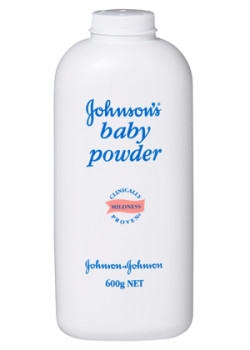
 A proposed Johnson’s baby powder cancer class action lawsuit was dismissed by a California federal judge, who ruled the plaintiff failed to allege specific misrepresentations made by Johnson & Johnson.
U.S. District Judge Troy L. Nunley said he dismissed plaintiff Mona E.’s proposed baby powder cancer class action lawsuit —which alleges she developed ovarian cancer after using Johnson’s Baby Powder for over 60 years for feminine hygiene purposes — finding that she could not support her claims that the baby powder product had been misrepresented as “safe” based solely on general statements pulled from the company’s website.
Judge Nunley states, “These statements lack sufficient specificity to substantiate an injury. Moreover, plaintiff does not specifically claim to have relied on these online statements at all when purchasing the baby powder and could not have relied on them in 1950 when she initially purchased the product.”
The judge also took issue with Mona’s claim that that J&J informed women that Johnson’s Baby Powder could be safely used on the genital area, because she allegedly did not identify specific statements to support her claim.
Mona’s Johnson’s baby powder class action lawsuit alleges that as early as 1982, Johnson & Johnson was aware that women who used the powder were at an increased risk of developing ovarian cancer, and despite this knowledge continued to promote Johnson’s baby powder for daily use.
Mona further alleges she paid a premium for Johnson’s Baby Powder. However, Judge Nunley pointed out that her decision to use the talc powder product for six decades shows that the plaintiff believed the J&J product was worth the price. He said: “Plaintiff received exactly what she paid for — the elimination of friction on the skin, the absorption of unwanted excess moisture, and the maintenance of freshness.”
The judge said he will allow the plaintiff to make an amended complaint for this Johnson’s Baby Powder class action lawsuit that must be filed within 30 days.
The Johnson’s Baby Powder Class Action Lawsuit is Case No. 2:14-cv-01051, in the U.S. District Court for the Eastern District of California.
History of Johnson Baby Powder Cancer
J&J began manufacturing and selling its talc powder product, Johnson’s Baby Powder, in 1893. In addition to making baby and adult skin feel soft and clean, Johnson’s baby powder has also been marketed as a safe product to mask odors in the female genital area.
In 1960, researchers began studying talc powder side effects, and found an increasing trend of ovarian cancer in correlation with talc powder use on the female genital area. Study after study demonstrated a strong link between the use of talc powder and a woman’s risk of developing ovarian cancer later in life.
In light of these studies, many female consumers like Mona have filed baby powder cancer lawsuits or have joined existing Johnson’s baby powder class action lawsuits.
Do YOU have a legal claim? Fill out the form on this page now for a free, immediate, and confidential case evaluation. The attorneys who work with Top Class Actions will contact you if you qualify to let you know if an individual lawsuit or class action lawsuit is best for you. [In general, baby powder cancer lawsuits are filed individually by each plaintiff and are not class actions.] Hurry — statutes of limitations may apply.
ATTORNEY ADVERTISING
Top Class Actions is a Proud Member of the American Bar Association
LEGAL INFORMATION IS NOT LEGAL ADVICE
Top Class Actions Legal Statement
©2008 – 2026 Top Class Actions® LLC
Various Trademarks held by their respective owners
This website is not intended for viewing or usage by European Union citizens.
Get Help – It’s Free
Join a Free Baby Powder Cancer Class Action Lawsuit Investigation
If you used Johnson’s Baby Powder, Shower to Shower, or another talcum powder product and were diagnosed with ovarian cancer, you may have a legal claim. Family members of loved ones who died of ovarian cancer can also join. Submit your information now for a free case evaluation.
An attorney will contact you if you qualify to discuss the details of your potential case at no charge to you.











