

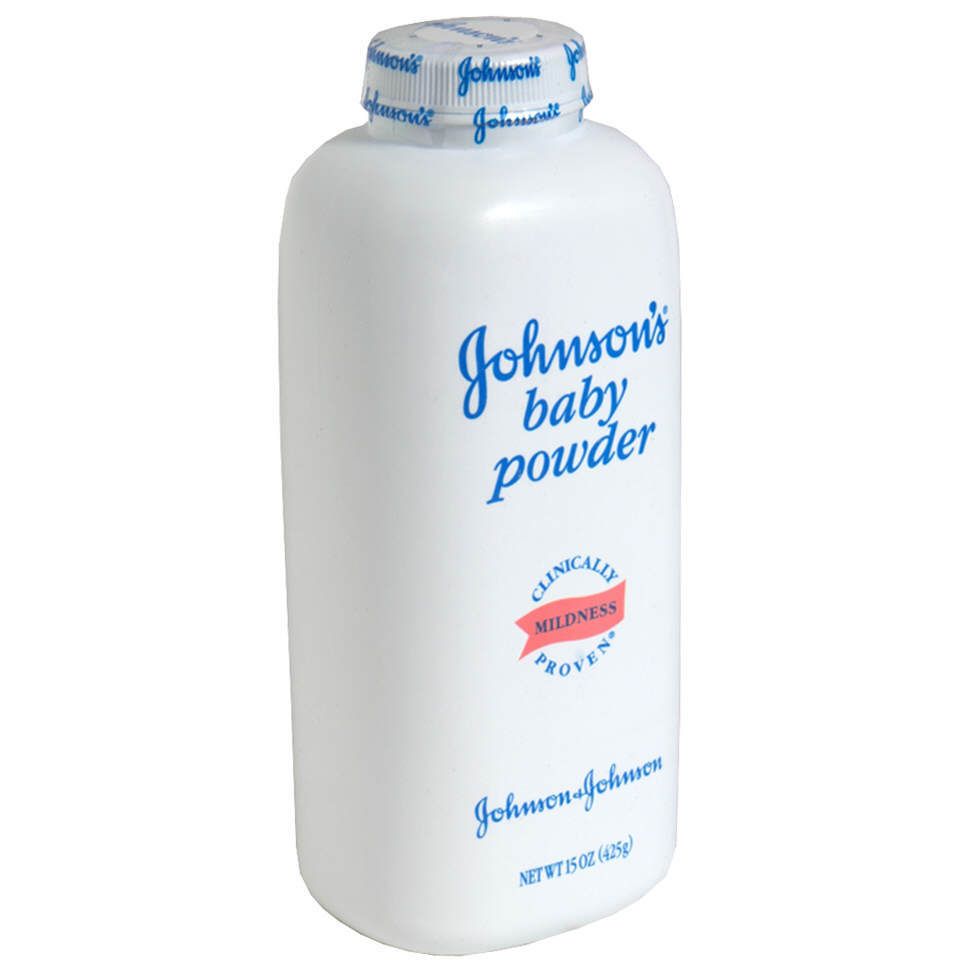
 A circuit court judge has allowed conspiracy claims to remain in a ongoing baby powder lawsuit in St. Louis County.
The baby powder lawsuit, filed by the husband of deceased professional ice skater and Missouri mother, Shawn B., alleges Johnson & Johnson purposefully concealed the risk of cancer linked to talcum powder from consumers, according to official court documents
The talcum powder lawsuit claims Shawn used talcum powder products such as Shower to Shower and Johnson’s Baby Powder for feminine hygiene purposes beginning in 1972. The plaintiff allegedly continued to use this talc powder until her death in January 2011, as a result of her three-year battle with ovarian cancer, a condition the baby powder cancer lawsuit claims was caused by various talcum powder products. Her husband Michael B. filed the lawsuit against Johnson & Johnson, Imerys Talc America, and other defendants, alleging concert of action and civil conspiracy.
Under the concert of action charge, Michael B. alleges that the pharmaceutical giant launched a task force with the express purpose of “pooling financial resources in an effort to collectively defend talc use at all costs – defend against claims that it was dangerous and to prevent regulation of any type over this industry.” The conspiracy claim alleges the defendants purposefully engaged in concealing baby powder ovarian cancer risk information from talcum powder users, which is a potentially illegal activity.
In a recent federal court ruling, U.S. District Judge Ronnie L. White dismissed the concert of action claim, but ruled that the conspiracy claims in this baby powder cancer lawsuit are valid. A jury trial is scheduled to begin on March 7, 2016, in Missouri federal court.
This Baby Powder Cancer Lawsuit is Case No. 4:2014cv00213, in the United States District Court, Eastern District of Missouri, Eastern Division.
Talcum Powder and Ovarian Cancer
The talcum powder lawsuit cites research dating back to the 1970s, including more than 20 studies conducted since 1982, which similarly indicate there is a strong link between baby powder and ovarian cancer. Researchers believe that talc powder particles can enter the female reproductive system through the vagina and migrate to the ovaries.
Talcum powder is most commonly used as a baby product to help prevent diaper rash and glides over the skin to eliminate friction and keep the skin cool. Yet, when Johnson & Johnson learned that many women were using the product as a body powder, the company began marketing to woman with other talc-based powders, including Shower-to-Shower.
Since 1982, approximately 22 studies have found evidence of a link between talcum powder and ovarian cancer; some evidence even emerged dating back to 1971. A 2013 baby powder cancer study published in the medical journal Cancer Prevention Research stated that women who used talcum body powder as a feminine hygiene product may face a 20% to 30% greater risk of ovarian cancer compared to those who do not apply talc.
Yet, Johnson & Johnson and other talc powder product manufacturers argued against the findings and managed to keep their dangerous products on store shelves without restriction or cancer warnings of any kind. Even after multiple petitions were made to the FDA to regulate talc, including one in 2008 led by the Cancer Prevention Coalition, all requests were denied or unacknowledged.
The American Cancer Society estimates that in 2014, about 21,980 new cases of ovarian cancer were diagnosed and 14,270 women will die of ovarian cancer in the United States alone. The exact number of these cases that are linked to talcum baby powder use is unknown, but studies found that out of approximately 8,500 women diagnosed with ovarian cancer, nearly a quarter of these women used baby powder after bathing or showering.
While these baby powder lawsuits are increasing public awareness of the link between talcum powder and ovarian cancer, the products still remain on store shelves without warnings.
Do YOU have a legal claim? Fill out the form on this page now for a free, immediate, and confidential case evaluation. The attorneys who work with Top Class Actions will contact you if you qualify to let you know if an individual lawsuit or class action lawsuit is best for you. [In general, baby powder cancer lawsuits are filed individually by each plaintiff and are not class actions.] Hurry — statutes of limitations may apply.
ATTORNEY ADVERTISING
Top Class Actions is a Proud Member of the American Bar Association
LEGAL INFORMATION IS NOT LEGAL ADVICE
Top Class Actions Legal Statement
©2008 – 2026 Top Class Actions® LLC
Various Trademarks held by their respective owners
This website is not intended for viewing or usage by European Union citizens.
Get Help – It’s Free
Join a Free Baby Powder Cancer Class Action Lawsuit Investigation
If you used Johnson’s Baby Powder, Shower to Shower, or another talcum powder product and were diagnosed with ovarian cancer, you may have a legal claim. Family members of loved ones who died of ovarian cancer can also join. Submit your information now for a free case evaluation.
An attorney will contact you if you qualify to discuss the details of your potential case at no charge to you.











