

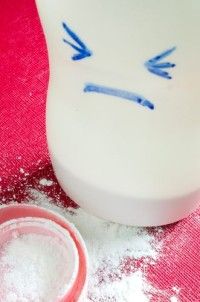
 When applied to the genital area, talcum powder particles can become trapped in a woman’s ovaries and potentially cause cancer. It has been an issue discussed in the medical community since at least the 1970s.
The risk is of particular concern because talcum powder has become a staple due to its absorbent properties. It is commonly used as part of a female hygienic routine.
The suspected correlation was raised in an article published in the 1971 issue of the British Journal of Obstetrics and Gynecology. The study detailed how researched found talcum powder particles inside the ovarian cancer victims.
Cancer Prevention Research in 2013 reported that women who used talcum powder faced a 2o%-30% increased risk of ovarian cancer. The study showed that talc particles can remain embedded in ovaries for up to eight years.
That has led many to compare talcum powder to asbestos. They both share the difficulty of diagnosing cancer in early stages because it can take so many years for the cancer to develop.
Talcum powder can remain in a woman’s ovaries for all those years before medical professionals could diagnose a problem. Talcum powder is officially listed as a “possible carcinogen” although studies have shown a clear connection between talcum powder and and a heightened risk of ovarian cancer.
Ovarian cancer is an aggressive cancer that affects as many as 10,000 women every year, with some experts suggesting many of the cases can be attributed to the use of talcum powder.
Overview of Talcum Powder Cancer Allegations
Despite the severity of this side effect, manufacturing companies have so far not included a warning on product labels. Many groups have requested that the warning labels be added.
The baby powder lawsuit alleged that Johnson & Johnson failed to warn women that the talcum powder found in Johnson’s Baby Powder and Shower to Shower could cause the development of ovarian cancer when used for feminine hygiene.
The big player in the talcum powder industry, Johnson & Johnson, has faced public pressure and lawsuits. The first baby powder cancer lawsuit went to trial in 2013 and hundreds more cases have since been filed alleging that talcum powder sold to consumers neglected to warn about the potential risk of ovarian cancer.
Do YOU have a legal claim? Fill out the form on this page now for a free, immediate, and confidential case evaluation. The attorneys who work with Top Class Actions will contact you if you qualify to let you know if an individual lawsuit or class action lawsuit is best for you. [In general, baby powder cancer lawsuits are filed individually by each plaintiff and are not class actions.] Hurry — statutes of limitations may apply.
ATTORNEY ADVERTISING
Top Class Actions is a Proud Member of the American Bar Association
LEGAL INFORMATION IS NOT LEGAL ADVICE
Top Class Actions Legal Statement
©2008 – 2026 Top Class Actions® LLC
Various Trademarks held by their respective owners
This website is not intended for viewing or usage by European Union citizens.
Get Help – It’s Free
Join a Free Baby Powder Cancer Class Action Lawsuit Investigation
If you used Johnson’s Baby Powder, Shower to Shower, or another talcum powder product and were diagnosed with ovarian cancer, you may have a legal claim. Family members of loved ones who died of ovarian cancer can also join. Submit your information now for a free case evaluation.
An attorney will contact you if you qualify to discuss the details of your potential case at no charge to you.











