

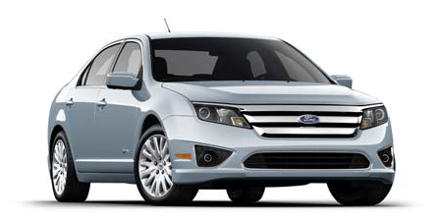
 Last week, a federal judge ruled to allow fraud and breach of warranty claims in the class action lawsuit alleging that Ford Motor Co. falsely represented the fuel economy of their Fusion and C-Max hybrid model vehicles.
The plaintiffs in the consolidated class action lawsuit alleged that Ford overstated fuel efficiency claims for its hybrid models, including the Fusion and C-Max vehicles.
In their class action lawsuits, the plaintiffs alleged that the hybrids generally get a maximum of only 37 miles per gallon or less; however, Ford allegedly advertised the gas mileage at much higher, even advertising that the vehicles could get from Los Angels to Law Vegas and back on one tank of gas. The plaintiffs allege that Ford hybrid owners and lessors relied heavily on Ford’s claim of better fuel economy when choosing to purchase or lease the cars.
Last week, U.S. District Judge Kenneth M. Karas ruled that claims of common law fraud and breach of express warranty were supported by the class action lawsuit. Judge Karas also retained claims that Ford exaggerated even the Environmental Protection Agency’s estimates of 47 miles per gallon.
“The court finds that plaintiffs’ other claims, namely those targeting specific ‘additional’ representations that go beyond those EPA estimates, state a claim under state consumer protection law, even under the strict requirements of Rule 9(b),” wrote the judge in his order. “Plaintiffs have sufficiently distinguished these additional representations from the mere use of EPA estimates in their papers,” he continued.
Judge Karas trimmed claims from the class action lawsuit concerning Ford’s use of the EPA’s fuel economy estimates in advertising. Judge Karas found that these claims were preempted by the Energy Policy and Conservation Act. Additionally, Judge Karas dismissed claims that the use of the EPA’s estimate was misleading because Ford included a disclaimer on all advertising that used the EPA estimate.
The class action claims under the Magnuson-Moss Warranty Act were trimmed by Judge Karas as well. The judge found that Ford’s claims about gas mileage in the ads did not establish an actionable warranty. Claims for unjust enrichment under state law were trimmed as well.
The Class Members are seeking reimbursement from the sales and leases of the hybrid vehicles. They also claim that the profits from the sale of the vehicles be disgorged by Ford.
The plaintiffs are represented by Paul Geller, Stuart Davidson, Mark Dearman and Sheri Coverman of Robbins Geller Rudman & Dowd LLP, Eric Gibbs, Geoffrey Munroe and David Stein of Girard Gibbs LLP, John A. Yanchunis and Rachel Soffin of Morgan & Morgan Complex Litigation Group, Richard McCune and Elaine Kusel of McCune Wright LLP, Jonathan Shub and Scott George of Seeger Weiss LLP, Stephen Jaffe, Mark Fistos and Seth Lehrman of Farmer Jaffe Weissing Edwards Fistos & Lehrman PL, Bruce Steckler and Mazin Sbaiti of Steckler Law LLP, and Cory Fein of Caddell & Chapman.
The Ford Fuel Efficiency Class Action Lawsuit is In re: Ford Fusion and C-Max Fuel Economy Litigation, Case No. 7:13-md-02450, in the U.S. District Court for the Southern District of New York.
ATTORNEY ADVERTISING
Top Class Actions is a Proud Member of the American Bar Association
LEGAL INFORMATION IS NOT LEGAL ADVICE
Top Class Actions Legal Statement
©2008 – 2026 Top Class Actions® LLC
Various Trademarks held by their respective owners
This website is not intended for viewing or usage by European Union citizens.

Harassing debt collector calls lawsuit investigation: Portfolio Recovery, Midland, LVNV, Transworld, CCS, I.C. System, Harris & Harris, Radius, NCB, Sequium
November 4, 2026 | Legal News










One thought on Efficiency Fraud Claims Survive in Ford Hybrid Class Action
That was November 2015. . . . .
Any current status (Nov. 2018)??