

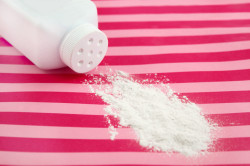
 Talc is a hydrous magnesium silicate, an inorganic material mined from the earth. There are talc mines throughout the United States. On the Mohs scale of mineral hardness, (one to 10, softest to hardest), talc is a one. It can be crushed into a white powder that is widely known as “talcum powder.” This powder has the ability to absorb moisture, absorb oils, absorb odor, serve as a lubricant and produce an astringent effect with human skin. These properties make talcum powder an important ingredient in many baby powders, foot powders, first aid powders and a variety of cosmetics.
Talc is the main ingredient in Johnson & Johnson’s baby powder. Around since 1893, it’s been a staple in people’s lives for over a century, and not just for use with children. It’s also used by many women as part of their feminine hygiene routine. But a federal baby powder cancer class action lawsuit claims that Johnsons baby powder, when used in the genital area, is unsafe.
Talc and Ovarian Cancer Risk
The baby powder cancer lawsuit was filed by plaintiffs Denis Mikhlin and Erin Hoffmann. Their complaint states that “Johnson’s Baby Powder is not safe. … As numerous studies have confirmed, Johnson’s Baby Powder leads to a significant increased risk of ovarian cancer. Women who used talc-based powders to powder their genital area have a 33 percent increased risk of ovarian cancer compared to those women who never used the powders.”
The plaintiffs claim that Johnson & Johnson does not tell its customers about the dangers associated with the talc-based product, and that the only existing warnings are to “avoid getting it into the eyes, avoid inhalation and to use it only externally.”
Mikhlin and Hoffman claim that Johnson & Johnson has known about the cancer risk for more than 30 years. The baby powder class action lawsuit alleges the defendants have been aware of scientific evidence linking the use of talcum powder in feminine hygiene to ovarian cancer since 1982, and that they continue to deceive the public about talc’s safety. “In an August 12, 1982, New York Times article entitled ‘Talcum Company Calls Study on Cancer Link Inconclusive,’ defendants admitted being aware of the 1982 Cramer study that concluded women were three times more likely to contract ovarian cancer after daily use of talcum powder in the genital area,” the baby powder cancer lawsuit says.
More recent studies, like the report published in the medical journal Cancer Prevention Research, show more of the same. This research, based on data collected covering about 2,000 women, found that women who use powder containing talc as part of their feminine hygiene routine may have a 20 percent to 30 percent greater risk of ovarian cancer.
“Defendants’ omissions and representations constitute deception, fraud, false pretense, false promise, misrepresentation, unfair practices and omission, concealment, and suppression of material information in connection with the sale or advertisement of any merchandise in trade or commerce in or from the state of Missouri,” the class action lawsuit says. The class consists of all Missouri residents within the past five years who have bought Johnson & Johnson’s baby powder. The plaintiffs seek class certification and punitive damages for violations of the Missouri Merchandising Practices Act, restitution, and a corrective advertising campaign.
In general, baby powder cancer lawsuits are filed individually by each plaintiff and are not class actions.
Do YOU have a legal claim? Fill out the form on this page now for a free, immediate, and confidential case evaluation. The attorneys who work with Top Class Actions will contact you if you qualify to let you know if an individual lawsuit or class action lawsuit is best for you. Hurry — statutes of limitations may apply.
ATTORNEY ADVERTISING
Top Class Actions is a Proud Member of the American Bar Association
LEGAL INFORMATION IS NOT LEGAL ADVICE
Top Class Actions Legal Statement
©2008 – 2026 Top Class Actions® LLC
Various Trademarks held by their respective owners
This website is not intended for viewing or usage by European Union citizens.
Get Help – It’s Free
Join a Free Baby Powder Cancer Class Action Lawsuit Investigation
If you used Johnson’s Baby Powder, Shower to Shower, or another talcum powder product and were diagnosed with ovarian cancer, you may have a legal claim. Family members of loved ones who died of ovarian cancer can also join. Submit your information now for a free case evaluation.
An attorney will contact you if you qualify to discuss the details of your potential case at no charge to you.











