

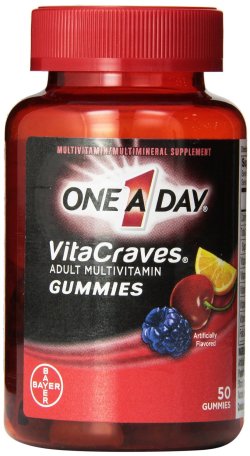
 On May 4, Bayer AG submitted a motion to dismiss a proposed One-A-Day Vitamin deceptive marketing class action lawsuit to a California federal court, arguing the plaintiffs had not demonstrated that the supplement labels made any illegal “disease-prevention” claims that would mislead consumers.
Bayer claims in the motion that the plaintiffs wrongly misinterpreted the One-A-Day labeling statements that claim the vitamin “supports heart health” and “supports immunity” as disease prevention claims. Additionally, the pharmaceutical company argued that the FDA and the California federal court already disagreed with the plaintiffs’ interpretation of these labeling claims.
In their One-A-Day Vitamin class action lawsuit, the plaintiffs allege that companies are not allowed to make disease-prevention claims on their products’ labels without first receiving FDA approval. The plaintiffs further argue that according to consumer surveys, customers do not generally distinguish between marketing claims like the ones found on Bayer’s One-A-Day Vitamin labels and disease-prevention claims.
In response to the plaintiffs’ arguments and their submitted consumer survey, Bayer said:
“Regardless of whether consumers understand the distinction between structure/function claims and disease claims, the legal distinction exists, the FDA has spoken, and so has this Court. The fact that some consumers may share Plaintiffs’ flawed understanding of Bayer’s claims does not change the FDA’s decision or the statute’s preemptive effect. Moreover, Plaintiffs should not be allowed to proceed based on a secret, unpublished, and unfiled survey.”
Back in October 2014, Plaintiffs Colleen Gallagher and Ilana Farar filed the Bayer One-A-Day Vitamin class action lawsuit on behalf of themselves and a Class of similarly situated consumers, alleging Bayer overstated their vitamin products ability to boost physical energy, immunity, and heart health in its users. However, the plaintiffs allege that One-A-Day vitamins would only benefit consumers suffering from a vitamin-deficiency, a rare condition that most consumers do not have.
Last week’s motion to dismiss is not the first attempt by Bayer to toss this complaint. Back in December, the company asked the court to toss the deceptive marketing class action lawsuit, arguing their labeling claims were protected by the Food Drug and Cosmetic At because they commented and structure and function that the vitamins may improve and did not make disease-prevention claims.
In response to Bayer’s arguments, U.S. District Judge William H. Orrick ruled in March that the FDCA did preempt the plaintiffs’ claims, but allowed the plaintiffs Gallagher and Farar time to amend their complaint. These amended deceptive marketing claims are the target of Bayer’s most recent bid to dismiss the One-A-Day Vitamin class action lawsuit.
The Plaintiff is represented by Laurence D. King, Lauren I. Dubick, Linda M. Fong and Robert N. Kaplan of Kaplan Fox & Kilsheimer LLP, Amanda Marie Howell of the Center for Science in the Public Interest, and Stephen Henry Gardner of Stanley Law Group.
The Bayer One A Day Vitamin Class Action Lawsuit is Colleen Gallagher, et al. v. Bayer AG, et al., Case No. 3:14-cv-04601, in the U.S. District Court for the Northern District of California.
UPDATE: On Nov. 15, 2017, a federal judge granted Class certification in a Bayer One A Day mislabeling class action lawsuit, limiting certification to three state-based Classes.
ATTORNEY ADVERTISING
Top Class Actions is a Proud Member of the American Bar Association
LEGAL INFORMATION IS NOT LEGAL ADVICE
Top Class Actions Legal Statement
©2008 – 2026 Top Class Actions® LLC
Various Trademarks held by their respective owners
This website is not intended for viewing or usage by European Union citizens.

Harassing debt collector calls lawsuit investigation: Portfolio Recovery, Midland, LVNV, Transworld, CCS, I.C. System, Harris & Harris, Radius, NCB, Sequium
November 4, 2026 | Legal News











