

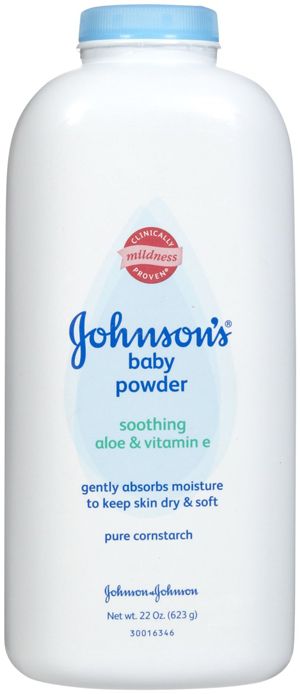
 A baby powder cancer lawsuit filed against Johnson & Johnson was sent back to the state court in which it was filed by order of the presiding federal judge. This talcum powder lawsuit represents 65 different women who were allegedly diagnosed with ovarian cancer after regularly using the product on their genital area.
U.S. District Judge Jean C. Hamilton stated Johnson & Johnson had wrongly misinterpreted the diversity clause required to remove the baby powder cancer lawsuit from federal court. The baby powder cancer lawsuit has since been sent to Circuit Court in St. Louis.
This baby powder cancer lawsuit was originally filed in Missouri federal court in late June by plaintiff Tiffany Hogans on behalf of herself and 64 other plaintiffs. According to the J&J cancer lawsuit:
“There are 65 plaintiffs in this action. Each plaintiff claims that she used talcum powder products and that she ‘developed ovarian cancer, and suffered effects attendant thereto, as a direct and proximate result of the unreasonably dangerous and defective nature of talcum powder. …’ These claims are alleged to be the ‘direct and proximate result of Defendants’ and/or their corporate predecessors [sic] negligent, willful, and wrongful conduct[.]”
Hogans and the other plaintiffs have lodged several allegations against Johnson & Johnson in this baby powder lawsuit, including failure to warn, negligence, breach of warranty, and civil conspiracy. They are seeking actual and punitive damages against the talcum powder producer for the alleged pain and suffering the plaintiffs have endured from the ovarian cancer diagnoses.
The Johnson’s Baby Powder Cancer Lawsuit is Hogans, et al. v. Johnson & Johnson, et al., Case No. 4:14-cv-01385-JCH, in the U.S. District Court for the Eastern District of Missouri.
History of Johnson’s Baby Powder Cancer
In 1893, Johnson & Johnson first manufactured and sold its now household favorite Johnson’s Baby Powder. In addition to making baby and adult skin feel soft and clean, Johnson’s Baby Powder has also been marketed as a safe product in masking odors from the female genital area. J&J markets its powder as an effective way to eliminate friction from skin on skin and skin on cloth contact and also absorbs excess moisture from both infant and adult women’s genital area.
However, as early as 1960, researchers raised concern about the effects of the use of talcum powder and an increasing trend of ovarian cancer. Study after study demonstrated a strong correlation between the use of the powder and a woman’s risk of developing ovarian cancer later in life.
In 1971, researchers published a study that showed more evidence to back up the baby powder cancer hypothesis. According to the research, talcum powder applied to the female genital area was prone to migrate into a woman’ ovaries. The study also demonstrated how 10 out of 13 dissected ovarian tumors had deeply embedded talc particles, suggesting the baby powder may in fact be causing or at the very least worsening the ovarian cancer condition.
In general, baby powder cancer lawsuits are filed individually by each plaintiff and are not class actions.
Do YOU have a legal claim? Fill out the form on this page now for a free, immediate, and confidential case evaluation. The attorneys who work with Top Class Actions will contact you if you qualify to let you know if an individual lawsuit or class action lawsuit is best for you. Hurry — statutes of limitations may apply.
ATTORNEY ADVERTISING
Top Class Actions is a Proud Member of the American Bar Association
LEGAL INFORMATION IS NOT LEGAL ADVICE
Top Class Actions Legal Statement
©2008 – 2026 Top Class Actions® LLC
Various Trademarks held by their respective owners
This website is not intended for viewing or usage by European Union citizens.
Get Help – It’s Free
Join a Free Baby Powder Cancer Class Action Lawsuit Investigation
If you used Johnson’s Baby Powder, Shower to Shower, or another talcum powder product and were diagnosed with ovarian cancer, you may have a legal claim. Family members of loved ones who died of ovarian cancer can also join. Submit your information now for a free case evaluation.
An attorney will contact you if you qualify to discuss the details of your potential case at no charge to you.











