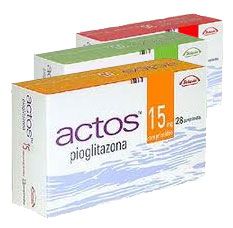
Two couples have filed a joint Actos lawsuit against Takeda Pharmaceuticals, alleging that the type-2 diabetes drug causes bladder cancer.
Like many patients in the United States, plaintiffs Kenneth and Olive B. and Howard and Eugenia B. had been seeking a solution to treat Kenneth’s and Howard’s diabetes. However, according to the Actos bladder cancer lawsuit, Kenneth’s and Howard’s diabetes was resistant to standard treatment medications.
Actos is typically prescribed to patients when other medications have failed, due to its fast and aggressive treatment mechanism.
Kenneth and Howard were prescribed Actos sometime before 2011, and had stayed on it for a period of time before being diagnosed with bladder cancer, the Actos bladder cancer lawsuit states.
However, after following all prescription instructions and taking his doctor’s advice when it came to taking Actos, Kenneth and Howard still developed alarming symptoms.
Their symptoms were brought to the attention of their doctors, and they were each diagnosed with bladder cancer. As a result, they will receive extensive medical treatment and have to take a variety of prescription drugs. Bladder cancer is one of the most aggressive cancers recognized in the medical community, with patients given a low life expectancy after diagnosis.
Soon after diagnosis, Kenneth and Howard filed the Actos lawsuit against Actos maker, Takeda Pharmaceuticals, for failing to protect against the side effects of Actos.
They also allege that Takeda knew about the possibility of bladder cancer, but deliberately failed to mention it on the drug’s label in order to protect its market value, according to the Actos bladder cancer lawsuit.
The Actos lawsuit also charges Takeda failed in its duty to warn the medical community and general public of the link between Actos and bladder cancer, adding that Kenneth and Olive were relying on the accuracy of the given information of the label.
Kenneth and Howard both insist that they never would have used the drug if he had known about the possibility of bladder cancer.
For being allegedly responsible for manufacturing, selling, distributing, and marketing a dangerous drug, the couples are suing Takeda Pharmaceuticals for negligence, false advertising, concealing information, and misrepresenting a product.
The Actos Bladder Cancer Lawsuit is Case No. 6:14-cv-02890, in the U.S. District Court for the Western District of Louisiana. It has been added to the Actos MDL, In Re: Actos Product Liability Litigation, MDL No. 2299, in the the same court.
Overview of Actos Complications
Actos was approved to be sold in the United States in July 1999, as an alternative treatment drug for type-2 diabetes. It was released as a joint venture between its original manufacturer, Takeda Pharmaceuticals, and its American partner Eli Lilly & Co.
As of now, it is one of the most widely requested second-choice diabetic treatment drugs in the United States, with patients praising its ability to fight against highly resistant diabetic symptoms.
Actos is a part of a family of insulin-sensitizing diabetes agents known as thiazolidinediones (TZDs), which means that it only works in the presence of insulin. Therefore, Actos cannot be used to treat type-1 diabetes in which the patient cannot produce any insulin at all.
While this drug is considered a success by many, it has recently come under extreme scrutiny for its alleged association with bladder cancer. Allegedly, Takeda Pharmaceuticals had known about this Actos side effect before releasing it in the United States but had chosen to withhold that information.
On Sept. 17, 2010, the FDA issued a public safety announcement that it was evaluating a 10-year study that was being conducted by Kaiser Permanente. This Actos study was meant to evaluate the likelihood of bladder cancer developing after ingesting Actos, in which it was concluded that the chances significantly increased after one year of using Actos.
Despite this, Takeda has denied all wrongdoing and has yet to update Actos’ warning label to include the possibility of bladder cancer. This has led to a mass litigation movement against Takeda and Eli Lilly, with Actos lawsuits being filed by injured patients that allege they developed bladder cancer from taking Actos.
Do YOU have a legal claim? Fill out the form on this page now for a free, immediate, and confidential case evaluation. The attorneys who work with Top Class Actions will contact you if you qualify to let you know if an individual Actos lawsuit or Actos class action lawsuit is best for you. [In general, Actos bladder cancer lawsuits are filed individually by each plaintiff and are not class actions.] Hurry — statutes of limitations may apply.
ATTORNEY ADVERTISING
Top Class Actions is a Proud Member of the American Bar Association
LEGAL INFORMATION IS NOT LEGAL ADVICE
Top Class Actions Legal Statement
©2008 – 2026 Top Class Actions® LLC
Various Trademarks held by their respective owners
This website is not intended for viewing or usage by European Union citizens.
Get Help – It’s Free
Join a Free Actos Class Action Lawsuit Investigation
If you or someone you know took Actos and were diagnosed with bladder cancer or bladder tumors, legal options are available. See if you qualify by filling out the short form below.
An attorney will contact you if you qualify to discuss the details of your potential case at no charge to you.
Oops! We could not locate your form.