

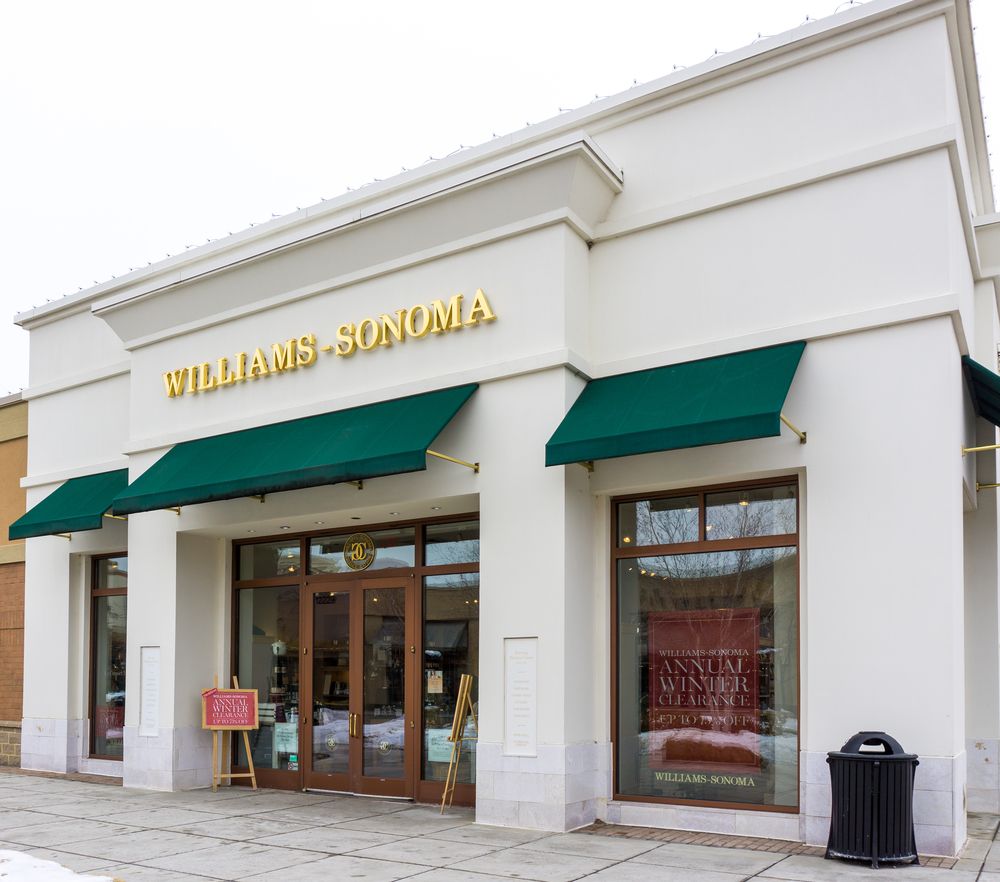
 Williams-Sonoma has been hit with a proposed class action lawsuit claiming the company violated the Song-Beverly Credit Card Act by improperly requiring and storing personal email addresses from customers paying via credit cards.
Headquartered in San Francisco, Williams-Sonoma Inc. is a multi-channel specialty retailer of high quality products for the home and operates more than 600 retail stores internationally under a portfolio of brands including Pottery Barn, Pottery Barn Kids, PBteen, Williams-Sonoma, Williams-Sonoma Home, West Elm, Mark and Graham, and Rejuvenation.
Plaintiff Benjamin Goff initiated the class action lawsuit in California Superior Court last Friday, claiming that Williams-Sonoma engages in a pattern of unlawful business practices utilizing an “information capture policy” where store employees “request and record” personal identification information, specifically email addresses, from customers using credit cards.
The California Supreme Court issued a decision a couple of years ago holding that a zip code is “personal identification information” under the Song-Beverly Credit Card Act of 1971, making it illegal for retailers to ask consumers to provide zip codes in connection with credit card transactions.
Extending that precedent, this case holds that retailers can’t ask for email addresses during credit card transactions.
The statute does not apply to online or other “card-not-present” transactions, but it does prohibit retailers from “request[ing] or requir[ing] as a condition to accepting the credit card as payment . . . the cardholder to provide personal identification information.”
Personal identification information is defined as information concerning the cardholder, “including but not limited to, the cardholder’s address and telephone number.”
Goff alleges that he was not informed that his email address would be used for marketing purposes.
Specifically, Goff says at no time during the course of his credit card transaction at a Pottery Barn store was he told by providing his email address that he would be included on marketing mailing lists and that he would receive numerous, regular unsolicited email advertisements.
“Defendant wanted to reduce opt-outs because the email addresses provided during the course of credit card transactions were used not merely to provide email receipts, but were also used to create a mass marketing email list of past customers,” Goff alleges.
At a subsequent visit to a Pottery Barn store, Goff says he made a purchase using the same credit card in his previous transaction and was asked to “verify” his email address.
The request that he “verify” his email address took place during the credit card transaction, before he was handed his receipt, leading Goff to believe that Williams-Sonoma retained and stored his email address from the earlier transaction.
Goff is seeking to represent a certified statewide Class of consumers whom Williams-Sonoma requested and recorded personal identification information in conjunction with a credit card transaction in William-Sonoma retail stores in California during the period of Sept. 2015 through the date of trial.
This is not the first time Williams-Sonoma has faced federal litigation over improperly collecting customers’ personal identification information.
Two similar class action lawsuits also accused the home goods retailers of violating the Song-Beverly Credit Card Act
In March, A Massachusetts woman filed a proposed class action alleging that the home goods retailer unlawfully collects ZIP codes from customers making credit card purchases, in “callous disregard” for their privacy rights. This case is currently pending in Massachusetts federal court.
In 2010, the California Supreme Court ruled against Williams-Sonoma in another class action lawsuit alleging that the housewares company used customer zip codes to obtain the home addresses of “hundreds of thousands, if not millions” of customers and then used the data for marketing or sold the information to other businesses.
The plaintiff in that case (Pineda v. Williams-Sonoma) said the practice breached her right to privacy under the California Constitution and violated the Song-Beverly Credit Card Act.
In an unanimous decision, the California Supreme Court ruled that the Act was designed to promote consumer protection and that personal identification information includes a cardholder’s zip code.
Each violation of the Song-Beverly Credit Card Act carries a civil penalty of up to $1,000.
Goff is represented by Mark L. Smith of Smith Correll LLP.
The Williams-Sonoma Email Address Collection Class Action Lawsuit is Benjamin Goff v. Williams-Sonoma Inc., Case No. BC631223, in the Superior Court of the State of California, County of Los Angeles.
ATTORNEY ADVERTISING
Top Class Actions is a Proud Member of the American Bar Association
LEGAL INFORMATION IS NOT LEGAL ADVICE
Top Class Actions Legal Statement
©2008 – 2026 Top Class Actions® LLC
Various Trademarks held by their respective owners
This website is not intended for viewing or usage by European Union citizens.













One thought on Williams-Sonoma Class Action Says Email Address Collection is Illegal
Williams Sonoma in California is now doing something similar. I placed and order with an associate in store. I made sure she removed the checked box to received further information. I had to give them my information to place the order since it was not in stock at the store. I was advised they will only use my email for that specific order.
Since I do not trust them I did not give them my full last name. Today I received an email from them addressed to me with my full last name. They were thanking me for successfully signing up. I did not sign up for anything, they must have collected my full last name from the credit card transaction.