

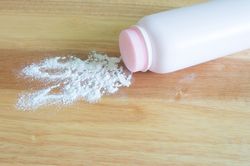
 A widower has filed a baby powder and cancer risk lawsuit on a loved one’s behalf alleging his wife used the company’s baby powder product and suffered serious injuries including wrongful death.
Plaintiff Ronald L. filed the baby powder and cancer risk lawsuit on behalf of Mary L., deceased, in Illinois federal court. The lawsuit was filed on Feb. 13, 2018.
According to the baby powder and cancer risk lawsuit, Mary became diagnosed with ovarian cancer. Her cancer was “directly and proximately caused by her regular and prolonged exposure to talcum powder, contained in Defendants’ Johnson & Johnson Baby Powder,” the baby powder and cancer risk lawsuit states.
Mary was an Illinois resident before she passed. She began using J&J’s Baby Powder in 1954 and continued through 2016. She also used the baby powder for “personal use in the perineal area,” the lawsuit contends. However, after prolonged product use, she was diagnosed with ovarian cancer in 2016.
The baby powder and cancer risk lawsuit was filed on multiple counts including failure to warn, design and/or manufacturing defect, negligence, breach of express warranty, breach of implied warranty, negligent misrepresentation, fraudulent concealment, intentional misrepresentation, violation of Illinois Consumer Fraud and Deceptive Business Practices Act, wrongful death, and survival action.
Overview: Baby Powder and Cancer Risk
The baby powder and cancer risk lawsuit was filed as part of a large multidistrict litigation, or MDL, centered upon allegations that J&J’s Baby Powder causes ovarian cancer. The claims against the company allege the company knew about this adverse effect all along but hid it from consumers.
The main component of J&J’s baby powder is talc, a mineral, known to be one of the softest minerals in the world today. It has been used in cosmetic products for decades particularly because of the mineral’s ability to absorb moisture and reduce friction.
Some researchers believe that when a woman uses talc, as in J&J’s baby powder, talc can travel from a woman’s genital area through the ovaries and become embedded into her tissue. Albeit soft, the mineral is difficult to remove once it becomes embedded in the body. As such, an embedded talc particle can then cause a multitude of side effects including cancerous tumors and inflammation.
The lawsuits against J&J support claims of talc’s ability to cause ovarian cancer by citing the International Association for Research on Cancer, or IARC, part of the World Health Organization’s categorization of talc-based body powder as a “Group 2B” human carcinogen.
The Baby Powder and Cancer Risk Lawsuit is Case No. 1:18-cv-01139, in the U.S. District Court for the Northern District of Illinois Eastern Division. The Johnson & Johnson Talc Powder MDL is In re: Johnson & Johnson Talcum Powder Products Marketing, Sales Practices, and Products Liability Litigation, MDL No. 2738, in U.S. District Court for the District of New Jersey.
Do YOU have a legal claim? Fill out the form on this page now for a free, immediate, and confidential case evaluation. The attorneys who work with Top Class Actions will contact you if you qualify to let you know if an individual lawsuit or class action lawsuit is best for you. [In general, baby powder cancer lawsuits are filed individually by each plaintiff and are not class actions.] Hurry — statutes of limitations may apply.
ATTORNEY ADVERTISING
Top Class Actions is a Proud Member of the American Bar Association
LEGAL INFORMATION IS NOT LEGAL ADVICE
Top Class Actions Legal Statement
©2008 – 2026 Top Class Actions® LLC
Various Trademarks held by their respective owners
This website is not intended for viewing or usage by European Union citizens.
Get Help – It’s Free
Join a Free Baby Powder Cancer Class Action Lawsuit Investigation
If you used Johnson’s Baby Powder, Shower to Shower, or another talcum powder product and were diagnosed with ovarian cancer, you may have a legal claim. Family members of loved ones who died of ovarian cancer can also join. Submit your information now for a free case evaluation.
An attorney will contact you if you qualify to discuss the details of your potential case at no charge to you.
Please Note: If you want to participate in this investigation, it is imperative that you reply to the law firm if they call or email you. Failing to do so may result in you not getting signed up as a client, if you qualify, or getting you dropped as a client.











