 An appeals court will not review a recent decision by a California federal judge who determined in a Twitter text message class action lawsuit that the social media company is responsible for sending texted tweets to recycled cell phone owners, which is a violation of the Telephone Consumer Protection Act (TCPA).
U.S. District Judge Vincent Chhabria said that Twitter is responsible for hundreds of unwanted tweets sent as text messages.
Old Phone Number, New Owner
Lead plaintiff Beverly Nunes filed the Twitter text message class action lawsuit after she began receiving text messages from two Twitter accounts. The text messages were generated from two Twitter accounts that belonged to Jose Perez, who had previously had that phone number.
When the phone number belonged to Perez’s phone, he had subscribed to SMS-delivered tweets, meaning he had given Twitter his approval to send tweets to what was his phone number at the time.
Twitter’s Take on Tweets
Twitter insists that Judge Chhabria’s ruling goes against a July 2015 FCC guidance on the Telephone Consumer Protection Act (TCPA).
“In addition to resolving a legal question, the court’s ruling regarding who ‘makes’ or ‘initiates’ a text message is unquestionably a controlling one in this case. If Twitter’s interpretation of the FCC order is correct, it cannot be liable for the messages at issue, and the case will be over,” Twitter had said prior to the decision.
Twitter’s position is that a July 2015 FCC order outlining guidelines for identifying the “maker” of a call deems the case suitable for an interlocutory appeal.
Judge Chhabria said the court applied the FCC’s test to the case, but also considered outside factors, and then concluded the FCC’s test didn’t apply in this Twitter text message class action lawsuit.
“Implicit in this court’s determination that certain factors listed in the 2015 order are not helpful one way or the other, in light of these particular facts, is its consideration of those factors. That’s how it works when courts apply a ‘totality of the circumstances’ test,” Judge Chhabria said.
“This was not a departure from the test set forth in the 2015 order, but an application of the test to the facts that led to a conclusion with which Twitter happens to disagree,” he added.
Twitter continues to insist it did not create the unwanted text messages and that it was immune under the Communications Decency Act, but Judge Chhabria did not agree on either count.
The Communications Decency Act refers to liability from content created by a third party. The judge explained this does not apply to the Twitter text message class action lawsuit because Nunes’ claims are not tweet-specific, nor are they based on any assumption that Twitter filters tweets.
Twitter Text Message Class Action
“Twitter contends that because the former owner signed up to receive tweets by text in the future, this means the former owner ‘makes’ all the text-message calls to that number in the future,” Judge Chhabria said. “This is, of course, contrary to the ordinary meaning of the word ‘make’ — when someone signs up to receive a call from someone else in the future, he is not ‘making’ that call when it comes in.”
The plaintiff said that not just any user could send those tweets, and that only Twitter has that capability.
In his decision on the Twitter text message class action lawsuit, the judge echoed the plaintiff’s position, saying that Twitter was “the only conceivable ‘maker’ of any of these calls.”
He added that the person who writes a tweet has no control over who subscribes to receive tweets. Therefore, the author of a tweet “can’t possibly be the maker of the call.”
The Twitter Text Message Class Action Lawsuit is Nunes et. al. v. Twitter Inc., Case No. 3:14-cv-02843, in the U.S. District Court for the Northern District of California.
Join a Free TCPA Class Action Lawsuit Investigation
If you were contacted on your cell phone by a company via an unsolicited text message (text spam) or prerecorded voice message (robocall), you may be eligible for compensation under the Telephone Consumer Protection Act.
ATTORNEY ADVERTISING
Top Class Actions is a Proud Member of the American Bar Association
LEGAL INFORMATION IS NOT LEGAL ADVICE
Top Class Actions Legal Statement
©2008 – 2026 Top Class Actions® LLC
Various Trademarks held by their respective owners
This website is not intended for viewing or usage by European Union citizens.
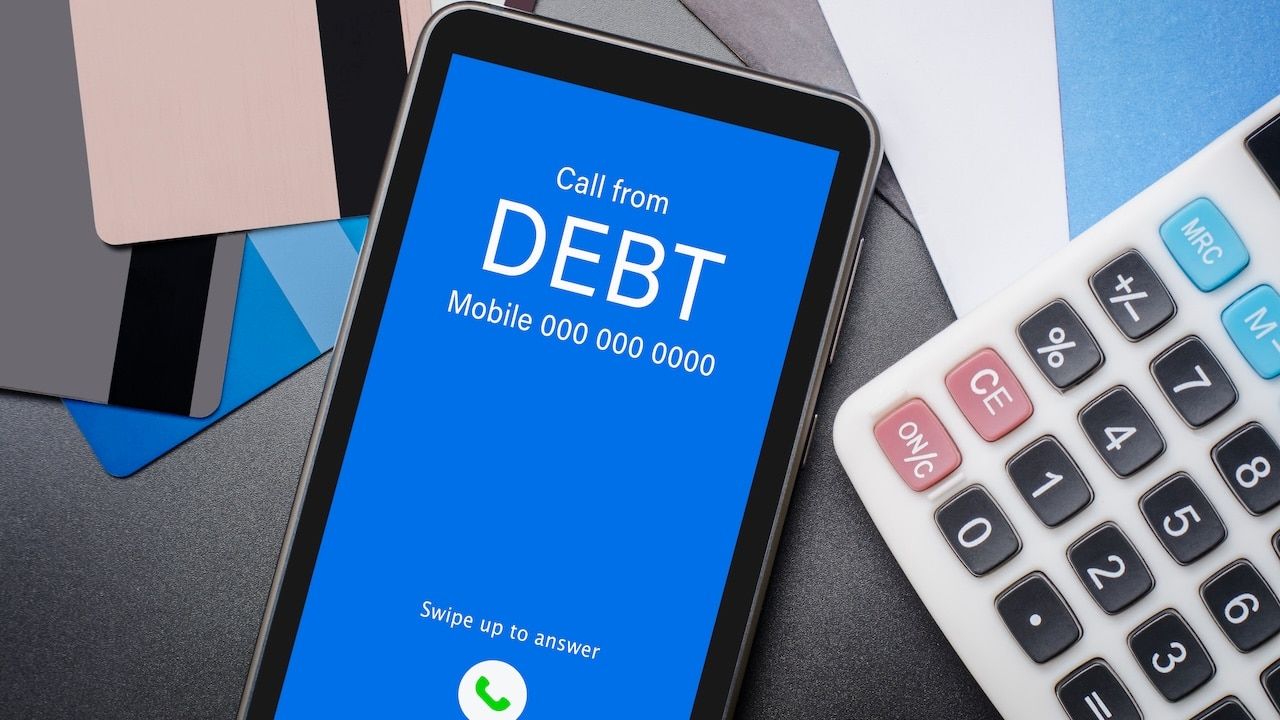
Harassing debt collector calls lawsuit investigation: Portfolio Recovery, Midland, LVNV, Transworld, CCS, I.C. System, Harris & Harris, Radius, NCB, Sequium
November 4, 2026 | Legal News