

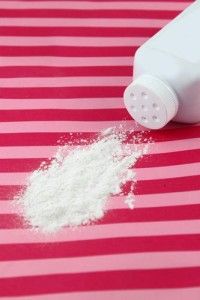
 A talcum powder lawsuit brought filed by the family of a woman who died of ovarian cancer, claim that Johnson & Johnson’s talc-based products are to blame.
Family members of Jackie F. are suing J&J in state court in St. Louis. They allege that Jackie’s ovarian cancer was caused by the talc used in Johnson & Johnson products.
Before Jackie died, she said in a deposition that she had been “raised on” Johnson’s Baby Powder and Shower to Shower, both J&J products that contain talc.
The plaintiffs argue that J&J knew that talcum powder presented a risk of developing ovarian cancer but failed to warn consumers about that risk. They say some of J&J’s internal documents prove the company knew about that risk even as it continued to market talc products without a warning.
J&J counters that “the best and most recent” scientific studies show no link between talc and ovarian cancer. They also say the plaintiffs can’t prove that Jackie’s ovarian cancer was caused by talc, and that Jackie still would have used their talc products even if they carried a warning label.
The judge hearing Jackie’s case has already rejected a motion for dismissal brought by Johnson & Johnson, saying there was enough evidence in the record for a jury to find the company knowingly hid the risks of ovarian cancer from consumers.
The company had cited a statement by the FDA from April 2014 that the agency had not found “conclusive evidence” of a link between talc and ovarian cancer.
According to Jackie’s family, scientific research from as far back as the 1970s shows a relationship between talc used for feminine hygiene and ovarian cancer. The family points to a 1982 study that found women who reported using talcum powder in the genital area were far more likely to develop ovarian cancer.
A more recent study by the same author, published in the journal Epidemiology in December 2015, found that women who used talc near the genital area were one-third more likely to develop ovarian cancer.
New Talcum Powder Lawsuits
The wave of talcum powder ovarian cancer lawsuits began when plaintiff Deane B. of South Dakota won a mixed jury decision on her own claim. Although the jury was not persuaded that Deane’s own ovarian cancer had been caused by talc, they did determine that J&J had been negligent in failing to warn of the risk of talcum powder ovarian cancer.
J&J, the largest manufacturer of health care products in the world, is facing about 1,200 similar talcum powder ovarian cancer lawsuits. Besides the case brought by Jackie’s family, about 1,000 other talcum powder lawsuits have been brought within Missouri state and federal courts. Another 200 talcum powder lawsuits are pending in Johnson & Johnson’s home state of New Jersey.
The outcome of Jackie’s trial may affect how J&J decides to fight or settle the remaining claims.
The Talcum Powder Ovarian Cancer Lawsuit is Case No. 1422-CC09012 in the Missouri Circuit Court in St. Louis.
Do YOU have a legal claim? Fill out the form on this page now for a free, immediate, and confidential case evaluation. The attorneys who work with Top Class Actions will contact you if you qualify to let you know if an individual lawsuit or class action lawsuit is best for you. [In general, baby powder cancer lawsuits are filed individually by each plaintiff and are not class actions.] Hurry — statutes of limitations may apply.
ATTORNEY ADVERTISING
Top Class Actions is a Proud Member of the American Bar Association
LEGAL INFORMATION IS NOT LEGAL ADVICE
Top Class Actions Legal Statement
©2008 – 2026 Top Class Actions® LLC
Various Trademarks held by their respective owners
This website is not intended for viewing or usage by European Union citizens.
Get Help – It’s Free
Join a Free Baby Powder Cancer Class Action Lawsuit Investigation
If you used Johnson’s Baby Powder, Shower to Shower, or another talcum powder product and were diagnosed with ovarian cancer, you may have a legal claim. Family members of loved ones who died of ovarian cancer can also join. Submit your information now for a free case evaluation.
An attorney will contact you if you qualify to discuss the details of your potential case at no charge to you.











