

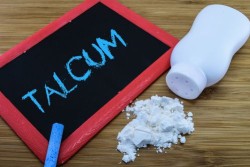
 The family of a woman who died of ovarian cancer has won a $72 million jury award in a lawsuit attributing the woman’s cancer to talcum powder.
Plaintiff Jackie F. had alleged she developed ovarian cancer after years of using Johnson’s Baby Powder for hygiene. In a deposition taken before she died, Jackie said she had used talcum powder since she was a child.
Jackie died in October 2015, four months before the conclusion of her talcum powder lawsuit.
Only $10 million of the award is intended to represent compensatory damages, with the remaining $62 million assessed as punitive damages against J&J.
Jurors said certain internal corporate documents were “decisive” in their four hours’ worth of deliberations, and that it was clear that J&J was aware of the issue but still concealed information.
Another named defendant, Imerys Talc America, will share no liability for the judgment. Imerys is the largest supplier of talc in the U.S. and is Johnson & Johnson’s only supplier of talc.
A representative of J&J commented that the company was “disappointed with the outcome of the trial.” She said that the company maintains its position that the available scientific evidence supports the safety of the company’s talcum powder products. The company plans to appeal the award.
This talcum powder lawsuit is Case No. 1422-CC09012-01 in the Missouri circuit court in St. Louis.
Other Talcum Powder Lawsuits
This case is the first time a jury has awarded damages based on an allegation of talcum powder cancer. Over 1,200 similar talcum powder lawsuits are now pending against Johnson & Johnson over the alleged link between talcum powder and ovarian cancer.
Generally, plaintiffs are women who developed cancer after using talcum powder for feminine hygiene. These women and their families now allege J&J knew for years about the possible link between talcum powder and ovarian cancer, yet failed to properly address that risk with an adequate warning for consumers.
The label for Johnson’s Baby Powder contains a warning against inhalation but does not mention the possibility of talcum powder cancer.
The next trial in a talcum powder lawsuit is scheduled to begin in April 2016, also in Missouri circuit court in St. Louis.
Johnson & Johnson began selling talcum powder over 100 years ago as a way to soothe rash. The original product was almost entirely made of talc, with a little fragrant oil added to act as a perfume.
Evidence suggesting the possibility of talcum powder cancer arose with a study published in 1971. British researchers examined tissue from 13 ovarian tumors and found particles of talc embedded in 10 of them.
Then in 1982, a study published in the journal Cancer reported the first statistical association between talcum powder and ovarian cancer. The author of that study later reported being contacted by a J&J doctor who he says tried to convince him that talcum powder use is harmless.
Since then, other scientific studies have yielded mixed results. However, 20 of those studies have found an approximately 33 percent increase in the risk of ovarian cancer associated with use of talcum powder for feminine hygiene.
Do YOU have a legal claim? Fill out the form on this page now for a free, immediate, and confidential case evaluation. The attorneys who work with Top Class Actions will contact you if you qualify to let you know if an individual lawsuit or class action lawsuit is best for you. [In general, baby powder cancer lawsuits are filed individually by each plaintiff and are not class actions.] Hurry — statutes of limitations may apply.
ATTORNEY ADVERTISING
Top Class Actions is a Proud Member of the American Bar Association
LEGAL INFORMATION IS NOT LEGAL ADVICE
Top Class Actions Legal Statement
©2008 – 2026 Top Class Actions® LLC
Various Trademarks held by their respective owners
This website is not intended for viewing or usage by European Union citizens.
Get Help – It’s Free
Join a Free Baby Powder Cancer Class Action Lawsuit Investigation
If you used Johnson’s Baby Powder, Shower to Shower, or another talcum powder product and were diagnosed with ovarian cancer, you may have a legal claim. Family members of loved ones who died of ovarian cancer can also join. Submit your information now for a free case evaluation.
An attorney will contact you if you qualify to discuss the details of your potential case at no charge to you.











