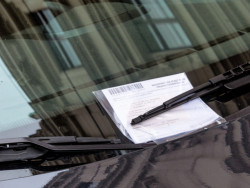
 Plaintiffs in a proposed credit card receipt class action lawsuit have asked a federal court in Florida to reopen a case over parking tickets issued by Miami-Dade County.
The request came in the wake of a U.S. Supreme Court ruling in the Spokeo Inc. case, which left open the way for plaintiffs to use statutory violations to establish standing.
In Spokeo, the Supreme Court found that a consumer cannot sue Spokeo for technical violations of the Fair Credit Reporting Act, but may still pursue a case based on statutory violations.
Lead plaintiff Nataly Cano Lopez requested that U.S. District Judge Marcia G. Cooke lift the stay on her FACTA lawsuit after the Spokeo ruling.
Cano Lopez’s FACTA lawsuit was originally filed in August. The lawsuit alleges that the county issued a credit card receipt in return for paying a parking ticket that displayed not only the last four digits of her card number, but also the first six, in clear violation of credit card receipt laws.
FACTA requires that no more than the last five digits of a card be displayed on a credit card receipt.
FACTA was established in 2003 as a method of preventing identity theft and fraud.
In addition to the requirement limiting the number of digits that can be shown on a receipt, it also prohibits receipts from showing any portion of a card’s expiration date.
According to Cano Lopez’s lawsuit, FACTA rules provide a completely enforceable law regarding credit card receipts. Cano Lopez asserts that this law means she has a right to expect that any parking tickets issued by Miami-Dade County will follow FACTA rules on credit card receipt information.
If they don’t, Cano Lopez says, she then has the right to file a lawsuit over statutory violations and expect a fixed sum in repayment.
“If defendants violated FACTA by storing and printing plaintiff’s identifying information, it harmed plaintiff by depriving her of an important privacy right to which she was entitled by law, thus constituting an injury-in-fact sufficient to confer standing,” the FACTA credit card receipt lawsuit said.
FACTA Credit Card Receipt Lawsuits
FACTA violations may offer awards of up to $1,000 per violation. Because businesses often print hundreds or thousands of receipts from the same machine, it is likely that many FACTA violations are committed by the same machine.
If you notice a FACTA credit card receipt law violation on your own receipt, reporting it can lead to helping hundreds or thousands of others who have also received a credit card receipt from that company.
Check each credit card receipt to see whether or not they follow FACTA rules properly. If not, you may be able to file a FACTA lawsuit against the company that issued the credit card receipt.
The Miami-Dade County FACTA Class Action Lawsuit is Cano Lopez v. Miami-Dade County et al., Case No. 1:15-cv-22943, in the U.S. District Court for the Southern District of Florida.
Free FACTA Class Action Lawsuit Investigation
If you made one or more purchases and the retailer provided you with a receipt that contained more than the last five digits of your credit or debit card number or the expiration date, you may be eligible for a free class action lawsuit investigation and to pursue compensation for these FACTA violations.
ATTORNEY ADVERTISING
Top Class Actions is a Proud Member of the American Bar Association
LEGAL INFORMATION IS NOT LEGAL ADVICE
Top Class Actions Legal Statement
©2008 – 2026 Top Class Actions® LLC
Various Trademarks held by their respective owners
This website is not intended for viewing or usage by European Union citizens.