FACTA is legislation that was enacted to protect consumers from identity theft.
Known more formally as the Fair and Accurate Credit Transactions Act, FACTA was passed in 2003 as an amendment to the Fair Credit Reporting Act.
Most consumers were informed at this time that FACTA allowed individuals to request and obtain a free copy of their credit report once every year from Experian, TransUnion and Equifax. These free reports may be accessed at www.annualcreditreport.com.
What not as many consumers are aware of is that FACTA also has more provisions to aid in protecting consumers from identity theft. Under its Identity Theft Prevention and Credit History Restoration, FACTA rules spell out the need for truncation of credit and debit card numbers.
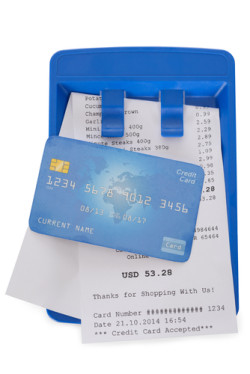
To ensure FACTA compliance, businesses who process point of sale transactions and accept debit cards or credit cards must follow certain rules on electronically printed receipts.
This only applies to electronic receipts and does not apply to handwritten receipts or those that use a credit card machine to manually make an impression of the card number.
FACTA Rules for Credit Card and Debit Card Receipts
There are two rules businesses must follow to ensure FACTA compliance on debit card and credit card receipts:
Rule 1: Businesses may not print more than the last five digits of the customer’s credit or debit card account number on the receipt.
It is usually clear immediately that a receipt is not in compliance when a business prints out the entire card number or has several numbers printed in the beginning of the account number, but other times, the violations may be more subtle.
Some businesses may print less than five numbers on the receipt, but if those numbers appear anywhere but at the last five digits of the number, it is in violation of FACTA rules.
Below are some examples of less obvious FACTA violations:
Card No: XXXX XXXX XX32 XXXX
Acct #: 5*** **** **** ****
In both cases above, there are less than five digits printed, but the location of the printed number is what violates FACTA compliance.
Rule 2: Businesses may not print any part of the expiration date on the credit card or debit card receipt.
Unless the expiration date looks like the examples below, if there are any digits that appear after the expiration date line on the receipt, it is out of compliance.
Exp:
EXP: **/**
Exp. Date: ####
What If My Receipt Violates FACTA Rules?
If your credit card or debit card receipt violates either or both of the FACTA rules listed above, you and other patrons of the business that issued your receipt are at risk for identity theft.
Businesses who fail to protect their customers from identify theft may be responsible to pay statutory damages to the individual ranging from $100 to $1000 per violation.
If a business has a debit card and credit card processing machine that is issuing noncompliant receipts and has a high volume of customers, the penalty for these businesses can be massive, especially if they are faced with a class action lawsuit.
FACTA class action lawsuits in California have resulted in settlements ranging from $4 billion to $40 billion. In two recent FACTA lawsuits, companies agreed to pay customers $200 to $265 each in settlements to resolve claims in the class action.
If you have a receipt that violates FACTA rules, you may be eligible for legal compensation. A lawyer can review your case to determine your eligibility at no charge to you.
Free FACTA Class Action Lawsuit Investigation
If you made one or more purchases and the retailer provided you with a receipt that contained more than the last five digits of your credit or debit card number or the expiration date, you may be eligible for a free class action lawsuit investigation and to pursue compensation for these FACTA violations.
ATTORNEY ADVERTISING
Top Class Actions is a Proud Member of the American Bar Association
LEGAL INFORMATION IS NOT LEGAL ADVICE
Top Class Actions Legal Statement
©2008 – 2026 Top Class Actions® LLC
Various Trademarks held by their respective owners
This website is not intended for viewing or usage by European Union citizens.