

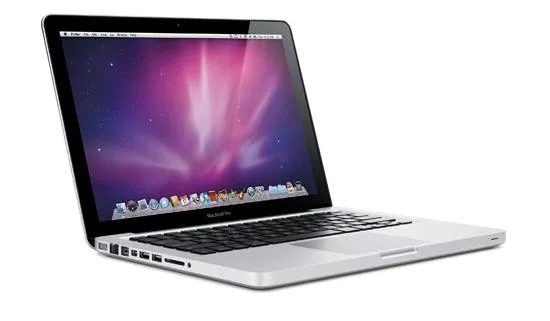
 A California federal judge has dismissed a class action lawsuit against Apple Inc. over its MacBook laptop computers saying that the claims against the computer company were not sufficiently pled.
U.S. District Judge William Alsup explained in his Jan. 8 ruling that he granted Apple’s motion to dismiss the MacBook class action lawsuit because plaintiffs Uriel Marcus of California and Benedict Verceles of Texas failed to make an adequate plea for Apple’s alleged violations of federal and state law.
Marcus and Verceles filed their Apple class action lawsuit in May 2014 in a Texas federal court, which was transferred to the California federal court in July.
They alleged in their MacBook class action lawsuit that the laptop computers included “defective ‘logic boards’ that routinely failed within two years of purchase,” which ultimately “rendered the computer useless.”
According to Marcus and Verceles, the failing logic board “was the result of negligent design production, and testing.”
In addition, the Apple MacBook class action lawsuit alleged that Apple knew about “the defect for over six years,” including Apple CEO Tim Cook, who they say knew of the defect in 2011, but never informed Apple customers of the defect.
These defects allegedly existed all while advertising the MacBook series of computers as “state of the art” and “advanced.”
The class action lawsuit alleged violations of California’s Unfair Competition Law, California’s Consumers Legal Remedies Act, Texas’ Deceptive Trade Practices Act, Texas common law fraud, breach of implied warranty of fitness for a particular purpose, breach of implied warranty of merchantability, violations of the Magnuson-Moss Warranty Act, violations of the Song-Beverly Consumer Warranty Act, and unjust enrichment.
Apple had asked Judge Alsup to take “judicial notice” of Apple’s One Year Limited Warranty, which it said applied to both plaintiffs’ MacBook Pro computers, which he granted.
The California federal judge explains that California’s Unfair Competition Law, Texas’s Deceptive Trade Practices Act, and the Texas common law fraud allegations fail because “plaintiffs have failed to plead the existence of any affirmative misrepresentations by Apple, and have not alleged any safety issues,” the plaintiffs have not made an adequate case for how Apple knew about the alleged defect, and that the claims by Apple about its MacBook computers “constitute non-actionable puffery and therefore cannot be adjudged false.”
The breach of warranty claims fail, Judge Alsup explains about the Apple class action lawsuit, because California’s Song-Beverly Consumer Warranty Act says that it can only apply to purchases made in California, but that the plaintiffs don’t say where they purchased their laptop computers.
The plaintiffs did sign affidavits in which Marcus said that “his computer was purchased online from Apple in California,” and that Verceles purchased his laptop in Texas. The judge concluded that Verceles does not have a claim under the Song-Beverly Act for this reason.
In addition, the California federal judge says that a warranty period does not begin once a customer discovers a defect or “the warranty would be useless.”
The implied warranty claims in the Apple class action lawsuit were also not adequately pled, according Judge Alsup.
Implied warranty claims must prove that the product was not fit for the purpose for which it was created, the judge explains, but “here, plaintiffs plainly fail to allege that the computers were used for any purpose other than their ordinary use as ‘a portable device.'”
In addition, “both plaintiffs were able to adequately use their computers for approximately 18 months and two years, respectively.”
The Magnuson-Moss Warranty Act claims fail because the Apple MacBook class action lawsuit failed “to adequately plead state law implied warranty claims.”
As for unjust enrichment, “the existence of Apple’s express Limited Warranty therefore precludes unjust enrichment as a cause of action,” Judge Alsup says.
The California federal judge has given Marcus and Verceles leave to filed amended class action lawsuits, which they have until Jan.22 to do.
Marcus and Verceles are represented by Omar Weaver Rosales of The Rosales Law Firm LLC.
Apple is represented by David M. Walsh, Kai S. Bartolomeo and Rose S. Lee of Morrison & Foerster LLP.
The Apple MacBook Class Action Lawsuit is Uriel Marcus et al. v. Apple Inc., Case No. 3:14-cv-03824, in the U.S. District Court for the Northern District of California.
ATTORNEY ADVERTISING
Top Class Actions is a Proud Member of the American Bar Association
LEGAL INFORMATION IS NOT LEGAL ADVICE
Top Class Actions Legal Statement
©2008 – 2026 Top Class Actions® LLC
Various Trademarks held by their respective owners
This website is not intended for viewing or usage by European Union citizens.
FACTA lawsuit investigation: Check your paper receipts for credit card privacy violations
November 6, 2026 | Legal News









One thought on Apple MacBook Pro Class Action Lawsuit Fails
Consumers are “hounded” by their computers and phones to update to the latest OS and sometimes your devices just “upgrade” without notice. But there is no warning that the applications that you use will no longer function with the new OS. There is also no option to go back to your previous version of OS if your applications no longer work so that you can continue working.
This causes a financial loss to the consumer, both in the cost of otherwise unnecessary upgrades, and downtime on the computer if the upgrades are not yet available. Some software authors stop upgrading their programs because of the constantly changing OS requirements and changes. This leaves consumers that depend on these software applications in the lurch.
Microsoft, Apple, and Samsung are all guilty of these practices with their device operating systems. No one should be “forced” to upgrade their system if it is working perfectly fine for them. That’s like saying you have to buy a new engine for your car every year for more efficiency — oh yes and you will have to upgrade the brakes, power steering, tires, and AC to be compatible with the new engine.