

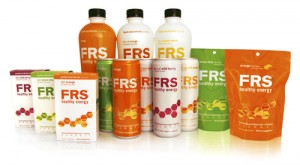
 On Tuesday, a California federal judge dismissed a class action lawsuit that accused famed cyclist Lance Armstrong and supplement maker FRS Co. of creating a marketing campaign that implied the products were responsible for Armstrong’s “legendary athletic achievements,” finding that the statements amounted to puffery and could not be objectively verified.
FRS manufactures, sells and markets sports drinks, concentrates, chews and powders. Armstrong, a world-renowned cycling champion, served as an “FRS Ambassador” and served as a member of the company’s Board of Directors. According to the class action lawsuit, Armstrong directly participated in the formation and execution of FRS’s marketing and advertising strategies. These advertising strategies closely associated FRS with Armstrong’s “legendary” athletic abilities, and allegedly implied that FRS products were the “secret weapon” that fueled Armstrong’s success.
Plaintiffs Robert Martin, Jessica Graham and Jennifer Hyle filed the class action lawsuit in response to Armstrong’s admission that he used illegal performance enhancing drugs (PEDs) while competing in the Tour de France cycling competitions. They allege FRS’s marketing campaign was designed to convince consumers that FRS supplements were responsible for Armstrong’s incredible athletic achievements.
The class action lawsuit alleged breach of express warranty and violations of the Consumer Legal Remedies Act (CLRA), the California False Advertising Law (FAL) and the California Unfair Competition Law (UCL).
The defendants filed a motion to dismiss the class action lawsuit, arguing that the plaintiffs failed to state a claim. U.S. District Judge Beverly Reid O’Connell agreed with the defendants, finding that the plaintiffs did not show that consumers were likely to be deceived by the advertising, or that the defendants used misleading advertising or made an actionable omission as required under the CLRA, FAL and UCL.
Judge O’Connell found that “the ‘secret weapon’ statements amount to non-actionable puffery that cannot be used to state a claim for breach of express warranty.” She also disagreed with the plaintiff’s assertion that members of the public were likely to be deceived by FRS’s advertisements, finding that reasonable consumers were unlikely to believe that Armstrong’s success was directly related to his use of FRS supplements.
“The court finds that plaintiffs’ allegations involving the ‘secret weapon’ statements require the reasonable consumer to make an unreasonable inference,” Judge O’Connell wrote in her dismissal of the class action lawsuit. Specifically, she found that “the reasonable consumer would not make the inference that a healthy energy drink could be the proprietary reason a decorated cyclist achieves success. Such an inference requires the reasonable consumer to discount extensive training, natural ability or even illegal PEDs use.”
Judge O’Connell will allow the plaintiffs to file a second amended class action lawsuit by March 18, 2014.
The plaintiffs are represented by Holly C. Blackwell and Jonathan D. Miller of Nye Peabody Stirling Hale & Miller LLP; Benjamin J. Sweet of Del Sole Cavanaugh Stroyd LLC; and Michael E. Berman of Michael E. Berman LLC.
The Lance Armstrong, FRS Products False Ad Class Action Lawsuit is Martin v. FRS Co., et al., Case No. 2:13-cv-01456, in the U.S. District Court for the Central District of California.
ATTORNEY ADVERTISING
Top Class Actions is a Proud Member of the American Bar Association
LEGAL INFORMATION IS NOT LEGAL ADVICE
Top Class Actions Legal Statement
©2008 – 2026 Top Class Actions® LLC
Various Trademarks held by their respective owners
This website is not intended for viewing or usage by European Union citizens.













