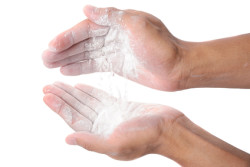
 Plaintiff Denise L. has filed a lawsuit against Johnson & Johnson in the Federal District Court of Columbia, alleging a link between talcum powder and cancer.
According to the talcum powder and cancer lawsuit, Denise alleges that she developed ovarian cancer as a result of using Johnson’s Baby Powder and Shower to Shower powder, both of which are talc based.
The talcum powder and cancerlawsuit further claims that she was living in California when she started using the product and had continuously used the product until January 2010. She was later diagnosed with ovarian cancer when she was forty-six years old, while still living in California.
There have been many lawsuits alleging women who developed ovarian cancer after they used the talcum based powders for personal hygiene purposes. Plaintiffs have gotten mixed results in cases that have gone to trial. Some juries have awarded plaintiffs’ verdicts in the hundreds of millions of dollars.
According to some studies, women who have used the talcum based baby powder in the perineal area have an increase likelihood of 24% of developing ovarian cancer. This report is fairly worrisome, as nearly 40% of women are said to regularly use baby powder after showering or bathing for personal hygiene purposes.
According to the American Cancer Society, moreover, about 22,440 women will be diagnosed with ovarian cancer and about 14,080 women will die from the disease in 2017. The site also ranks ovarian cancer as fifth among women deaths in the U.S. which accordingly, accounts “for more deaths than any other cancer of the female reproductive system.”
According to researchers reporting on talc powder, when talc powder is applied to the perineal area, the powder may travel into the body and cause inflammation. This inflammation can cause cancer cells to flourish. According to the reports, tiny talc particles have been found in ovarian tissue from women with ovarian cancer.
Talc particles that lodge in this tissue can remain there for years. It can take even eight years for a tiny particle of talc to dissolve in the lungs. And these experts researching the product further report that talc has some chemical similarities to asbestos, which is linked to causing mesothelioma, a form of lung cancer.
According to the talcum powder and cancer lawsuit, the defendants have put thousands of women allegedly at risk for developing ovarian cancer. And similar to this talcum powder and cancer lawsuit, a number of product liability lawsuits have been filed against Johnson & Johnson and other manufactures for allegedly putting these women at risk and for failing to warn of the dangers of Johnson’s Baby Powder and Shower to Shower.
The Talcum Powder and Cancer Lawsuit is Case No. 1:17-cv-01535-RC, in the U.S. District Court for the District of Columbia.
Do YOU have a legal claim? Fill out the form on this page now for a free, immediate, and confidential case evaluation. The attorneys who work with Top Class Actions will contact you if you qualify to let you know if an individual lawsuit or class action lawsuit is best for you. [In general, baby powder cancer lawsuits are filed individually by each plaintiff and are not class actions.] Hurry — statutes of limitations may apply.
ATTORNEY ADVERTISING
Top Class Actions is a Proud Member of the American Bar Association
LEGAL INFORMATION IS NOT LEGAL ADVICE
Top Class Actions Legal Statement
©2008 – 2026 Top Class Actions® LLC
Various Trademarks held by their respective owners
This website is not intended for viewing or usage by European Union citizens.
Get Help – It’s Free
Join a Free Baby Powder Cancer Class Action Lawsuit Investigation
If you used Johnson’s Baby Powder, Shower to Shower, or another talcum powder product and were diagnosed with ovarian cancer, you may have a legal claim. Family members of loved ones who died of ovarian cancer can also join. Submit your information now for a free case evaluation.
An attorney will contact you if you qualify to discuss the details of your potential case at no charge to you.
Please Note: If you want to participate in this investigation, it is imperative that you reply to the law firm if they call or email you. Failing to do so may result in you not getting signed up as a client, if you qualify, or getting you dropped as a client.