

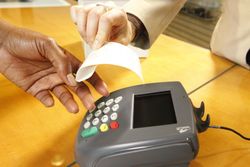
 Preventing credit card fraud is the main goal of The Fair and Accurate Credit Transactions Act of 2003 (FACTA).
Under this law, retailers can print only the last five digits of your credit or debit card on your electronic receipt. These receipts also must not show the card’s expiration date.
FACTA-compliant receipts show enough information to make the transaction identifiable to the consumer and to the retailer in the event a return or refund is required, but not enough information to benefit a would-be fraudster.
Always look at your receipt to be sure the retailer is following FACTA’s guidelines, even when you shop at a retailer that you regularly visit. Staying alert helps you take an active role in preventing credit card fraud.
How FACTA is Preventing Credit Card Fraud
The Bureau of Consumer Protection, a division of the Federal Trade Commission (FTC), says compliance with FACTA laws are important because “credit card numbers on sales receipts are a ‘golden ticket’ for fraudsters and identity thieves.”
Retailers that do not comply with FACTA receipt rules can face law enforcement action by the FTC. Both civil penalties and injunctive relief have been applied in various cases. (Injunctive relief means the court orders the defendant to cease a specified act rather than ordering the defendant to make a monetary payment.)
A merchant is more apt to be found he has “willfully” violated FACTA receipt laws if the retailer “knew or should have known” of FACTA’s regulations and was made aware of the statute’s requirements. If the consumer can prove that the merchant willfully violated FACTA, the consumer could recover statutory damages ranging from $100 to $1000 per violation.
Preventing Credit Card Fraud Should Become a Habit
Consumer advocates recommend some specific tips for preventing credit card fraud:
- Only shop online if the website is encrypted, which means the URL will start with “https” instead of just “http.” Also look for the Better Business Bureau logo or other merchant validation.
- Check your bank account and your credit card activity statements to see if you used your card at any store that has recently been hacked.
- Beware of phishing scams. There are hackers who will email or call you under the guise of being your bank or credit card issuer. They will try to trick you into giving up passwords, your date of birth, Social Security number, or other private information.
- If your credit card is fraudulently used or even attempted to be used, call your credit card company or bank and demand a new replacement card immediately.
- Keep a list of your credit card numbers and their customer service numbers somewhere safe inside your home. If your wallet or purse are stolen, you will be able to contact the correct companies right away.
If preventing credit card fraud has failed and you believe it’s because of FACTA violations, you could benefit by speaking with a lawyer regarding your rights and options for compensation.
Free FACTA Class Action Lawsuit Investigation
If you made one or more purchases and the retailer provided you with a receipt that contained more than the last five digits of your credit or debit card number or the expiration date, you may be eligible for a free class action lawsuit investigation and to pursue compensation for these FACTA violations.
ATTORNEY ADVERTISING
Top Class Actions is a Proud Member of the American Bar Association
LEGAL INFORMATION IS NOT LEGAL ADVICE
Top Class Actions Legal Statement
©2008 – 2026 Top Class Actions® LLC
Various Trademarks held by their respective owners
This website is not intended for viewing or usage by European Union citizens.













