

Credit card security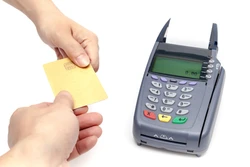 is one of the most prominent concerns in today’s consumer market, with millions of purchases made every day with card transactions. This also makes credit card security a top priority for businesses that regularly rely on card transactions for consumer purchases. Additionally, there are federal regulations in place to make sure consumer information is protected.
According to the Federal Trade Commission’s Bureau of Consumer Protection, credit card numbers are “golden tickets” for people looking to commit credit card fraud and identity theft. Credit card security is promoted by the Fair and Accurate Credit Transactions Act (FACTA), which requires businesses to adhere to strict regulations when handing their customer’ debit and credit card information.
Under FACTA, businesses must have receipt printing software that can accurately omit certain card information to lower the risk of credit card fraud and identity theft. More specifically, FACTA requires that all but the last five digits of the card number be concealed and that the expiration date is completely omitted.
By hiding these pieces of information, thieves and fraudsters are more likely to move on to a different target. FACTA was passed by Congress in 2003, and had given businesses until 2006 to update their receipt software to meet federal standards. FACTA applies to all electronically printed receipts from cash registers, self service kiosks, and restaurant tickets.
It is important to note that FACTA does not apply to handwritten or imprinted receipts, in which case consumers are encouraged to use cash for these transactions. This is because there is no way to control what happens to their card information after the transaction process is complete, leaving their card information out in the open.
Overview of Credit Card Security
With the age of online retail, thieves and hackers have a plethora of potential victims that makes sufficient credit card security is vital for modern society. In addition to the strict debit and credit card security measures, FACTA also guarantees consumers the right to a free annual credit report from each of the major credit reporting agencies: Equifax, Experian, and TransUnion.
However, there is more to credit card security than FACTA. Consumers can take their own measures to protect themselves.
Consumers can setup fraud alert with their banks or credit unions, so any suspicious card activity can be flagged. Consumers can also keep track of their receipts and ensure they are disposed of properly, or not opt for a receipt if the purchase is not particularly significant.
Furthermore, consumers can check their receipts to see if they are FACTA compliant and raise alarm if any of their personal information is present. FACTA requires businesses to confirm that their receipt printing software adheres to federal standards, and to take immediate action if a customer reports a faulty receipt.
If the business fails to take any form of corrective action, affected consumers may be able to file a FACTA lawsuit seeking up to $1,000 per faulty receipt. Consumers looking to file legal action for FACTA violations, should keep a record of the allegedly faulty receipts and summarize what the transaction was for.
Free FACTA Class Action Lawsuit Investigation
If you made one or more purchases and the retailer provided you with a receipt that contained more than the last five digits of your credit or debit card number or the expiration date, you may be eligible for a free class action lawsuit investigation and to pursue compensation for these FACTA violations.
ATTORNEY ADVERTISING
Top Class Actions is a Proud Member of the American Bar Association
LEGAL INFORMATION IS NOT LEGAL ADVICE
Top Class Actions Legal Statement
©2008 – 2026 Top Class Actions® LLC
Various Trademarks held by their respective owners
This website is not intended for viewing or usage by European Union citizens.













