Alabama embryos children ruling overview:
- Who: The Alabama Supreme Court ruled frozen embryos count as children and are protected under the state’s Wrongful Death of a Minor Act.
- Why: The court determined the act applies “to all children, born and unborn, without limitation.”
- Where: The court’s decision affects Alabama residents and could have implications outside the state’s borders.
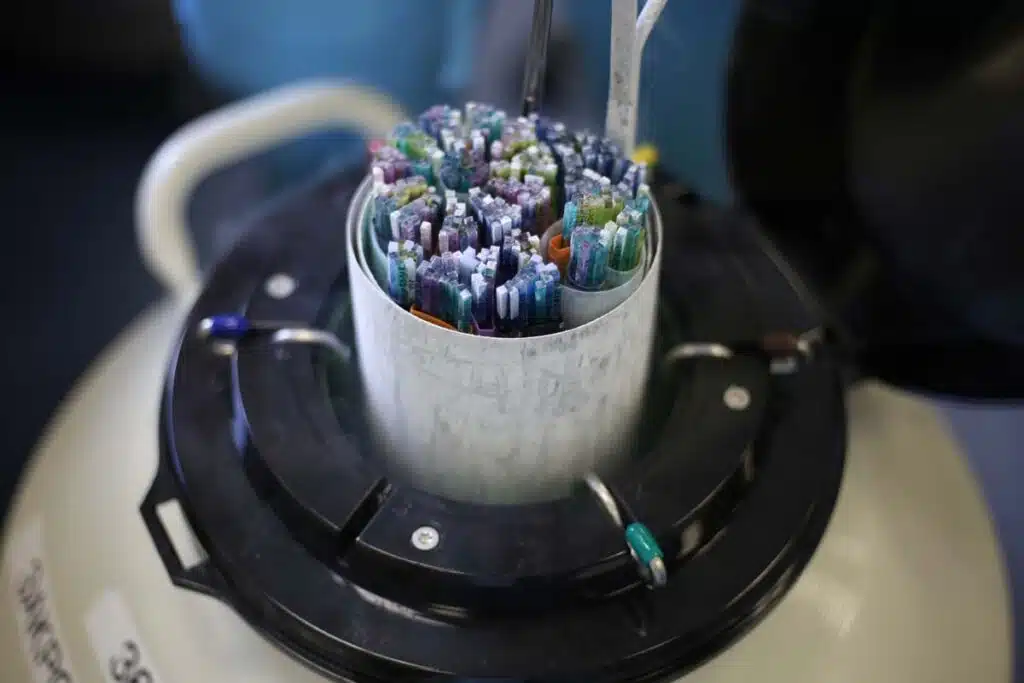
The Alabama Supreme Court ruled last week that frozen embryos are children and that parents can seek damages under the state’s Wrongful Death of a Minor Act in the event an embryo dies while in the care of a cryogenic nursery.
The court wrote the act does not contain an “unwritten exception” for extrauterine children who are outside of a biological uterus “at the time they are killed,” while reviving lawsuits filed by three couples seeking damages from an Alabama fertility clinic.
The couples filed their complaints against the Mobile Infirmary Medical Center, a fertility clinic in the state that offers in vitro fertilization (IVF) treatments and stores frozen embryos. The couples argue frozen embryos belonging to them were negligently destroyed by a patient who gained access to them.
“(The Wrongful Death of a Minor Act) applies to all children, born and unborn, without limitation. It is not the role of this court to craft a new limitation based on our own view of what is or is not wise public policy,” Justice Jay Mitchell wrote in the court’s majority opinion.
National patient advocacy organization criticizes Alabama embryos ruling
Justice Greg Cook was the only member of the court to dissent from the majority opinion, writing the decision expands the meaning of the Wrongful Death of a Minor Act and goes beyond its intended meaning at the time it was enacted in 1872.
“The main opinion’s holding almost certainly ends the creation of frozen embryos through in vitro fertilization (‘IVF’) in Alabama,” Justice Cook wrote.
The court’s decision also faces criticism from the national patient advocacy organization Resolve: the National Infertility Association, which called the ruling “anti-family” and said it would “likely have devastating consequences.”
“Alabama’s Supreme Court ruling is a terrifying development for the 1 in 6 people impacted by infertility who need in-vitro fertilization to build their families,” the organization wrote.
A pair of couples from Los Angeles filed lawsuits against CooperSurgical earlier this year over claims the fertility and women’s health company failed to recall an allegedly toxic solution prior to the solution allegedly destroying their developing embryos.
What do you think of the Alabama Supreme Court’s decision about frozen embryos? Let us know in the comments.
Don’t Miss Out!
Check out our list of Class Action Lawsuits and Class Action Settlements you may qualify to join!
Read About More Class Action Lawsuits & Class Action Settlements:
- Target, Jetson Electric Bikes reach $38.5M settlement in hoverboard deaths lawsuit
- Couples file lawsuits against company over embryo destruction
- Snapchat, Tiktok lawsuit claims social media platforms responsible for girl’s suicide
- Rael class action claims feminine wipes falsely advertised as ‘natural’