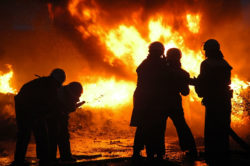
 Two PG&E customers have filed a lawsuit in an attempt to stop the new California wildfire compensation law, claiming it unfairly places the burden of restoration and prevention on ratepayers.
The bill passed by overwhelming majorities in both houses of the state legislature, easily clearing the two-thirds majority required by law for “urgency bills,” or laws that go into effect as soon as possible. That urgency has raised questions about what some consider to be a “badly vetted wildfire bill” and why Governor Newsom and the California Legislature were in such a hurry to get it passed.
What the California Wildfire Bill Will Do
Assembly Bill 1054 was introduced near the end of June 2019. It establishes a $21 billion fund for future wildfire recovery, including assistance for victims going forward. Responsibility for paying into the fund would be divided equally between PG&E shareholders and ratepayers, who will see a $2.50 surcharge on their bills.
Executive compensation will be tied to whether or not the utility companies achieve specific safety objectives. Furthermore, utilities will not be allowed to profit from ratepayer-funded safety upgrades.
There is one provision in the law that critics particularly take issue with: how negligence is determined.
Going to a “National Standard”
Under the new California wildfire law, a new standard would be used in determining whether or not a utility company is liable when its equipment is determined to be the cause of a fire, by bringing it into line with the federal standard. Furthermore, outside investigators will be required to prove that there was “serious doubt” that the utility company took all reasonable steps to prevent a conflagration. This, say critics, will make it harder for victims to prove that negligence was indeed involved.
Making Ratepayers Bear the Costs
Another bone of contention is a provision that allows utility companies that achieve safety goals to pass on the cost of wildfires to ratepayers. This, argue the plaintiffs, makes it easier for utilities to raise their rates to pay for damage caused by company equipment.
Even though ratepayers’ contribution to the $21 billion California wildfire fund is only $2.50 a month, plaintiffs in the wildfire legislation lawsuit argue the fee constitutes an illegal gift of public money to a corporation owned by private shareholders. That particular surcharge was instituted in the wake of the crisis caused by Enron in 2001, and was scheduled to expire in 2020. Under the new California wildfire law, the fee will continue until 2035.
Governor is Confident
Governor Newsom, a staunch supporter of the new legislation, told the media that the law will assist the state in moving toward “a safer, affordable and reliable energy future” while providing “certainty for wildfire victims.”
Join a Free California Wildfire Property Damage Lawsuit Investigation
If you or a loved one suffered property damage in the Camp Fire, Woolsey Fire, Hill Fire or last year’s Thomas Fire, legal help is available to help you through the claim process with your insurance company.
This article is not legal advice. It is presented
for informational purposes only.
ATTORNEY ADVERTISING
Top Class Actions is a Proud Member of the American Bar Association
LEGAL INFORMATION IS NOT LEGAL ADVICE
Top Class Actions Legal Statement
©2008 – 2026 Top Class Actions® LLC
Various Trademarks held by their respective owners
This website is not intended for viewing or usage by European Union citizens.
Get Help – It’s Free
Join a Free California Wildfire Property Damage Lawsuit Investigation
If you qualify, an attorney will contact you to discuss the details of your potential case at no charge to you.
PLEASE NOTE: If you want to participate in this investigation, it is imperative that you reply to the law firm if they call or email you. Failing to do so may result in you not getting signed up as a client or getting you dropped as a client.
E-mail any problems with this form to:
[email protected].
Oops! We could not locate your form.