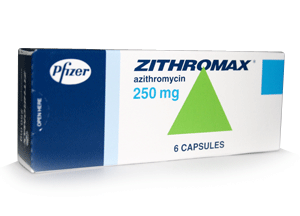
 Zithromax, described as the “drug of choice” for certain eye infections, may actually increase the patient’s likelihood of being re-infected later.
Zithromax is an antibiotic approved for treatment of a wide variety of bacterial infections, from respiratory infections to skin infections to sexually transmitted diseases. It’s also sold in a single extended-release dose called Zmax and in three- or five-day courses labeled Z-Pak.
The antibiotic has been and continues to be considered an effective treatment for an eye disease called trachoma, which puts the patient at risk for eye injury and blindness. Yet research suggests that Zithromax may have a tendency to promote recurrence of trachoma, the very condition it’s sometimes prescribed to treat.
What Is Trachoma?
Trachoma is a prolonged infection caused by the bacteria Chlamydia trachomatis. It attacks the conjunctiva, the membranes on the inside of the eyelid that cover the white of the eye.
Trachoma makes the conjunctiva red and irritated at first. Later, it can cause the vision to be obscured by blood vessels that grow across the cornea, possibly causing eye injury and sometimes permanent blindness. About 5 percent of trachoma patients end up with impaired vision or blindness.
In its early stages, trachoma is contagious. It can be transmitted by hand contact with the eye, by flies, or by sharing contaminated things like handkerchiefs or eye make-up.
Trachoma occurs only rarely in the U.S., but in hot, dry equatorial countries it’s more common. It’s the most common preventable cause of blindness in the world.
Zithromax Side Effects and the SAFE Program
While trachoma itself is not among Zithromax side effects, some studies show an increased incidence of re-infection in Zithromax users.
One such study examined results from the SAFE program, a World Health Organization program developed in 1996 with the goal of eradicating blinding trachoma by 2020. Program designers identified oral azithromycin, the generic form of Zithromax as the drug of choice for treatment of the condition.
But a study of children in Vietnam, one of the priority countries in the SAFE program, found that re-infection rates were significantly higher in groups treated with both surgery and antibiotics, compared to groups treated with surgery alone. The re-infection risk for those groups was four times higher, the researchers found.
The researchers concluded that the results were consistent with the possibility that treatment with Zithromax (identified in the study as azithromycin) can interfere with the patient’s immune function in a way that increases their susceptibility to trachoma re-infection.
Other Zithromax Side Effects
Trachoma isn’t the only condition related to Zithromax that can lead to blindness. Zithromax side effects include Stevens Johnson syndrome, a rare but serious condition with eye symptoms that can end in blindness.
Stevens Johnson syndrome is known for attacking the skin with blisters that enlarge and peel away. It also attacks mucous membranes like the conjunctiva. SJS can make the eyes painful, swollen, and so purulent that they seal shut. It may also lead to corneal scarring. Some SJS patients end up with permanently impaired vision due to eye injury, or they may be completely blind.
Do YOU have a legal claim? Fill out the form on this page now for a free, immediate, and confidential case evaluation. The Zithromax attorneys who work with Top Class Actions will contact you if you qualify to let you know if an individual lawsuit or Zithromax class action lawsuit is best for you. [In general, Zithromax lawsuits are filed individually by each plaintiff and are not class actions.] Hurry — statutes of limitations may apply.
Get Help – It’s Free
Join a Free Zithromax Class Action Lawsuit Investigation
If you or a loved one were diagnosed with liver failure, kidney failure, Stevens Johnson Syndrome or Toxic Epidermal Necrolysis after taking Zithromax, Z-Pak, Zmax or azithromycin, you may have a legal claim. See if you qualify by filling out the short form below.
A Zithromax attorney will contact you if you qualify to discuss the details of your potential case at no charge to you.
Oops! We could not locate your form.
ATTORNEY ADVERTISING
Top Class Actions is a Proud Member of the American Bar Association
LEGAL INFORMATION IS NOT LEGAL ADVICE
Top Class Actions Legal Statement
©2008 – 2026 Top Class Actions® LLC
Various Trademarks held by their respective owners
This website is not intended for viewing or usage by European Union citizens.