 A woman diagnosed with ovarian cancer has filed a lawsuit against Johnson & Johnson alleging the company hid a talc powder cancer risk.
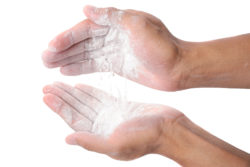
Plaintiff Joann J. says she used Johnson and Johnson’s baby powder from 1966 to 2015 and Shower to Shower powder from 1985 to 2015. She claims that because she used the powders in her perineal area for all those years, she developed ovarian cancer. Johnson & Johnson allegedly promoted both powders as safe and convenient treatments for controlling wetness and odor all over a woman’s body.
Both powders contain talc as the main ingredient. Talc is an inorganic material mined from the earth that according to some studies has been linked to ovarian cancer since the 1970s. Despite evidence of a potential link between talcum powder and ovarian cancer, both Johnson’s Baby Powder and Shower to Shower continued to be marketed to women who wished to feel fresh, dry and comfortable in their private areas.
According to Joann, Johnson and Johnson’s promotional materials for its talc powders said, “For you, use every day to help feel soft, fresh, and comfortable.” Shower to Shower’s slogan was “A sprinkle a day keeps the odor away.” Shower to Shower’s advertising allegedly pushed women to feel safe using the talcum powder all over their bodies.
Plaintiff: Talc Powder Cancer Risk Hidden for Years
Joann’s talc powder lawsuit describes some of the research that suggests a link between talc and ovarian cancer.
In 1971, researchers led by Dr. W.J. Henderson in Wales found talc particles embedded in ovarian tumors of women who used talcum powders in their perineal area. It was believed that tiny talc crystals could enter the genitourinary tract that leads into the peritoneal cavity. The ovaries are open-ended in the peritoneal cavity, allowing the talc crystals to settle inside them and cause irritation, and possibly cancer.
In 1982, Dr. Daniel W. Cramer compared 215 women diagnosed with ovarian cancer with a control of 215 healthy women. He found that women who used talcum powder on their bodies had a 92 percent increased risk of ovarian cancer. The talc powder cancer risk for women who dusted the substance on their genitals and on feminine napkins was more than three times that of non-talc users.
According to the lawsuit, Dr. Cramer visited Dr. Bruce Semple of Johnson & Johnson to advise him that the company should place warning labels on Johnson’s Baby Powder and Shower to Shower so that women could make an informed choice about their health. The company never added a talc powder cancer risk warning label to either product.
Approximately 22 other studies completed since 1982 have shown a link between talcum powder use in the genital area and ovarian cancer. According to the talc powder cancer risk lawsuit, a 1992 study found an 80 percent increased risk of ovarian cancer among women who had applied more than 10,000 perineal dustings of talcum powder over their lifetime. This study alone demonstrated “a positive dose-response relationship,” says the lawsuit.
The Talc Powder Cancer Risk Lawsuit is Case No. 1:18-cv-00915 in the U.S. District Court for the Northern District of Illinois, Eastern Division.
Do YOU have a legal claim? Fill out the form on this page now for a free, immediate, and confidential case evaluation. The attorneys who work with Top Class Actions will contact you if you qualify to let you know if an individual lawsuit or class action lawsuit is best for you. [In general, baby powder cancer lawsuits are filed individually by each plaintiff and are not class actions.] Hurry — statutes of limitations may apply.
ATTORNEY ADVERTISING
Top Class Actions is a Proud Member of the American Bar Association
LEGAL INFORMATION IS NOT LEGAL ADVICE
Top Class Actions Legal Statement
©2008 – 2026 Top Class Actions® LLC
Various Trademarks held by their respective owners
This website is not intended for viewing or usage by European Union citizens.
Get Help – It’s Free
Join a Free Baby Powder Cancer Class Action Lawsuit Investigation
If you used Johnson’s Baby Powder, Shower to Shower, or another talcum powder product and were diagnosed with ovarian cancer, you may have a legal claim. Family members of loved ones who died of ovarian cancer can also join. Submit your information now for a free case evaluation.
An attorney will contact you if you qualify to discuss the details of your potential case at no charge to you.
Please Note: If you want to participate in this investigation, it is imperative that you reply to the law firm if they call or email you. Failing to do so may result in you not getting signed up as a client, if you qualify, or getting you dropped as a client.